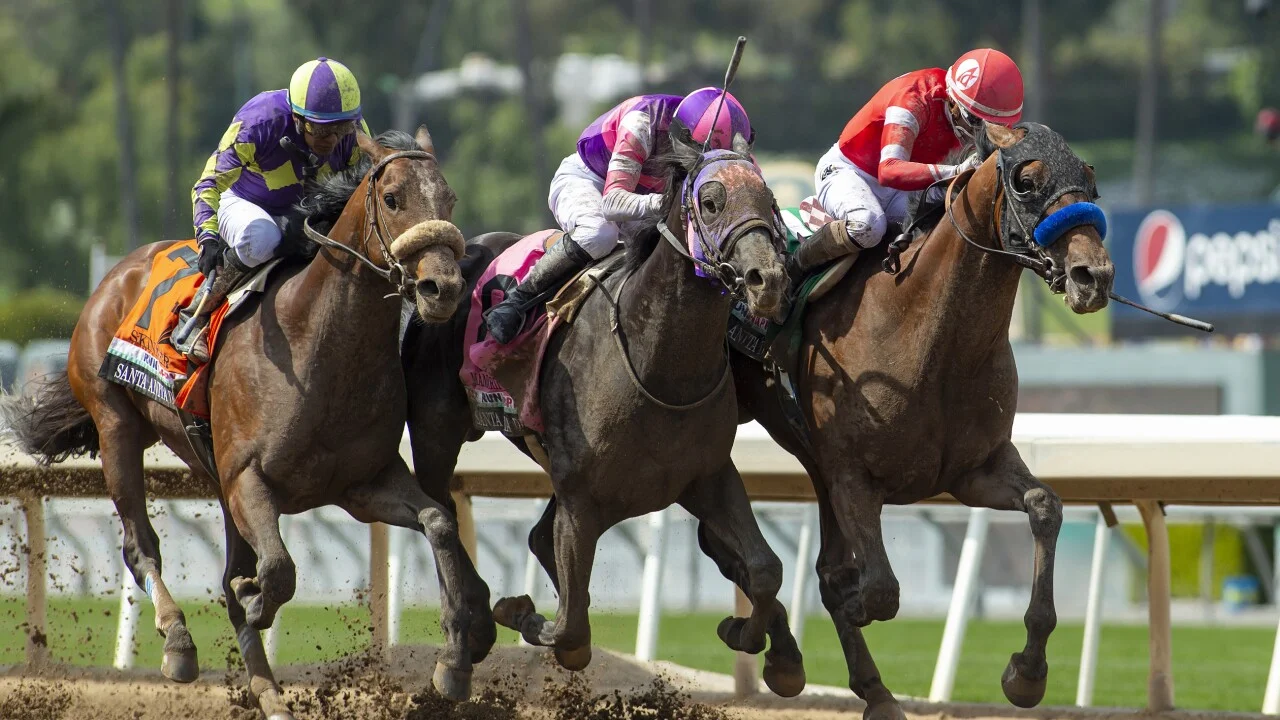
For decades, Kentucky Derby betting was built on instinct, history, and whispers from the backstretch. Before charts, algorithms, and a formal qualification process, bettors relied on subjective readings of talent, bloodlines, and the small-sample reputation of trainers and barns. The Derby was always a spectacle, but for handicappers, the task of choosing a winner was closer to decoding a mystery than running numbers through predictive models. Everything changed in 2013, when Churchill Downs adopted the official Kentucky Derby leaderboard and points-based qualification system. Since then, the strategy behind Derby wagering has never been the same.
Quick Tip: Before you check the upcoming information, boost your bankroll with the top new-player bonus.

Before the introduction of the modern Kentucky Derby leaderboard, fields were determined through graded-stakes earnings, including races at any distance and sometimes on synthetic or turf surfaces. A sprinter could score a large purse in a non-traditional route prep and still qualify for the Derby, despite having no proven stamina. Bettors were left to judge whether a horse capable of winning six furlongs in dazzling time could somehow handle the grueling 1¼-mile test on the first Saturday in May.
In that era, past performances were cluttered with noise. Horses with limited two-turn experience slipped into the gate based on a single high-purse score. Bettors often gave heavy weight to buzz from trainers, flashy morning workouts, and pedigree speculation. Kentucky Derby betting depended on individual interpretation: someone who trusted intuition over analytics could occasionally be rewarded because the field contained unpredictable, untested entrants. The lack of standardization created volatility in Kentucky Derby odds, sometimes sending inexperienced sprinters to low prices while distance-proven contenders were ignored.
The modern shift arrived with the Kentucky Derby points system, designed to give more weight to races that actually prove Derby-style ability. The Churchill Downs committee restructured the road to the Derby, emphasizing prep races run at one mile or longer and awarding tiered points based on difficulty and closeness to Derby season. Gone were the days when a sprinter could buy a trip to Louisville with a giant check from a random juvenile stakes.
Now, qualification is mathematical: you must earn enough points across key Kentucky Derby prep races to rank inside the top horses on the Kentucky Derby leaderboard. Most bettors today follow the leaderboard as if it were a stock market board, tracking who climbs, who drops, and how late-season surges might shape the starting gate.
| Date | Race | Track | Pts (1st) |
|---|---|---|---|
| September 2026 | |||
| Sep 12 | Iroquois Stakes | Churchill Downs | 10 |
| Sep 26 | The Royal Lodge Stakes Euro-ME | Newmarket, England | 10 |
| Sep 26 | Churchill Tyres Beresford Stakes Euro-ME | Curragh, Ireland | 10 |
| October 2026 | |||
| Oct 3 | Claiborne Breeders' Futurity | Keeneland | 10 |
| Oct 3 | American Pharoah | Santa Anita Park | 10 |
| Oct 3 | Champagne Stakes | Belmont Park | 10 |
| Oct 4 | Qatar Prix Jean-Luc Lagardère Euro-ME | Longchamp, France | 10 |
| Oct 24 | William Hill Futurity Trophy Stakes Euro-ME | Doncaster, England | 10 |
| Oct 25 | Street Sense Stakes | Churchill Downs | 10 |
| Oct 30 | Breeders' Cup Juvenile | Keeneland | 30 |
| November 2026 | |||
| Nov 28 | Kentucky Jockey Club Stakes | Churchill Downs | 10 |
| Nov 29 | Cattleya Japan Road | Tokyo Racecourse, Japan | 10 |
| December 2026 | |||
| Dec 5 | Remsen Stakes | Belmont Park | 10 |
| Dec 12 | Los Alamitos Futurity | Los Alamitos | 10 |
| Dec 16 | Zen-Nippon Nisai Yushun Japan Road | Kawasaki, Japan | 20 |
| Dec 19 | Gun Runner Stakes | Fair Grounds | 10 |
| Dec 19 | Remington Springboard Mile | Remington Park | 10 |
| January 2027 | |||
| Jan 2 | Smarty Jones Stakes | Oaklawn Park | 10 |
| Jan 16 | Lecomte Stakes | Fair Grounds | 20 |
| Jan 16 | Leonatus Stakes | Turfway Park | 10 |
| Jan 16 | Withers Stakes | Belmont Park | 20 |
| Jan 22 | UAE 2000 Guineas Euro-ME | Meydan Dubai | 20 |
| Jan 30 | Robert B. Lewis Stakes | Santa Anita Park | 20 |
| Jan 30 | Holy Bull Stakes | Gulfstream Park | 20 |
| February 2027 | |||
| Feb 6 | Saudi Derby Euro-ME | King Abdulaziz Racecourse, Saudi Arabia | 30 |
| Feb 6 | Sam F. Davis Stakes | Tampa Bay Downs | 20 |
| Feb 6 | Southwest Stakes | Oaklawn Park | 20 |
| Feb 13 | Risen Star Stakes | Fair Grounds | 50 |
| Feb 14 | Sunland Derby | Sunland Park | 20 |
| Feb 19 | Dubai Road to the Kentucky Derby Stakes Euro-ME | Meydan Dubai | 20 |
| Feb 20 | Gotham Stakes | Belmont Park | 50 |
| Feb 21 | Hyacinth Japan Road | Tokyo Racecourse, Japan | 30 |
| Feb 24 | Road to the Kentucky Derby Condition Stakes Euro-ME | Kempton, England | 20 |
| Feb 26 | The Patton Euro-ME | Dundalk, Ireland | 20 |
| Feb 27 | Fountain of Youth Stakes | Gulfstream Park | 50 |
| Feb 27 | John Battaglia Memorial | Turfway Park | 20 |
| Feb 27 | San Felipe Stakes | Santa Anita Park | 50 |
| March 2027 | |||
| Mar 6 | Tampa Bay Derby | Tampa Bay Downs | 50 |
| Mar 13 | Rebel Stakes | Oaklawn Park | 50 |
| Mar 13 | Virginia Derby | Colonial Downs | 50 |
| Mar 20 | Louisiana Derby | Fair Grounds | 100 |
| Mar 20 | Jeff Ruby Steaks | Turfway Park | 100 |
| Mar 25 | Fukuryu Japan Road | Nakayama, Japan | 40 |
| Mar 27 | Florida Derby | Gulfstream Park | 100 |
| Mar 27 | UAE Derby Euro-ME | Meydan Dubai | 100 |
| April 2027 | |||
| Apr 3 | Blue Grass Stakes | Keeneland | 100 |
| Apr 3 | Santa Anita Derby | Santa Anita Park | 100 |
| Apr 3 | Wood Memorial | Belmont Park | 100 |
| Apr 10 | Arkansas Derby | Oaklawn Park | 100 |
| Apr 11 | Lexington Stakes | Keeneland | 20 |
Pts (1st) is the number of qualifying points awarded to the winner. Euro-ME and Japan Road races are the international qualifiers.
Last Updated on 10/10/2026
For Kentucky Derby betting, this fundamentally changed the informational landscape. Instead of chaos, there is structure; instead of instinct, there is measurable data. Bettors can now see which horses have proven their worth in legitimate Derby-style trials, simplifying comparisons between contenders.
The most significant shift brought by the points system is sample size and reliability. Because qualifying demands consistent performance in key Derby-relevant conditions, bettors no longer make decisions off a single race. They get to watch contenders across multiple two-turn preps, meaning handicappers have more tape, sectional times, pace breakdowns, and stamina evidence.
Modern Kentucky Derby odds reflect this improved confidence. Favorites have performed notably stronger since the points system was implemented, including a streak of favorites winning from 2013 to 2018, something almost unthinkable in the older, more erratic entry format.
The change has also influenced how bettors analyze pace. Because qualifying requires stamina and tactical positioning, fewer pure sprinters enter the race. Pace scenarios are more uniform, which reduces the probability of chaotic collapses or meltdowns that once turned longshots into legends. Bettors now assess tactical speed, route pace figures, and how a horse maintains energy distribution across long-form efforts.
To succeed with modern Kentucky Derby betting, you cannot ignore the leaderboard. Every move on it tells a story. A horse sitting comfortably in the top five weeks before Derby day may skip later prep races, signaling the barn’s confidence. A contender hovering around the bubble might be forced to run aggressively in a final prep, revealing its hand and giving bettors insight into form pressure.
Tracking progression through Kentucky Derby prep races is essential. Did a horse earn early points and regress? Did it peak late and continue improving? Derby champions tend to follow arcs of development, not isolated spikes. Because the leaderboard separates contenders by résumé, bettors can prioritize horses that have demonstrated legitimate class in graded routes. So far, this is the Kentucky Derby Leaderboard of the current season:
| Rank | Horse | Pts | Trainer | Earnings * |
|---|---|---|---|---|
| 1 | Commandment | 150 | Brad Cox | $943,020 |
| 2 | Further Ado | 135 | Brad Cox | $1,068,095 |
| 3 | Renegade | 125 | Todd Pletcher | $1,002,500 |
| 4 | So Happy | 115 | Mark Glatt | $444,000 |
| 5 | Fulleffort | 110 | Brad Cox | $507,900 |
| 6 | The Puma | 106 | Gustavo Delgado | $428,000 |
| 7 | Silent Tactic | 100 | Mark Casse | $1,020,130 |
| 8 | Emerging Market | 100 | Chad Brown | $600,000 |
| 9 | Albus | 100 | Riley Mott | $400,000 |
| 10 | Potente | 100 | Bob Baffert | $220,000 |
| 11 | Pavlovian | 70 | Doug O'Neill | $527,000 |
| 12 | Right to Party $ | 65 | Kenny McPeek | $176,000 |
| 13 | Incredibolt | 60 | Riley Mott | $424,570 |
| 14 | Golden Tempo | 60 | Cherie DeVaux | $300,000 |
| 15 | Ottinho | 56 | Chad Brown | $267,750 |
| 16 | Class President | 50 | Todd Pletcher | $569,700 |
| 17 | Stark Contrast | 50 | Michael McCarthy | $439,900 |
| 18 | Danon Bourbon (JPN) | Japan RTKD | Manabu Ikezoe | $222,762 |
| 19 | Wonder Dean (JPN) | Intl. RTKD | Daisuke Takayanagi | $725,172 |
| 20 | Six Speed (UAE) | Intl. RTKD | Bhupat Seemar | $314,366 |
| 21 | Iron Honor | 50 | Chad Brown | $182,500 |
| 22 | Chief Wallabee | 50 | Bill Mott | $175,800 |
| 23 | Chip Honcho | 49 | Steve Asmussen | $190,000 |
| 24 | Intrepido | 38 | Jeff Mullins | $290,000 |
| 25 | Universe | 38 | Kenny McPeek | $244,650 |
| 26 | Grittiness | 36 | Todd Pletcher | $150,000 |
| 27 | Nearly | 35 | Todd Pletcher | $220,450 |
| 28 | Bravaro | 35 | Saffie Joseph Jr. | $118,700 |
| 29 | Litmus Test | 34 | Bob Baffert | $429,688 |
| 30 | Talkin | 30 | Danny Gargan | $233,625 |
| 31 | Great White | 30 | John Ennis | $144,003 |
| 32 | Napoleon Solo | 25 | Chad Summers | $316,520 |
| 33 | Ocelli | 25 | Whit Beckman | $80,200 |
| — | Vitruvian Man + | 25 | Doug O'Neill | $60,000 |
| 35 | Confessional | 15 | Brad Cox | $55,000 |
| * Non-restricted earnings | + Not nominated to the Triple Crown | $ Paid $6,000 late-nomination fee | ||||
Last Updated on 04/17/2026
When making final Derby selections, bettors now shift strategy from subjective interpretation to structured evaluation:

Kentucky Derby betting today requires discipline. While nostalgia lovers cling to the days when unpredictability reigned, the points system rewards bettors who analyze instead of guessing. Now, the contenders who step onto the track at Churchill Downs have proven their worth through the Kentucky Derby leaderboard, giving bettors a deeper and more trustworthy picture. That shift will continue to define the sport, making strategy and analytics more important than ever.

The writing team at US Racing is comprised of both full-time and part-time contributors with expertise in various aspects of the Sport of Kings.