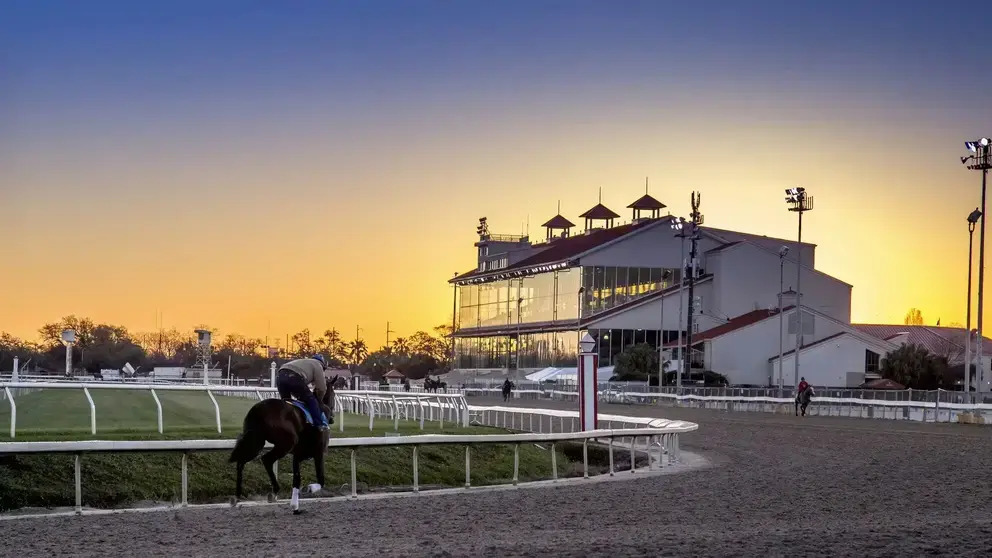
The annual Road to the Kentucky Derby begins in earnest during the depths of winter, offering horseplayers the first true glimpse of the three-year-old class aiming for Churchill Downs. Enthusiasts often focus solely on final times or the margin of victory. Still, astute bettors know two factors exert a far more profound influence on a horse’s success or failure: localized track bias and unpredictable winter weather. Ignoring these variables means sacrificing a critical edge when calculating Kentucky Derby Odds and predicting who will ultimately stand among the elite on the first Saturday in May.
We dissect the unique geographical challenges and surface trends of the primary winter circuits, providing you with the necessary analytical tools to interpret the results of crucial Kentucky Derby prep races and to identify legitimate contenders before the public catches on.

The Florida circuit, anchored by Gulfstream Park, presents one of the most complex handicapping puzzles on the entire trail. Track data consistently demonstrates a pronounced speed bias in dirt sprints and one-mile races. We see horses racing on or close to the lead win 46% of one-mile dirt contests, suggesting that tactical speed reigns supreme when horses only navigate one turn. However, the dynamics shift dramatically when we analyze the two-turn routes, like the Holy Bull, Fountain of Youth, and the crucial Florida Derby.
These long-distance Derby preps flip the script, favoring horses with a stalking or closing style, which run better than deep closers in shorter races. Furthermore, post position matters acutely in Gulfstream’s two-turn configuration. Statistics reveal the inside path offers a significant advantage in these longer races. Horses starting from the outside post position, number five, face a noticeable disadvantage, requiring an incredible effort to overcome the ground loss. Bettors must heavily discount a horse who wins a route from an extreme outside draw at Gulfstream unless he dominates by an exceptional margin.
Louisiana’s Fair Grounds Race Course maintains its reputation as a testing, deep, and highly demanding surface, particularly during its winter stand. Unlike the speed-favoring ovals of Florida, the Fair Grounds surface demands exceptional stamina and staying power, forcing horses to carry their speed over a highly taxing track. This makes the Gun Runner, Lecomte, and Risen Star Stakes invaluable gauges of genuine distance potential, separating the early-maturing sprinters from true Derby prospects.
Consider recent winners like Built, who captured the 2024 Gun Runner Stakes with a gate-to-wire triumph. He set the pace and still accelerated his final fractions effectively, demonstrating that he possessed the foundation to carry his speed over the deep surface. His victory provides a strong signal of confidence, confirming his inclusion among serious Kentucky Derby contenders. Horses who demonstrate an ability to handle the New Orleans dirt and weather, which often features damp, cool conditions, prove their mental fortitude and physical depth—qualities we demand in top-tier runners when we bet on Kentucky Derby futures.
Arkansas’ Oaklawn Park, home to the Smarty Jones, Southwest, and Rebel Stakes, offers another unique set of surface characteristics defined by its heavy, reddish clay base. This track often plays fast when dry, but it transforms dramatically under wet conditions, presenting one of the most challenging ‘off-tracks’ in the country. The surface can quickly become sloppy or muddy, requiring handicappers to prioritize horses with proven ability to handle deep, wet footing.
The ability of a horse to overcome adverse conditions at Oaklawn provides a significant sign of resilience, making the results here highly instructive for establishing the Kentucky Derby leaderboard. When we see a contender win the Southwest Stakes over a sloppy track, we gain assurance regarding their adaptability, a trait Churchill Downs frequently requires.
Trainers often target Oaklawn specifically for its demanding nature, knowing a horse that can slog through the deep red clay in January and February owns a distinct tactical advantage over horses bred exclusively for dry, fast tracks. We look for horses with certain bloodlines, notably those tracing back to stamina influences, that often thrive in these harsh conditions.
The Aqueduct circuit in New York presents the ultimate test of cold-weather durability. The Remsen and Withers Stakes unfold amidst freezing temperatures and the constant threat of snow or ice, which track crews expertly manage to minimize deep freezing. However, the chilly conditions often create a dense, highly compacted track surface that sometimes favors front-runners but, more importantly, tests a horse's tolerance for the demanding northeastern winter.
Success at Aqueduct proves a horse’s ability to remain focused and thrive despite adverse training and racing environments. Horses who ship south to Florida or Kentucky after winning the Remsen or the Withers often maintain high Kentucky Derby futures odds because they demonstrated superior mental toughness. They confirm they handle the rigors of travel and cold-weather racing, essential elements for a horse preparing for a 1 1/4-mile grind in Louisville, regardless of the weather on race day.
California’s primary winter track, Santa Anita Park, presents a generally fairer surface than its eastern counterparts. Statistics generally reflect a relative balance, with horses close to the lead and those coming from off the pace finding the winner’s circle with similar regularity. This fairness makes the Los Alamitos Futurity, San Felipe, and the Santa Anita Derby excellent litmus tests of pure ability rather than surface preference.
However, the California circuit still requires contextual analysis. The key is monitoring day-to-day fluctuations; an overnight change in maintenance or a heatwave can introduce a temporary speed bias. Handicappers must pay close attention when a horse demonstrates brilliance against the prevailing trend. For instance, if a deep closer like Chancer McPatrick prevails in a race that statistically favors speed, you instantly upgrade that performance. That closing effort on a neutral or speed-biased track suggests a powerful engine and superior acceleration, positioning them immediately near the top of the Kentucky Derby leaderboard.
Quick Tip: Before you check the upcoming information, boost your bankroll with the top new-player bonus.

The most critical takeaway for professional horseplayers revolves around horses who successfully defy a pronounced track bias. When you analyze the result charts, always ask: Did the winner receive a beneficial trip or overcome a disadvantage? A horse demonstrating a powerful late rally to beat speed on a day where Gulfstream’s two-turn races clearly favored the front end deserves serious consideration. They prove they possess superior talent, which overcomes unfavorable conditions.
These efforts represent high-value data points, offering excellent opportunities for early Kentucky Derby betting. A horse who overcame a significant bias often ships to their next engagement at better Kentucky Derby Odds because casual bettors overlook the context of their previous victory. By recognizing the hidden significance of a hard-fought win against the grain, you immediately put yourself ahead of the general wagering public. Exploit this contextual knowledge, and you turn a simple race result into powerful forecasting data.
We have unpacked the distinct geographical and meteorological hurdles the top three-year-olds face every winter. From Gulfstream’s internal pace complexity to Fair Grounds’ stamina requirement and Oaklawn’s weather test, each race offers unique data points far beyond the final time. Success on the Road to the Roses comes not from guessing, but from dissecting every performance with surgical precision.
Stop wagering based on guesswork and start using professional-grade analysis to power your strategy. You need immediate, actionable insights to turn Kentucky Derby prep races into profitable opportunities.
Stay tuned to US Racing for exclusive data reports today, and we will equip you with the tools to master the track biases and weather angles, transforming you into a top-tier handicapper. Secure your advantage now, identify the ultimate Kentucky Derby contenders, and lock in value before the market corrects itself.

The writing team at US Racing is comprised of both full-time and part-time contributors with expertise in various aspects of the Sport of Kings.