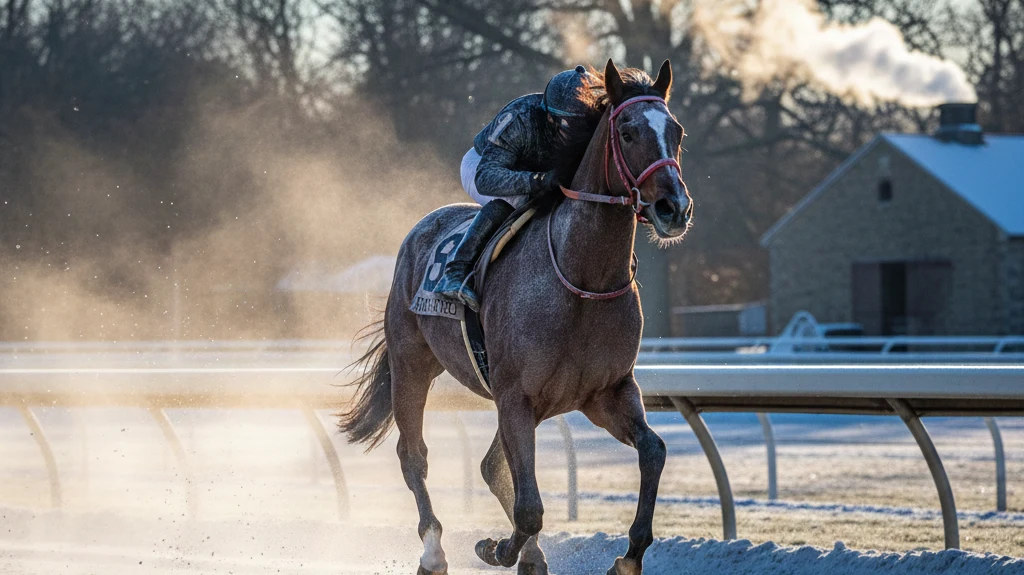
As the winter chill settles over North American racetracks, the heat intensifies in the race for the 152nd Kentucky Derby. We currently stand at a critical juncture in the racing calendar where the "boys" separate themselves from the "men."
The transition from the juvenile season to the three-year-old campaign defines the legendary status of Thoroughbreds. Sharpening your Kentucky Derby betting strategy now will deliver the highest possible ROI before the pools close and prices collapse. Analysts and enthusiasts alike look to the early prep season to identify the "buzz horses" with the stamina to conquer the classic distance of 1 1/4 miles.
Quick Tip: Before you check the upcoming information, boost your bankroll with the top new-player bonus.

The current Kentucky Derby leaderboard reflects a shifting landscape following high-stakes performances in the Remsen Stakes, the Los Alamitos Futurity, and the Gun Runner Stakes. Every point earned in these early winter contests acts as a golden ticket toward the Churchill Downs starting gate.
While many fans focus on the stars of the Breeders' Cup Juvenile, history proves that winter bloomers often find their peak when the spring sun hits the Kentucky bluegrass. You must monitor the points standings closely because a single win in January can catapult a longshot into the top ten, significantly altering the Kentucky Derby Odds across major online racebooks.
Savvy bettors prioritize the Kentucky Derby prep races held at Gulfstream Park, Fair Grounds, and Santa Anita. These venues serve as the primary laboratories for elite trainers like Todd Pletcher, Brad Cox, and Bob Baffert. We see a specific pattern emerging this winter: mid-distance sprinters successfully sustain their speed through two turns. For instance, the winners of the Jerome Stakes often reveal hidden stamina through their pedigree and closing fractions. If you intend to bet on Kentucky Derby futures, you should focus on horses that maintain a steady gallop-out past the wire, as this indicates a high ceiling for longer distances.
The current crop of Kentucky Derby contenders features a diverse mix of tactical speed and deep-closing power. We are currently watching several colts that bypassed the heavy autumn schedule to focus on a fresh winter campaign. Statistics show that horses entering the Derby with five or fewer starts often possess the physical longevity required to survive the grueling Triple Crown trail. You should look for "bridge-jumpers" who dominated their maiden special weights by multiple lengths and now face winners for the first time. These "rising stars" offer the most significant value in the winter betting pools before the general public catches on to their brilliance.
Quick Tip: Before you check the upcoming information, boost your bankroll with the top new-player bonus.
The Kentucky Derby futures markets offer a unique opportunity for high-risk, high-reward plays that define a professional bettor's season. During the winter months, you can often find a potential favorite sitting at odds of 40-1 or 50-1 simply because they haven't won a graded stakes race yet. We recommend diversifying your portfolio by backing three to four different colts across various training paths. This "ladder" approach ensures that even if one contender falls off the trail due to injury or poor performance, you still hold a live ticket at a massive price on another rising star. Consistent Kentucky Derby betting success requires this long-term perspective.
Serious handicappers dive deep into Beyer Speed Figures and Thoro-Graph sheets to find the hidden gems of the winter season. We look for a "forward move", a consistent upward trajectory in speed ratings, that suggests a horse is maturing physically. A horse that ran an 85 Beyer in November and jumps to a 94 in January commands immediate respect. These numbers provide an objective baseline that bypasses the hype often found in racing journalism. By focusing on raw data, you can identify which Kentucky Derby contenders actually possess the engine to compete at the highest level and which ones are merely beating weak fields.
Stamina is the currency of the Kentucky Derby, and winter is where we test its value. We analyze the "Dosage Index" and the "Average Winning Distance" of a contender's sire and dam to predict their ceiling. Colts sired by Triple Crown winners or classic distance specialists tend to thrive when the races move from one mile to nine furlongs in February and March. If a horse wins a winter prep but appears winded at the end of 1 1/16 miles, we generally fade them when considering Kentucky Derby betting options for May. Focus your capital on the progeny of stallions like Into Mischief, Curlin, and Gun Runner, who consistently produce runners capable of handling the Churchill Downs surface.
Every elite trainer approaches the Road to the Kentucky Derby with a signature style. Some conditioners, like Steve Asmussen, prefer to run their horses frequently to build fitness and grit. Others, like Chad Brown, might use a "less is more" approach, targeting specific high-value races with fresh horses. Understanding these nuances helps you predict when a horse will deliver peak performance. We often see Kentucky Derby trainers use January races as "prep-preps," meaning the horse is only 80% fit and intends to improve significantly in their next start. Identifying these patterns prevents you from overreacting to a single loss and helps you find better prices on the Kentucky Derby Odds boards.
The path to Louisville often depends on where a horse spends its winter. The "Fair Grounds path" frequently produces battle-tested runners who handle heavy dirt well, while the "Gulfstream path" favors horses with high cruising speed. You must also consider how a horse is dealt with during cross-border shipping.
A contender that dominates in California but struggles with the humidity of Florida might face challenges when arriving in Kentucky. We pay close attention to workout reports from Palm Meadows or Santa Anita, as these morning sessions often reveal more about a horse's physical state than the official race results.
Modern training methods have largely debunked old myths like the "Curse of Apollo," but historical trends still offer valuable insights. We look for horses that have at least one start as a two-year-old, as no horse has won the Derby without a juvenile foundation in over a century (with very few exceptions like Justify). Furthermore, the winter window is the last chance for a horse to build the "bottom" necessary for a 20-horse field. We prioritize horses that show "tactical versatility" (the ability to sit just off the lead and pounce) as this is the most successful running style in modern Kentucky Derby history.
As we move through the Kentucky Derby prep races, the "jockey merry-go-round" begins to spin. When an elite rider like Irad Ortiz Jr. or Flavien Prat chooses one mount over another, the betting public notices. These choices often signal which horse the connections believe has the most potential. However, this also creates value in the "discarded" horses. Sometimes a Kentucky Derby jockey switches mounts simply because of a prior commitment or a relationship with a specific trainer, leaving a high-quality horse with a capable but less heralded rider at much better odds.
Before the major 100-point prep races arrive in March, you should have your primary Kentucky Derby betting positions established. The goal is to "beat the closing line." If you hold a ticket on a horse at 30-1 that eventually starts as the 3-1 favorite on Derby Day, you have already won from a mathematical standpoint.
Use the current winter data to narrow your list of Kentucky Derby contenders to a manageable "Short List" of five or six runners. Monitor their health, their work tabs, and their social media updates from the barns to ensure your investment remains sound.
The Kentucky Derby isn't just a race; it is a months-long puzzle that rewards the diligent and the daring. By identifying the winter movers now, you position yourself miles ahead of the casual bettors who only show up in May.
The Kentucky Derby Odds will never be this generous again. Whether you are backing a seasoned stakes winner or a flashy maiden breaker, the time to act is now. Stay tuned to US Racing, lock in your futures, and join the elite group of fans who turn the "Run for the Roses" into a profitable masterpiece. Don't let the best prices gallop away, place your bets and ride the momentum all the way to the winner's circle at Churchill Downs.

The writing team at US Racing is comprised of both full-time and part-time contributors with expertise in various aspects of the Sport of Kings.