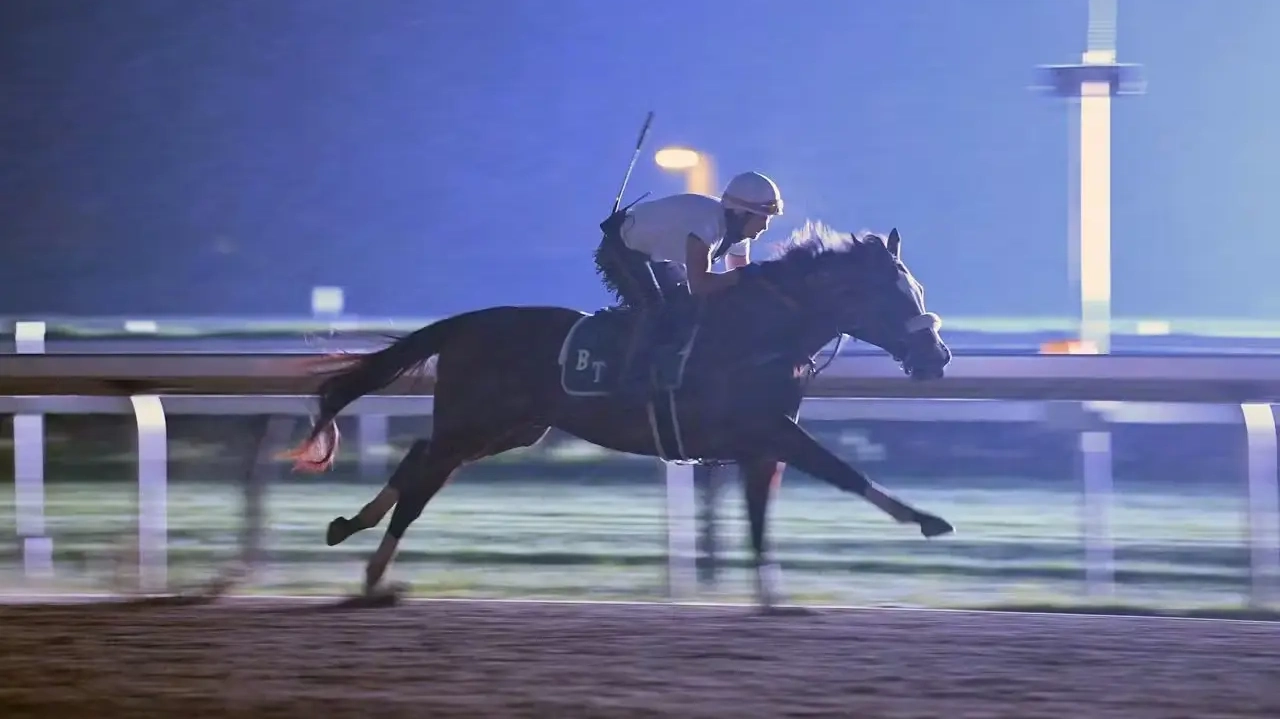
Analyzing the "Work-Tab" becomes the ultimate weapon for any serious handicapper during a weekend without a major Grade 1 prep. While the casual fan waits for the next televised race, the professional scout watches the sunrise at Palm Meadows or Santa Anita. These morning hours reveal the "Mental Engine" of a horse, a psychological profile that past performance lines simply cannot capture.
If you want to master a real Kentucky Derby betting strategy, you must learn to read the silence between the races. The morning workout is not just a physical drill; it is a confession of readiness, intent, and mental maturity from the world’s most elite three-year-olds.

Equine psychology serves as the foundation for scouting successful Kentucky Derby contenders. A horse entering the starting gate at Churchill Downs faces a wall of sound from 150,000 fans, a chaotic 20-horse field, and the pressure of a 10-furlong distance they have never run before. Morning workouts allow us to see how a colt handles these stressors before the money is on the line. Scouts look for "professionalism," a term describing a horse that remains focused despite distractions. When a horse like Ted Noffey steps onto the track, analysts watch his ears. Forward-pointing, alert ears suggest a horse that seeks the finish line with purpose. Conversely, a horse that "washes out" or sweats excessively during a routine gallop signals a high-anxiety mind that may crumble under the Derby’s immense pressure.
Understanding the "Work-Tab" requires you to distinguish between pure speed and strategic conditioning. A "bullet work" occurs when a horse records the fastest time at a specific distance on a given morning. While a bullet work looks impressive to the novice, it often signifies a trainer sharpening a horse’s speed for a shorter sprint. In the context of the 1 1/4-mile classic, a "maintenance work" often carries more weight for those analyzing Kentucky Derby Odds. These drills involve slower, steadier work in which the horse moves comfortably under its own power, without urging from the rider. Maintenance work builds the aerobic foundation and stamina necessary for the "Run for the Roses." Sharp bettors prioritize a horse coming off a series of rhythmic, easy maintenance works over a "speed-ball" that exerts all its energy on a Tuesday morning.
Trainers use these morning sessions to communicate their confidence levels to the betting public, albeit in a coded language. If a trainer sends a horse out for a five-furlong move in 1:01 "breezing," they are telling you the horse is fit and happy. If they "ask" the horse to go in :58 flat, they might be worried about fitness or trying to wake up a sluggish mind. To successfully bet on Kentucky Derby online, you must separate the trainer's intent from the raw numbers. Slow work on a heavy track often provides more fitness than fast work on a "paved" surface. You should always look for the horse that finishes its work with its head low and its stride extending naturally, as this indicates a horse that is not struggling with the distance.
The most profitable horse betting insight in horse racing hides in the seconds after the stopwatch stops. Most fans only look at the timed portion of a workout, but the "gallop-out" tells the real truth. When a horse passes the wire at Santa Anita and continues to accelerate for another two furlongs, it demonstrates "bottom" (the deep stamina reserves required for 10 furlongs). If you spot a longshot on the Kentucky Derby leaderboard like Chip Honcho galloping out past his workmate with ease, you have found a horse peaking at the right time. This "hidden" energy suggests the horse has not yet reached its ceiling. Tracking these gallop-outs at training centers like Palm Meadows allows you to get ahead of the market before the next Kentucky Derby prep races occur.
Scouts often record the gallop-out times for an extra eighth or quarter-mile. If a horse works five furlongs in 1:00 but gallops out six furlongs in 1:12 and seven furlongs in 1:25, that horse possesses elite lung capacity.
This data point often separates the winners from the also-rans in Kentucky Derby betting. During the chaotic final quarter-mile at Churchill Downs, the horses with the best gallop-out figures in April are usually the ones passing tiring rivals in May. You want to see a horse that "wants" to keep running even after the rider tries to pull them up. This desire to compete is the hallmark of a champion.
Geographic scouting provides a massive edge when you bet on Kentucky Derby online. The deeper, sandier surface at Palm Meadows often produces "slower" times that mask a horse's true fitness. A horse that looks "average" on the clock in Florida might actually be a monster waiting to explode on the Churchill Downs dirt. Meanwhile, at Santa Anita, the tighter, faster surface can inflate speed figures. To find value in Kentucky Derby betting, look for the "under-the-radar" worker who handles a heavy track with a fluid, effortless stride. If a trainer like Todd Pletcher or Brad Cox has a horse "skimming the surface" during a morning gallop, that horse is likely ready to jump up in class and outrun its current price.
Consider the humidity and temperature at these locations as well. A horse that works brilliantly in the cool morning air of Arcadia, California, might react differently to the muggy conditions of a Kentucky spring. Professionals cross-reference workout times with "track variants" to see how the surface was playing on a specific day. If the track was "dead" and slow, but a horse still produced a maintenance work that looked effortless, you have identified a top-tier athlete. These nuances are what drive fluctuations in Kentucky Derby Odds weeks before the race.
The Kentucky Derby leaderboard acts as a map, but the morning works provide the compass. Currently, the top-tier horses hold the most points, but points do not equal performance. By cross-referencing the leaderboard with recent work patterns, you can identify "fragile" favorites. If a high-point horse shows a string of erratic, slow works, it may be regressing or dealing with minor physical issues. Conversely, a horse lower on the list might be showing "powerhouse" morning drills that suggest a massive performance is coming in their next start. This synthesis of data and visual scouting is how professionals dominate the Kentucky Derby futures markets.
You must treat the leaderboard as a dynamic document. A horse might sit at 20th place today but show a workout tomorrow that suggests they belong in the top five. Sharp bettors use these "gap" moments to place wagers on Kentucky Derby futures before the odds adjust to the new reality. If the "Work-Tab" shows a horse is thriving, the points will eventually follow. Your job is to anticipate the point gain by watching the morning preparation. This proactive strategy puts you ahead of 90% of the betting public who only react to race results.
Success in this game requires an active voice and a proactive mindset. Do not wait for the "experts" to tell you who is working well. Access the workout videos provided by major racing platforms and watch the "path" of the horse. Are the rider’s hands quiet, or are they "scrubbing" to keep up? A horse that moves under "dead-aim," meaning it is focused and straight without drifting, possesses the mental maturity to navigate traffic. When you evaluate Kentucky Derby contenders, ignore the hype and trust your eyes. A horse that enjoys its work will always outperform a horse that struggles against its rider.
Observe the horse’s body language during the "post-parade" of the morning work. Does the horse stand calmly while the rider adjusts the girth, or is it dancing and wasting energy? The "Mental Engine" requires efficiency. Every ounce of energy spent acting up in the morning is energy unavailable for the final stretch of the Derby. We look for "controlled aggression" (a horse that is eager to run but remains under the total control of the jockey). This level of communication between horse and rider is essential for navigating the traffic of a 20-horse field in the Kentucky Derby prep races.
The window to lock in massive value on Kentucky Derby Odds is closing as we approach the major 100-point prep races. Currently, you can find quality mid-tier horses at prices that will vanish the moment they win a major race. By focusing on the morning "Work-Tab" today, you are essentially buying stock in a company before it goes public. The goal of Kentucky Derby betting is to be "right and early." If you wait until May to place your wagers, you are settling for crumbs. Use the quiet weekends to study the psychology and physical development of these athletes, and you will find yourself holding a winning ticket while others are still guessing.
Betting markets are notoriously reactive. A single fast workout can slash a horse's odds from 30/1 to 15/1 in a matter of hours. By monitoring the "Work-Tab" daily, you can place your bets on Kentucky Derby futures the moment a horse shows an elite move. This "clocker-first" approach ensures you always get the best number. High-volume bettors know that price is just as important as the winner; getting 20/1 on a horse that should be 8/1 is the fastest way to long-term profitability in horse racing.

Race day is full of variables: bad breaks, track bias, and jockey errors. Morning workouts represent the horse in its purest form. This is where the trainer experiments with equipment like "blinkers" to improve focus or "shadow rolls" to keep a horse's head down. Watching how a horse reacts to these changes gives you a direct line into the trainer's strategy. When you participate in Kentucky Derby betting, you aren't just betting on a horse; you are betting on a preparation process. A horse with a "consistent, ascending" work pattern, where each drill is slightly better than the last, is a horse on a trajectory toward the winner’s circle.
The "afternoon hype" often focuses on flashy wins in small fields. However, the morning "truth" reveals if a horse is actually improving or simply beating inferior competition. We look for "hidden" improvement—a horse that finished fourth in its last race but just turned in a "best of 50" workout. That horse is a prime candidate for an upset in the next round of Kentucky Derby prep races. By ignoring the surface-level narratives and focusing on the underlying physical data, you insulate yourself from the emotional traps that catch most casual bettors.
To win big, you must identify the "diamond in the rough" among the Kentucky Derby contenders. Keep a close watch on horses training at secondary tracks or those coming off layoffs. Sometimes, a "bad" race on paper hides a "great" workout in reality. If a longshot is showing "rocket-ship" gallop-outs in private, the public's lack of interest becomes your greatest asset. The "Mental Engine" of a horse is either firing on all cylinders or struggling to stay in gear. By the time the gates open at Churchill Downs, the horses have already told us who is ready to win; you just have to be awake early enough to hear them.
Remember that Kentucky Derby Odds are a reflection of public opinion, not necessarily reality. The public loves a winner, but the professional loves a "good worker." If you find a horse with a perfect "Mental Engine" and a string of rhythmic maintenance works, you have found your Derby horse. Trust the process, track the "Work-Tab," and keep your eyes on the gallop-out. The riches of the First Saturday in May are won in the cold mornings of March and April.
The road to the winner's circle starts with a single click. Now that you understand how to decode the "Mental Engine" and read the "Work-Tab" like a professional scout, it is time to put that knowledge into action. Don't let the best Kentucky Derby Odds pass you by while the "smart money" is already locking in their positions. Whether you are backing the favorite or hunting for a 50/1 miracle, the data you need is at your fingertips.
Stay tuned to US Racing to access exclusive clocker reports, deep-dive analytics, and real-time updates on the Kentucky Derby leaderboard. Secure your account now and prepare to dominate the most exciting two minutes in sports with the confidence of a professional insider.

The writing team at US Racing is comprised of both full-time and part-time contributors with expertise in various aspects of the Sport of Kings.