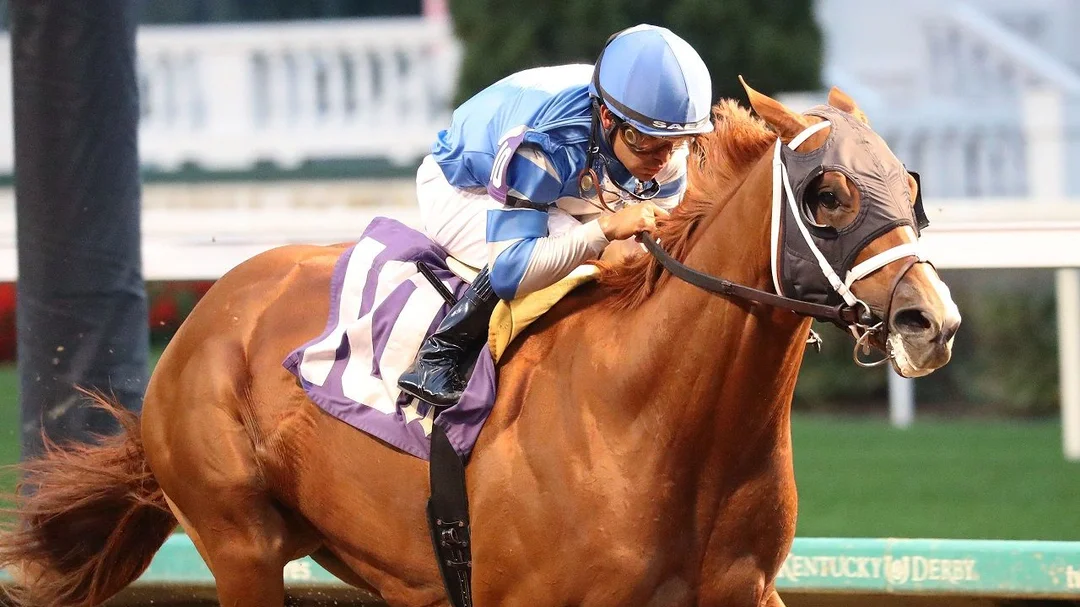
The road to the First Saturday in May begins long before the starting gate snaps open at Churchill Downs. For the astute gambler, the journey starts in the breeding sheds of Lexington, Kentucky. Currently, the industry is buzzing about Further Ado, a striking son of the legendary sire Gun Runner. This hype isn't just about speed figures or visual impressions in early maiden scores. It centers on a biological "ghost" that haunts the betting markets: the power of prepotent genetics.
When you look at the current Kentucky Derby Odds, you aren't just betting on a horse; you are betting on a lineage. Gun Runner has revolutionized the "January Stallion" concept, producing offspring that reach physical maturity months ahead of their peers. This early development creates a "genetic trap" for the unwary bettor who fails to distinguish between precocity and true classic distance capacity.

In the modern era of Kentucky Derby betting, certain sires dominate the early prep cycle with ruthless efficiency. We refer to these as "January Stallions." Sires such as Gun Runner and Into Mischief possess a genetic advantage that allows their foals to handle high-intensity racing as early as three-year-olds. These horses often look like Greek gods in the paddock while their rivals still resemble awkward teenagers. Because they mature so fast, they rack up points on the Kentucky Derby leaderboard during the winter months. However, this early dominance often inflates their perceived value. The betting public falls in love with the five-length winner of a mile prep in January, driving the price down to an unprofitable level. You must ask yourself: has this horse reached his ceiling while others are just finding their legs?
The fundamental challenge of the Derby is the jump from the 1 1/16-mile Kentucky Derby prep races to the grueling 1 1/4-mile "Classic" distance. History proves that many early winners are essentially "milers" masquerading as stayers. If a horse is sired by a brilliant sprinter-influencer, he might win on sheer talent at shorter distances. But when the oxygen debt kicks in at the top of the Churchill Downs stretch, genetics takes over. This is where "The Gun Runner Ghost" becomes a cautionary tale. While Gun Runner himself was a world-beater at classic distances, he often injects so much raw speed into his foals that they burn too much fuel early. Identifying which Kentucky Derby contenders possess the lung capacity to sustain that speed is the difference between a winning ticket and a losing one.
Professional handicappers utilize a mathematical tool known as the Dosage Index (DI) to quantify a horse's genetic potential for distance. Developed by Dr. Franco Varola and refined by Steven Roman, the DI analyzes the "Chef-de-Race" influences in a pedigree. A lower number (typically below 3.00) suggests a higher aptitude for staying the 1 1/4-mile trip.
Conversely, a high DI indicates a greater emphasis on speed over stamina. When you analyze Kentucky Derby futures, the Dosage Index acts as a filter. If Further Ado or any other "hype horse" shows a DI of 4.00 or higher, history suggests they will struggle when the distance moves to 1 1/8 miles in February and beyond. You are essentially looking for the "stamina anchor" in the second and third generations of the pedigree.
While the "January Stallions" grab the headlines, the "Late Bloomers" provide the true betting value. Sires like Tapit or Curlin often produce horses that require more time to coordinate their massive frames. These horses might finish third or fourth in early winter preps, appearing "slow" to the casual observer. However, their genetic ceiling is much higher. As the distances increase, these stayers begin to pass the tired "speed" horses. Savvy gamblers look for these "hidden" Kentucky Derby contenders who are bred to thrive at 10 furlongs. While the public chases the flashy winners of January, you should be hunting for the closer who finished strongly at a mile and is screaming for more ground.
A horse’s phenotype (its physical appearance) must match its genotype. Fast-maturing horses often exhibit a "finished" look early in the season, with deep shoulders and heavily muscled hindquarters. While impressive, this often indicates a horse that has already utilized most of its growth potential. In contrast, the classic Derby winner often looks "leggy" or slightly unrefined in January.
The Horse Racing Analysts look for the horse that grows into its frame between February and April. If you bet on Kentucky Derby prospects, avoid the "bulky" types who look like they belong in a sprint. The Derby demands a high power-to-weight ratio and efficient mechanics that can only be sustained by a specific genetic makeup.
The most profitable move in Kentucky Derby betting is "fading" the early winner with a sprinter’s pedigree. In February, the prep races transition to 1 1/8 miles (9 furlongs). This extra sixteenth of a mile acts as a "talent filter." Horses sired by pure speed influences like Speightstown or Munnings often hit a wall here. They may lead for the first six furlongs, but their stride frequency collapses in the final stages. By identifying these "distance-limited" winners early, you can find massive overlays on horses with "Classic" pedigrees. Don't let a flashy win in a January stakes race blind you to the reality of the 1 1/4-mile requirement.
Data doesn't lie. Over the last two decades, nearly 80% of Derby winners have come from a handful of sire lines that emphasize stamina. Even in the era of "speed-favoring" tracks, the final quarter-mile of the Derby is almost always the slowest. This means the winner isn't necessarily the fastest horse; it is the horse that slows down the least. When evaluating Kentucky Derby futures, prioritize horses whose grand-sires include names like A.P. Indy, Unbridled, or Galileo. These lines provide the "foundation" necessary to survive the 20-horse cavalry charge. If the top of the pedigree looks like a list of Breeders' Cup Sprint winners, proceed with extreme caution.
Further Ado serves as the perfect case study for this season. As a son of Gun Runner, he possesses undeniable brilliance. However, his maternal line features a heavy influence of European turf speed. This "nick" (the cross between sire and dam) suggests a horse that might be more comfortable at a mile or 1 1/16 miles.
If he wins a major prep in dominant fashion, his Kentucky Derby Odds will plummet. This creates a "value vacuum" for other horses in the field. As a specialist, I advise you to watch his energy levels in the gallop-out after the wire. If he is being eased up immediately while others are still running, he is likely a "January Stallion" who will fade when the real running starts in May.

To dominate the pools this year, you must build a "Pedigree Profile" for every horse on the Kentucky Derby leaderboard:
If both sides of the family tree point to sprinting, you have a prime candidate to fade. This disciplined approach removes the emotion from betting and replaces it with cold, hard biological facts.
Timing is everything when you bet on Kentucky Derby markets. The "Futures Pools" offered by Churchill Downs provide a window into the public's mind. Often, the best time to bet on a "Late Bloomer" is after they lose a race they weren't meant to win. If a Tapit colt finishes third in a speed-favoring 7-furlong race, his price might drift to 50-1. That is the moment to strike. Conversely, the "January Stallions" are usually at their lowest price after their first big win. Professional bettors rarely take 5-1 in January on a horse that still has to prove it can go 10 furlongs. We wait for the "Pedigree Pivot" to occur in late March when the pretenders are exposed.
The "Gun Runner Ghost" isn't a myth; it's a measurable biological reality that dictates how the Triple Crown season unfolds. Understanding that some horses are genetically programmed to peak early allows you to navigate the hype with a clear head. The Kentucky Derby is a test of endurance, lung capacity, and mental fortitude—traits that are passed down through generations. By focusing on the Dosage Index, physical maturity, and sire-line stamina, you position yourself to cash in when the "early bloomers" wilt under the pressure of the classic distance. Don't be fooled by the flashes of January; look for the substance that lasts until May.
Are you ready to turn pedigree knowledge into profit? The Kentucky Derby prep races are heating up, and the odds are moving every day. Information is the most valuable currency in horse racing. Don't leave your bankroll to chance; use the genetic blueprints we've discussed to outsmart the public.
Stay tuned to US Racing today to get exclusive Dosage Index breakdowns, trainer insights, and real-time alerts on the best value plays in the Kentucky Derby Odds markets. The road to Churchill Downs is paved with data; make sure you're the one holding the map. Join us now and start winning before the first gate opens.

The writing team at US Racing is comprised of both full-time and part-time contributors with expertise in various aspects of the Sport of Kings.