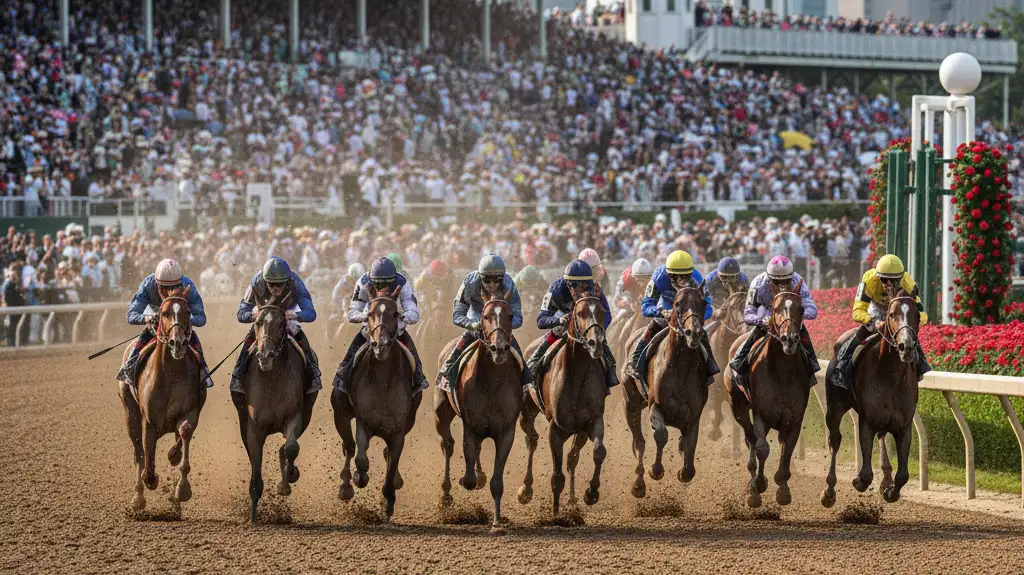
The first Saturday in May represents more than just a horse race; it stands as a massive psychological experiment for millions of bettors worldwide. While seasoned handicappers spend months dissecting the Kentucky Derby leaderboard, the general public often arrives at the betting windows during the final 48 hours, armed only with recent headlines and emotional biases. This influx of "casual money" creates a unique market environment where Kentucky Derby Odds often drift far away from a horse's actual probability of winning. Understanding the tension between logic and hype allows sharp players to capitalize on the inflated prices of overlooked runners.
The Power of Recency Bias in the Run for the Roses
Recency bias acts as the most dominant force in the Churchill Downs wagering pools. Bettors naturally place excessive weight on the most recent Kentucky Derby prep races, often ignoring the total body of work a horse has compiled over its two and three-year-old seasons. If a contender wins the Florida Derby or the Santa Anita Derby by five lengths in April, the public immediately crowns them the "horse to beat." This collective memory of a singular, dominant performance drives the price down, frequently turning a fair 5-1 shot into an under-lay at 2-1 or 5-2.
Psychologically, the human brain seeks patterns and safety. Winning a major prep race provides a "safety signal" to the bettor. However, data from the last 20 years proves that the most impressive prep winner rarely finds the same easy trip in a 20-horse Derby field. You must look past the "wow factor" of the last race and evaluate how that performance affected the horse’s energy reserves. Often, a horse that finished a gritty third in a fast-paced prep race offers significantly better value than the flashy winner that the public over-bets.
Tracking the Kentucky Derby Leaderboard and Public Hype
The introduction of the points system changed the landscape of Kentucky Derby betting. Now, fans track the Kentucky Derby leaderboard like a stock market ticker. This transparency creates a "prestige bias" where horses at the top of the list receive disproportionate attention. Bettors assume that a high point total equates to a higher win probability, which is not always a statistical reality. Points only measure past success in specific qualifying races; they do not account for a horse's ceiling or its ability to handle the unique 10-furlong distance at Churchill Downs.
As we analyze the current Kentucky Derby contenders, we see a clear trend: the "talking horses" of the spring dominate the social media landscape. When trainers and analysts praise a specific colt's morning workouts, the betting public reacts instantly. This creates a feedback loop that shortens the odds on horses with high visibility. Smart players counter this by looking for "quiet" horses—those who qualified safely but haven't been the subject of a viral workout video. These horses often retain their value while the hype-train runners see their odds slashed by half.
Analyzing Market Efficiency and Kentucky Derby Odds Movement
The pari-mutuel system means you are not betting against the "house," but against other bettors. This makes the Kentucky Derby Odds a direct reflection of public sentiment. In a typical race, the favorite wins about 33% of the time. However, the Kentucky Derby features a 20-horse field, the largest in North American racing, which introduces massive variance. Despite this, the betting public often hammers the favorite as if it were a five-horse stakes race.
When you bet on Kentucky Derby markets, you must watch the "totes" or the live odds movement on race day. Late money—money that enters the pool in the final 20 minutes before post time—usually comes from professional syndicates and high-volume bettors. If you see a horse's odds drop from 12-1 to 8-1 in the final minutes, it signals that the "smart money" has identified a value proposition. Conversely, if a favorite remains at low odds despite a large pool, it indicates a "public favorite" that lacks the backing of the professional gambling community.
Leveraging Kentucky Derby Futures for Maximum Value
One of the most effective ways to combat race-day psychological traps is to engage with Kentucky Derby futures. These wagering pools, offered months in advance, allow you to lock in prices that will likely never be seen again. For example, a horse that eventually wins the Blue Grass Stakes might be available at 40-1 in the February futures pool. By the time it reaches Churchill Downs, those odds might drop to 6-1.
A successful Kentucky Derby betting strategy requires a long-term perspective. By spreading small bets across several high-potential Kentucky Derby contenders during the winter months, you build a portfolio of "value" that protects you from the emotional volatility of Derby weekend. The goal is to hold a ticket with double-digit odds on a horse that the public has suddenly realized is a top-tier threat. While you risk the horse not making the starting gate, the payout potential far outweighs the static returns of betting on race day.
The "Favorite's Curse" and the Search for Value
From 2013 to 2018, the betting favorite won the Kentucky Derby six consecutive times, a historical anomaly that reinforced a dangerous psychological trend. Bettors began to believe that the "best horse" always wins. However, the years following that streak (including the 80-1 shocker by Rich Strike in 2022) reminded the world that chaos is the true king of the Derby. This "Favorite's Curse" (or the reversion to the mean) suggests that the public frequently overestimates the gap between the top-ranked horse and the rest of the field.
In a 20-horse field, the "best horse" often gets trapped behind a wall of tired runners or forced wide on the final turn. Kentucky Derby betting should prioritize horses that possess tactical speed—the ability to sit just behind the leaders and pounce. The public often bets on "deep closers" who look spectacular when they pass horses at the end of a prep race. However, those same closers frequently find themselves 18th in a 20-horse field with no path to victory. Avoiding the public's fascination with "come-from-behind" stories can lead you to the mid-priced stalkers who actually win the race.
Identifying Value Through Kentucky Derby Prep Races
To find the winners that the public misses, you must go back to the film of the Kentucky Derby prep races. Don't just look at the result; look at the "trip." Did a horse have to check sharply at the start? Did it run four-wide on both turns? A horse that finishes 4th after a nightmare trip in the Arkansas Derby is often a much better bet than the winner who had a perfect, uncontested lead.
The betting public rarely does this level of homework. They see the "1" in the program and bet accordingly. By identifying a horse that showed immense talent despite a poor finishing position in a prep race, you uncover "hidden form." This is how you find the 20-1 or 30-1 shots that spice up the trifecta and superfecta payouts. Kentucky Derby betting is ultimately a game of information asymmetry; you win when you know something the general public refuses to see.
Mastering Your Betting Psychology
Victory at the windows on Derby Day requires you to master your own emotions while exploiting the biases of the crowd. Stop chasing the horses everyone is talking about on social media and start looking for the athletes whose blueprints for success are written in the data, not the headlines. The biggest payouts don't come to those who follow the herd; they go to the disciplined analysts who wait for the market to overreact.
Are you ready to turn your horse racing knowledge into a massive payday? Don't wait for the crowds to push the prices down. Stay tuned to the US Racing premium racing portal today to get exclusive access to expert speed figures, trainer insights, and real-time odds analysis that the public simply doesn't have. Join thousands of winning horseplayers and secure your edge for the next Run for the Roses.
The writing team at US Racing is comprised of both full-time and part-time contributors with expertise in various aspects of the Sport of Kings.