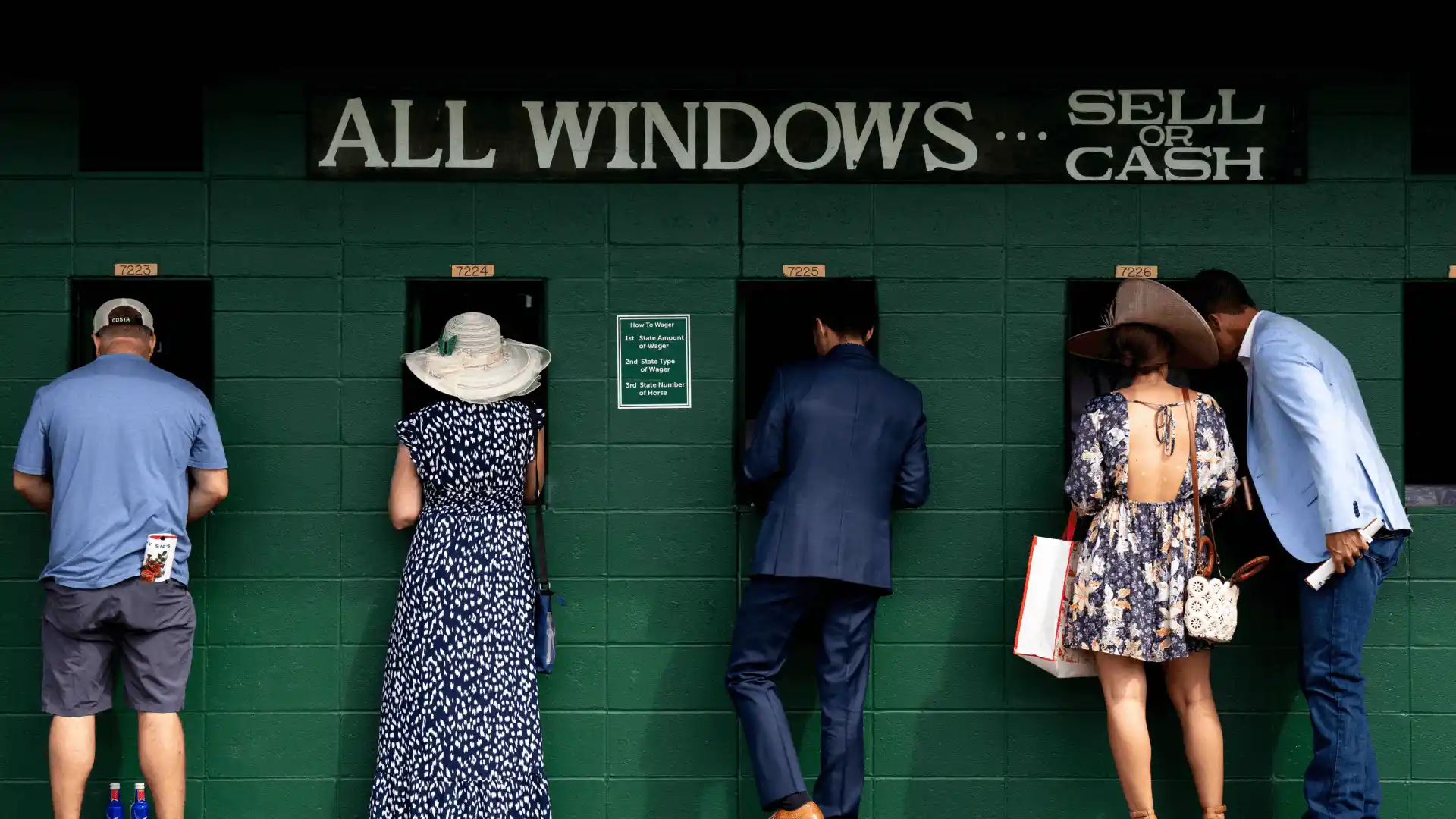
This analysis on securing value in the Kentucky Derby futures market will provide you with the insight needed to stop throwing away your bankroll on predictable mistakes.
We are about to share an in-depth look at the earliest and most costly errors that futures bettors commit every season. As our US Racing specialist covering the road to the Derby, we watch countless handicappers fall for the same illusions year after year, guaranteeing that the best value slips right through their fingers. The objective here is simple: to equip you with the analytical tools to avoid the amateur traps, capitalize on the public’s ignorance, and secure profitable Kentucky Derby Odds now.
Quick Tip: Before you check the upcoming information, boost your bankroll with the top new-player bonus.

The public consistently makes the costly mistake of overvaluing the winner of the previous year's Breeders' Cup Juvenile, allowing its perceived dominance to inflate its Kentucky Derby Odds throughout the winter artificially. Bettors treat this race as the definitive answer to the question of the 2-year-old champion, ignoring the critical fact that the Juvenile tests a different skill set than the 1 1/4 mile grind at Churchill Downs six months later.
We must understand that the Juvenile is a sprint on a young horse's calendar, not a blueprint for stamina. Historically, only a handful of Juvenile winners (Street Sense in 2007 and Nyquist in 2016 stand out as recent examples) successfully navigated the immense physical and mental challenges required to capture the Run for the Roses.
The tremendous pressure and hype surrounding this horse guarantee that it sells at a depressed price in the earliest future pools. Savvy players recognize that the emotional betting generated by the Juvenile winner suppresses the actual value of later-developing Kentucky Derby contenders who show better stamina pedigrees and superior progression patterns in the new year. Never pay a premium for a crown a horse won as a juvenile; instead, wait for that champion to prove its conditioning as a three-year-old stretching out to greater distances.
A fundamental error in early Kentucky Derby betting revolves around a failure to properly vet a horse's genetic suitability for the grueling 1 1/4-mile distance, which is often called ten furlongs. Many bettors focus exclusively on the fast speed figures a colt achieves in a mile or 1 1/16-mile races, disregarding the immense stamina demand that the Derby imposes.
We always need to look past a horse’s flashy juvenile wins and delve deep into its pedigree, paying particular attention to the broodmare sire, the maternal grandfather. Top-tier analysts know that a strong bottom side of the pedigree, featuring stamina-rich sires like A.P. Indy, can often override a faster, more speed-oriented sire line. If a horse’s dam produced only sprinters or if its sire line struggled to produce distance runners, you must view that horse with extreme skepticism, regardless of its early speed figures or prep race success.
You place your bet on Kentucky Derby contenders only after confirming that they possess the necessary genetic foundation to handle the last, most crucial quarter-mile of the race, which consistently separates the genuine champion from the pretenders.
Many newcomers to Kentucky Derby futures betting place undue weight on the early point-earning races, mistakenly believing that horses accumulating small amounts of points in November or January possess a significant advantage. The modern Derby qualification system heavily weights the final major prep races, those held in April offering 100, 50, 20, and 10 points to the top four finishers.
This structure renders the points earned in the earliest, lower-tier races virtually irrelevant in securing one of the twenty starting gates. Smart bettors recognize that the only true value in the Kentucky Derby leaderboard comes from analyzing which horses are peaking during the late-season 100-point races, not who topped the list in December. The focus should not be on a horse accumulating 10 points in a minor stake; instead, you must concentrate on the quality of competition a horse faces and its margin of victory in a 50 or 100-point race.
Early point accumulation often signals an overly ambitious training schedule, a common mistake trainers make, leading to a burnt-out horse by May. Therefore, avoid wagering heavily on any horse whose trainer forces it to chase early points just to appear on the Kentucky Derby leaderboard months before it actually matters.
Bettors frequently make the mistake of chasing "buzz" horses, those colts that generate extraordinary hype through one spectacular workout or an easy win against weak competition, thereby paying overinflated Kentucky Derby Odds for unproven quality.
This error stems from a psychological need to feel like they are "in on the secret." True value in bet on Kentucky Derby markets lies in horses that demonstrate consistent, quiet progression, often overlooked by the mainstream media and casual bettors.
For example, a futures pool favorite at 8-1 might possess the same ultimate chance of winning as a horse at 30-1, but the hype machine artificially compresses the favorite's price. Savvy analysts understand that you must look for the "under the radar" horse that records respectable, but not spectacular, finishes in major Kentucky Derby prep races and demonstrates consistent improvement in speed figures, not massive spikes.
By filtering out the noise and focusing on verifiable, objective data, such as sustained, high-quality morning workouts and steady fractional times, you avoid the trap of betting on narratives and secure much better prices on eventual champions.
A common futures mistake is ignoring the overall conditioning arc and required spacing of the Kentucky Derby prep races a horse runs. The modern Derby winner requires a minimum of three starts as a three-year-old, with the final prep race ideally taking place four to five weeks before the Derby itself.
When placing your Kentucky Derby betting wagers, you must scrutinize a horse’s schedule; horses running their final major prep just two or three weeks before the Derby (a classic "bounce" setup) often regress on the first Saturday in May. Furthermore, a horse needs to prove it can successfully stretch its speed around two turns, typically by winning a major Grade 1 or Grade 2 race at 1 1/8 miles.
Bettors who place futures wagers on horses that skip a major prep or show a significant regression in their final outing commit a major blunder. You need to see a horse finish strongly in a 1 1/8-mile race, demonstrating that vital closing ability required for the final furlongs. Never back a horse in the Kentucky Derby futures market that fails to demonstrate both the physical toughness of a dense schedule and the finishing power needed to dominate its peers in a long stretch duel.
| Rank | Horse | Pts | Trainer | Earnings * |
|---|---|---|---|---|
| 1 | Commandment | 150 | Brad Cox | $943,020 |
| 2 | Further Ado | 135 | Brad Cox | $1,068,095 |
| 3 | Renegade | 125 | Todd Pletcher | $1,002,500 |
| 4 | So Happy | 115 | Mark Glatt | $444,000 |
| 5 | Fulleffort | 110 | Brad Cox | $507,900 |
| 6 | The Puma | 106 | Gustavo Delgado | $428,000 |
| 7 | Silent Tactic | 100 | Mark Casse | $1,020,130 |
| 8 | Emerging Market | 100 | Chad Brown | $600,000 |
| 9 | Albus | 100 | Riley Mott | $400,000 |
| 10 | Potente | 100 | Bob Baffert | $220,000 |
| 11 | Pavlovian | 70 | Doug O'Neill | $527,000 |
| 12 | Right to Party $ | 65 | Kenny McPeek | $176,000 |
| 13 | Incredibolt | 60 | Riley Mott | $424,570 |
| 14 | Golden Tempo | 60 | Cherie DeVaux | $300,000 |
| 15 | Ottinho | 56 | Chad Brown | $267,750 |
| 16 | Class President | 50 | Todd Pletcher | $569,700 |
| 17 | Stark Contrast | 50 | Michael McCarthy | $439,900 |
| 18 | Danon Bourbon (JPN) | Japan RTKD | Manabu Ikezoe | $222,762 |
| 19 | Wonder Dean (JPN) | Intl. RTKD | Daisuke Takayanagi | $725,172 |
| 20 | Six Speed (UAE) | Intl. RTKD | Bhupat Seemar | $314,366 |
| 21 | Iron Honor | 50 | Chad Brown | $182,500 |
| 22 | Chief Wallabee | 50 | Bill Mott | $175,800 |
| 23 | Chip Honcho | 49 | Steve Asmussen | $190,000 |
| 24 | Intrepido | 38 | Jeff Mullins | $290,000 |
| 25 | Universe | 38 | Kenny McPeek | $244,650 |
| 26 | Grittiness | 36 | Todd Pletcher | $150,000 |
| 27 | Nearly | 35 | Todd Pletcher | $220,450 |
| 28 | Bravaro | 35 | Saffie Joseph Jr. | $118,700 |
| 29 | Litmus Test | 34 | Bob Baffert | $429,688 |
| 30 | Talkin | 30 | Danny Gargan | $233,625 |
| 31 | Great White | 30 | John Ennis | $144,003 |
| 32 | Napoleon Solo | 25 | Chad Summers | $316,520 |
| 33 | Ocelli | 25 | Whit Beckman | $80,200 |
| — | Vitruvian Man + | 25 | Doug O'Neill | $60,000 |
| 35 | Confessional | 15 | Brad Cox | $55,000 |
| * Non-restricted earnings | + Not nominated to the Triple Crown | $ Paid $6,000 late-nomination fee | ||||
Last Updated on 04/17/2026
Expert Kentucky Derby futures players never fail to account for the historical success and specific patterns of the training and riding teams. Different experienced Kentucky Derby trainers employ vastly different approaches to the Derby trail; for instance, a trainer like Todd Pletcher often sends out numerous Kentucky Derby contenders but may employ a distinct strategy for his most promising runner.
You must identify which trainers consistently peak their horses on the first Saturday in May, and whose horses typically regress after an intense final prep. Similarly, a high-percentage jockey’s commitment to a specific horse often signals supreme confidence from the barn.
Beyond human factors, you must consider the track bias of a horse’s most impressive wins. If a colt won a major prep over a speed-favoring track where the rail was golden, its performance may be artificially inflated. As analysts, we adjust for track conditions and prefer horses that show versatility, winning on different surfaces or closing from off the pace. The betting public often takes performances at face value, creating an opportunity for you to secure better Kentucky Derby Odds on horses whose wins look less spectacular but possess far more merit when you adjust for track bias and conditions.

The ultimate mistake made by early futures bettors involves mismanaging their bankroll and refusing to hedge potential outcomes as the season progresses. Futures betting is about securing a high price on a horse whose chance of running improves over time. However, many bettors load up on one or two horses in the fall and then stick with those wagers, even when those horses suffer setbacks, get injured, or fail to progress. This "all-or-nothing" approach is financially destructive.
Competent money managers recognize that they should spread their exposure across four or five high-value colts to create a diversified portfolio. As the major Kentucky Derby prep races conclude and the field tightens, you can then selectively hedge your strongest remaining futures tickets by betting against them at lower odds, thereby locking in a profit regardless of the outcome. For example, if you snagged a horse at 100-1 and its race-day odds settle at 15-1, you can bet on Kentucky Derby opponents to cover your initial outlay and guarantee a positive return. Always view your futures tickets as investments that require constant re-evaluation and strategic hedging to maximize profit potential, not lottery tickets to hold blindly until May.
Now you command the analytical framework of a seasoned professional. You recognize that the path to success in Kentucky Derby futures betting lies not in chasing headlines, but in respecting pedigree, understanding the nuanced point system, and maintaining bankroll discipline. These are the crucial disciplines that separate the serious player from the casual bettor who consistently wastes value.
Don't miss another chance to capture the best possible Kentucky Derby Odds! Stop falling for the same old illusions and start making sharp, informed decisions based on expert analysis. Your path to profitability begins right here. Stay tuned to US Racing to access our exclusive, deep-dive analysis, personalized futures picks, and real-time updates on all the Kentucky Derby contenders as they make their final push to the Run for the Roses.

The writing team at US Racing is comprised of both full-time and part-time contributors with expertise in various aspects of the Sport of Kings.