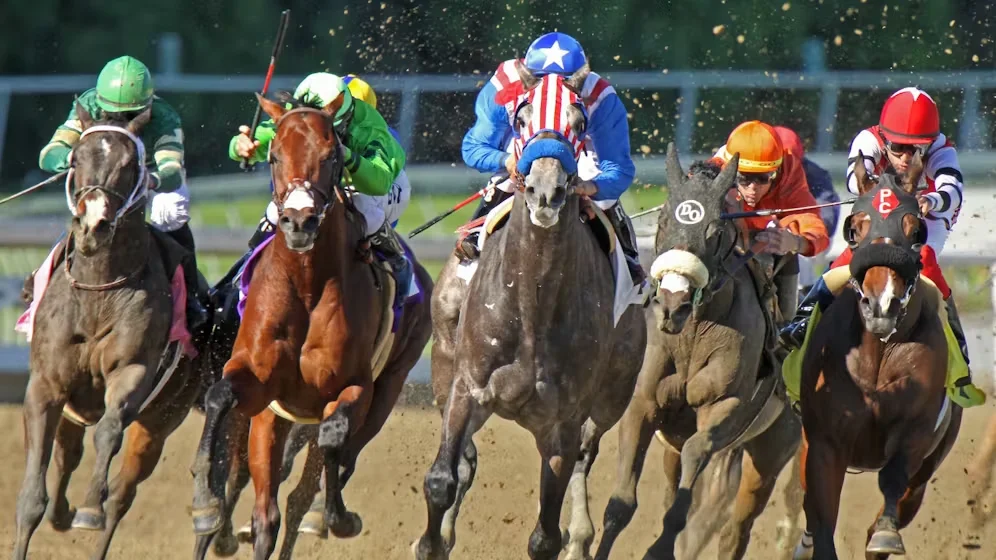
Sharp horseplayers understand that the Kentucky Derby represents more than just a test of stamina; it serves as a mathematical puzzle where seconds and fifths of a second dictate the outcome. To master Kentucky Derby betting, you must look beyond the win-loss column and dissect the internal clock of every contender.
Fractional times, the snapshots of a horse's speed at the quarter-mile, half-mile, and three-quarter-mile marks, expose the true talent hidden beneath the surface. While the casual fan focuses on the finishing position, the professional analyst scrutinizes how a horse achieved that position. Rising stars often reveal their potential through "hidden" fractions, where they overcome a blistering opening pace or sustain a punishing middle move that leaves rivals gasping. Analyzing these numbers allows you to identify which horses possess the lung capacity and tactical gear-shifting necessary to conquer the 1.25-mile distance at Churchill Downs.

The opening quarter-mile of any race on the Kentucky Derby leaderboard tells a story of intent and energy expenditure. We often see front-runners "gun" the start, posting sub-23-second opening quarters that effectively end their chances before the backstretch. History shows us that horses who win the Derby rarely lead at the first call if the pace exceeds a certain threshold of intensity.
You need to identify the "efficient" speed horses that can position themselves near the front without overextending their internal batteries. When you check the Kentucky Derby Odds, look for those runners who consistently post "even" fractions in their prep races. A horse that runs a :23.2 opening quarter and follows it with a :23.4 second quarter displays a level of cardiovascular efficiency that translates perfectly to the classic distance. These efficient movers often provide the best value in the early wagering pools because they lack the flashy "gate speed" that attracts public money but possess the sustainable energy required for the long haul.
The middle half-mile, or the "turn-time," acts as the separator between pretenders and true Kentucky Derby contenders. This segment covers the run from the quarter-mile pole to the half-mile pole, and again to the three-quarter pole, where the real jockeying for position occurs. Data analysts focus on the "internal" half-mile because it highlights a horse's ability to accelerate while under pressure from the field. A rising star often makes a "winning move" on the far turn of a prep race, and the fractional time of that specific quarter-mile reveals if the effort was sustainable or a desperate sprint. If a horse records a sub-24-second third quarter while wide on a turn, you have found a runner with immense "wind." This metric proves vital when you bet on Kentucky Derby entries because the Churchill Downs surface demands a high cruising speed that doesn't falter when the real running begins at the top of the stretch.
One of the most reliable indicators in modern handicapping is the "Final Fractions Theory," which suggests that a Derby winner must finish their final prep race's last quarter-mile in 25 seconds or less. We call this the "closing kick," and it remains the gold standard for evaluating rising stars. When you analyze Kentucky Derby prep races like the Florida Derby or the Santa Anita Derby, pay close attention to the final 440 yards. A horse that wins while "crawling" home in 26.2 seconds often struggles when they add the extra furlong at Churchill Downs.
Conversely, a runner like Sovereignty or Journalism, who powers through the wire in :24.4, signals that their gas tank remains half-full. This specific fractional data point helps you filter the Kentucky Derby leaderboard to identify closers with the speed to pass tired leaders, rather than merely inheriting positions from collapsing front-runners.
You cannot analyze fractional times in a vacuum without considering the specific track where the horse recorded those numbers. Every racing surface possesses its own "speed" or "heaviness," which artificially inflates or deflates the raw times. For instance, a :47.2 half-mile at Gulfstream Park might actually be slower than a :48.1 at a deeper, more demanding track like Aqueduct or Oaklawn Park.
Professional Kentucky Derby betting requires you to adjust these times based on daily track variants. A rising star might look slow on paper, but a deeper dive into the "feet per second" velocity reveals they were actually working harder against a "dead" rail or a tiring surface. When you compare different Kentucky Derby contenders, always normalize their fractions against the track average for that specific day to ensure you are comparing apples to apples.
Incredible speed figures in February or March often lead to a "bounce" or a performance regression in May. If a young horse runs the fastest fractional times of their career in a final prep, they might have left their best race on the training track. This is where Kentucky Derby futures betting becomes a game of psychological and physical evaluation.
You want to see "progressive" fractional improvement, a horse that gets slightly faster and more efficient with every start. A significant speed increase, particularly in the middle fractions, suggests peak performance that is difficult to replicate three weeks later. Smart bettors look for the horse that "galloped out" strongly after the wire, indicating that the recorded fractional times didn't even tap into the horse's full reserve.
The most successful running style in the modern era of the Derby is the "tactical stalker." These horses don't need the lead, but they possess the fractional speed to stay within two or three lengths of the pace. By staying within striking distance, they avoid the "traffic jams" that plague deep closers while letting the "need-the-lead" types burn themselves out.
When analyzing the Kentucky Derby Odds, prioritize horses whose internal fractions show they can run a :46.5 half-mile comfortably while sitting in third or fourth. This "tactical efficiency" allows a jockey to wait until the quarter pole to ask for maximum effort. Rising stars with this style often show up in the data as having very "flat" or consistent quarter-mile splits, rarely deviating by more than a few tenths of a second throughout the race.
Sometimes, a race looks slow on the lead, but the horses in the back are actually flying. If the leader sets a "crawl" pace of :49.0 for the half-mile, the horse in tenth place who is only four lengths back must be running even slower. However, if the leader sets a "brisk" :46.0 pace and the horse in tenth is only five lengths back, that trailer is actually running a very respectable :47.0 half-mile.
You must calculate the "adjusted" fractional times for every contender on your shortlist. This often reveals a rising star who finished fifth or sixth in a prep but ran the fastest internal splits in the field. These "hidden" performers are the keys to massive payouts in the exacta and trifecta pools because the general public misses their true speed.
Quick Tip: Before you check the upcoming information, boost your bankroll with the top new-player bonus.

While the stopwatch tells us what happened, pedigree tells us why it happened. A horse by a sprint sire might post brilliant opening fractions but inevitably "wilts" in the final quarter-mile. In contrast, a horse with a "classic" distance pedigree might show slightly slower early fractions but maintain an incredible "average" speed over the entire distance.
When you engage in Kentucky Derby betting, cross-reference fractional times with dosage profiles and sire stamina indexes. A rising star who can run a :24.0 third quarter and has a sire like Curlin or Tapit is a much safer bet than a horse with the same time by a sire known for producing six-furlong specialists. The ability to sustain those fractions is a genetic trait that becomes apparent as the distances increase in the spring.
The road to the winner's circle is paved with data points, and fractional times are the most vital coordinates on your map. By ignoring the surface-level results and digging into the internal clock of these three-year-olds, you gain a massive edge over the casual betting public.
You now know how to spot the efficient speed, the sustainable turn-time, and the elite closing kick that defines a champion. Don't let the "hype" horses distract you from what the numbers clearly show. The Kentucky Derby is a race won by the horse that manages its energy most effectively, not necessarily the one that can run the fastest for a short burst.
Are you ready to turn this expert analysis into a winning ticket? The Kentucky Derby occurs only once a year, and the windows are open for those who have done the work. Sign up for our premium racing portal today to get exclusive access to our proprietary "Fractional Adjusted Ratings" and real-time track variants for all upcoming prep races. Join the US Racing community of winning horseplayers who don't just guess, they calculate.

The writing team at US Racing is comprised of both full-time and part-time contributors with expertise in various aspects of the Sport of Kings.