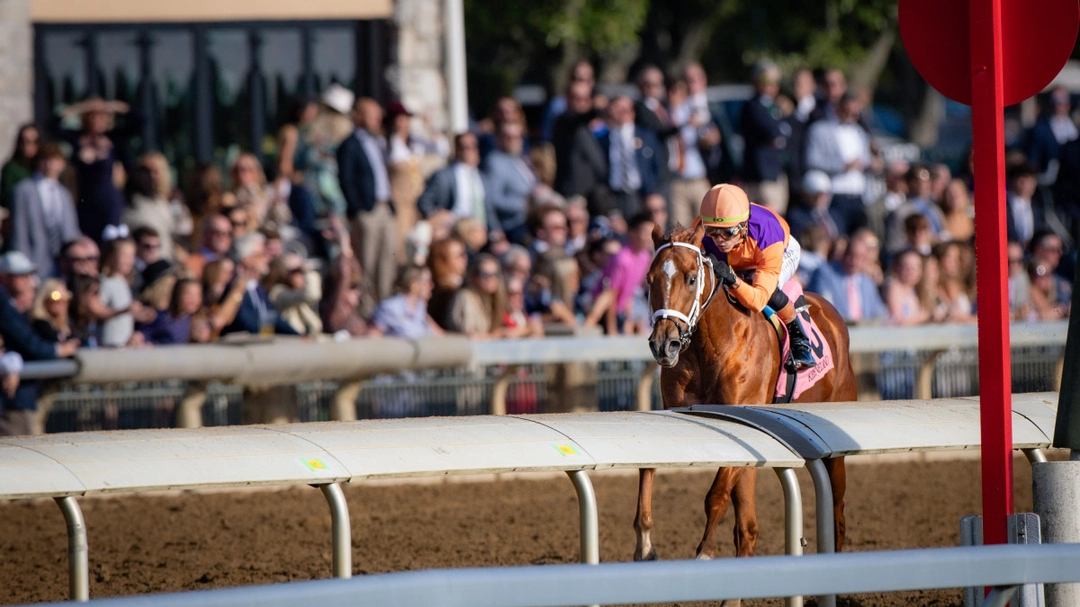
Horse racing enthusiasts often fall in love with the visual brilliance of a blowout win. When Brad Cox unleashed Further Ado in a late-autumn maiden special weight, the racing world stopped to watch a 20-length destruction of the field. This massive margin of victory immediately vaulted the colt to the top of the Kentucky Derby contenders' lists across every online racebook. However, seasoned handicappers recognized the flashing red lights of a statistical anomaly. While a 20-length win looks spectacular on a highlight reel, it often functions as a "betting trap" for those who ignore the underlying physics of Thoroughbred performance.

A 20-length victory creates a psychological bias that inflates Kentucky Derby Odds beyond their actual mathematical probability. When a horse wins by such a staggering distance, the betting public assumes the horse possesses a transcendent level of talent. In reality, these massive margins often result from a perfect storm of a lightning-fast track, a collapsing pace behind the leader, and a field of inferior competitors who stopped persevering once the gap widened. For Further Ado, that maiden win represented a peak performance that he could likely never replicate, creating a scenario ripe for "The Bounce."
Horse betting experts rely heavily on the "Bounce Theory" when evaluating Kentucky Derby prep races. The theory posits that extreme physical exertion (such as running 20 lengths clear of a field) depletes a horse's internal reserves. The cardiovascular and musculoskeletal systems undergo such intense stress that the horse requires a significantly longer recovery period than a standard race provides.
If a trainer enters that horse into a high-stakes race too soon, the horse "bounces," delivering a flat, uninspired performance. We saw the first signs of this with Further Ado in the Kentucky Jockey Club, where his margin of victory shrank from twenty lengths to a hard-fought neck.
Handicappers must monitor the concept of "diminishing returns" as the road to the Derby gets longer. As the distance increases from six furlongs to a mile and an eighth, the energy required to maintain a massive lead grows exponentially. When you analyze Kentucky Derby betting trends, you notice that the most successful Triple Crown winners often win their early races by measured, efficient margins rather than taxing themselves with double-digit blowouts. A horse that wins by less each time the distance increases is often screaming that it has hit its ceiling. Further Ado's regression from a 20-length romp to a narrow victory suggests he is struggling to maintain his brilliance as the finish line moves further away.
By January, sophisticated bettors stop looking at how far a horse won by and start looking at how the horse moved. "Efficiency of Stride" acts as a much more reliable predictor of success in the Kentucky Derby leaderboard than a simple margin of victory. An efficient gallop allows a horse to cover more ground with less oxygen expenditure. Further Ado's maiden win relied on raw, aggressive power—a "high-rev" style that burns fuel too quickly. To bet on Kentucky Derby online successfully, you must identify the horses that move with a rhythmic, low-effort stride, as these are the animals that will thrive at the classic 1.25-mile distance in May.
The "20-length mirage" creates an opportunity for "hidden value" elsewhere in the field. Because the public pours money onto the "hype horse," the Kentucky Derby Odds for consistent, improving types become much more attractive. While the world focused on Further Ado’s flashy win, several other colts were quietly finishing second or third while earning superior speed figures on a "gallop out."
Regression to the mean is a powerful force in sports betting; a horse that runs a "110" speed figure in a maiden race is statistically likely to run a "95" in its next start. Smart money bets against outliers and favors a steady upward trajectory.
Trainer Brad Cox knows how to manage expectations, but even the best trainers cannot fight the laws of biology. Cox’s stable frequently produces high-profile Kentucky Derby contenders, and his ability to peak a horse for the first Saturday in May is legendary. However, Further Ado's early-career brilliance might have forced Cox's hand.
When a horse wins by 20 lengths, the pressure to jump into graded stakes company immediately becomes immense. This accelerated schedule often leads to the very "burnout" that the Bounce Theory predicts. Bettors should check the Kentucky Derby futures to see if the market has overreacted to the Cox name rather than the horse's actual performance metrics.
Raw time and Beyer Speed Figures provide the "truth" behind a 20-length margin. Often, a horse winning by a huge distance actually runs a slower overall time than a horse winning a competitive race by a head on the same day. A blowout indicates the leader is never "asked" to give its full effort in the closing stages, or, conversely, that the competition was so poor the margin is meaningless. Before you engage in Kentucky Derby betting, compare Further Ado’s final times to the historical averages for his age group. You will often find that the 20-length winner is actually running slower than the horses he will face in the real Kentucky Derby prep races.
The media plays a significant role in creating the mirage. Racing portals love a "superhorse" narrative because it drives clicks and engagement. However, the objective of Kentucky Derby betting is profit, not fandom. When you see a horse described as "the next Secretariat" after one maiden win, that is your cue to look for reasons to beat them.
Further Ado became a victim of his own success; every eye in the industry watched his next move, forcing his odds down to an unplayable level. Value is found in the shadows, not in the spotlight of a 20-length blowout.

As we approach the final rounds of the prep season, Further Ado remains a polarizing figure on the Kentucky Derby leaderboard. If he continues to win by ever-smaller margins, it indicates that his physical advantage is eroding as his peers catch up in development.
To maximize your returns when you bet on Kentucky Derby online, you should wait for a "reset" race. If Further Ado loses a prep race and his odds drift back to 10-1 or 12-1, he might finally offer the value that was missing when he was the 3-5 favorite following his maiden romp.
The 20-length win by Further Ado was a magnificent moment in racing, but as a bettor, you must distinguish between a great performance and a great bet. Chasing "hype horses" is the fastest way to deplete your bankroll before the Triple Crown even begins. By understanding the Bounce Theory, monitoring efficiency of stride, and looking for signs of diminishing returns, you put yourself in the driver's seat for the most exciting two minutes in sports.
Are you ready to turn these insights into a winning ticket? Don't let the next 20-length mirage fool you. Stay tuned to the US Racing community of expert handicappers today and get the most accurate Kentucky Derby Odds delivered straight to your inbox.

The writing team at US Racing is comprised of both full-time and part-time contributors with expertise in various aspects of the Sport of Kings.