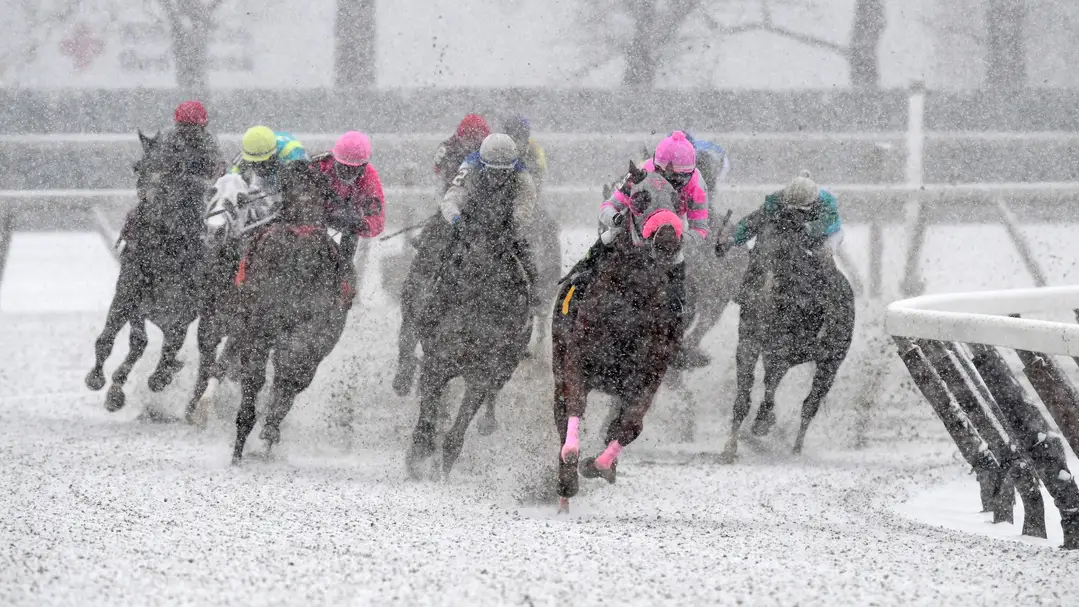
Winter horse racing in New York presents a brutal physiological gauntlet that fundamentally alters the path to the winner’s circle. As we move past the Jerome Stakes and cast our eyes toward the Withers Stakes on January 31st, we must look beyond standard speed figures. Sub-freezing temperatures at Aqueduct Racetrack force equine athletes to divert massive amounts of caloric energy away from muscle repair and toward basic thermoregulation. When a three-year-old Thoroughbred faces the biting winds of Jamaica Bay, its internal furnace works overtime just to maintain a core temperature of 100.5 degrees Fahrenheit. This environmental stress creates a phenomenon known in the backstretch as "winter burnout," a state where even the most talented individuals lose their competitive edge. Sharp handicappers who analyze Kentucky Derby betting trends know that a horse winning in January might be an empty shell by April.

You must learn to recognize the physical manifestations of acute cold stress, popularly called "The Shivers," during the paddock preview. When the ambient temperature drops below the lower critical temperature (LCT) of roughly 12 degrees Fahrenheit for young horses, their bodies trigger involuntary muscle contractions.
While a light shiver helps generate heat, persistent shivering indicates a horse is nearing its metabolic limit. This state of irritability often precedes a complete performance collapse in the final furlongs of Kentucky Derby prep races. You should watch for horses that appear "washed out" or overly reactive to the wind, as these behavioral cues signal a nervous system under duress. A horse that spends its pre-race energy fighting the cold rarely has the stamina to sustain a winning drive against a field of fresh Kentucky Derby contenders.
The most reliable visual indicator of winter burnout is a "tucked up" appearance in the horse's midsection. When you see a horse that looks thin in the flanks and lacks a rounded barrel, you are looking at a metabolic deficit. Cold stress causes horses to burn through fat and protein stores at an alarming rate, leading to rapid weight loss that "tucks" the belly upward toward the spine. If a horse exhibits this silhouette in the Aqueduct paddock, you should immediately adjust your Kentucky Derby betting strategy. These animals are likely suffering from a caloric imbalance that prevents them from recovering between starts. Even if they possess elite Kentucky Derby odds, a tucked-up runner lacks the physical reserves to handle the grueling distance of a 1 1/8-mile prep like the Withers.
Data from environmental physiology studies suggests that extreme cold increases blood viscosity and reduces the elasticity of soft tissues. In the context of New York racing, this means that a horse running in 20-degree weather faces greater resistance to oxygen transport than one training in Florida. You must factor this "oxygen debt" into your evaluation of the Kentucky Derby leaderboard. A horse that finishes a tired third in the frozen mud of Aqueduct might actually possess a higher ceiling than a front-runner who had an easy trip in the sun. However, the cumulative effect of these cold-weather starts often leaves a horse "leg-weary" by the time the Championship Season begins. You should prioritize runners that show a healthy, dappled coat and a full midsection, despite the harsh Northeast conditions.
To win consistently at the windows, you must identify the "winter-hardy" operations that mitigate cold stress through superior facility management. Trainers like Todd Pletcher and Chad Brown often utilize climate-controlled barns or specific nutritional programs that include higher forage intake to fuel the internal "fermentation vat" of the horse’s gut. Alternatively, keep a close eye on horses shipping in from Gulfstream Park or Palm Meadows. These runners arrive with a metabolic advantage, having spent the winter building muscle rather than burning calories to stay warm.
When looking at Kentucky Derby futures, a Florida-based horse entering a New York prep often holds a hidden physical edge over the local "winterized" field. This shipping angle remains one of the most profitable moves for those who bet on Kentucky Derby online.
Colder surface temperatures at Aqueduct often lead to a harder, more jarring track surface, which can skew traditional speed measurements. When the moisture in the dirt base freezes, the cushion becomes less forgiving, requiring greater bone density and joint integrity from young runners.
This "frozen fast" condition can produce deceptive times that don't translate well to Churchill Downs's warmer, deeper clay. Smart analysts who track Kentucky Derby odds recognize that a "winter specialist" might thrive on the hard New York surface but fail miserably when the spring thaw arrives. You should look for horses that maintain their stride length despite the changing track consistency, as this indicates superior physical soundness and resilience to cold-weather fatigue.

As the Kentucky Derby leaderboard begins to take shape in late January, the points earned in the Jerome and Withers carry significant weight. However, you must differentiate between "quality points" and "attrition points." Often, the winner of a winter prep in New York is simply the last horse standing after the rest of the field succumbs to the cold. You should cross-reference a horse's performance with its post-race physical condition.
If a winner returns to the barn looking haggard and spent, their long-term prospects as Kentucky Derby contenders are bleak. Look for the runner who finishes strong and recovers quickly, as these individuals possess the robust constitution required to survive the trail without succumbing to winter burnout.
The gap between the Withers in January and the Wood Memorial in April is a critical period for metabolic recovery. If a trainer pushes a horse too hard through the sub-zero months, the animal may never reach its peak in May. You should monitor the workout patterns of New York-based horses throughout February. A sudden drop in work frequency or a series of slow "maintenance" breezes often signals a horse that is being "nursed" back from a winter-induced slump.
A successful Kentucky Derby betting strategy requires you to anticipate these plateaus before the betting public catches on. A horse that is "fresh" in March is far more dangerous than one that won three races in the January snow but now struggles to keep its weight on.
The upcoming Withers Stakes on January 31st offers a prime opportunity to apply these environmental insights. The 1 1/8-mile distance is a true test of stamina that will expose any horse suffering from "The Shivers" or caloric depletion. You should focus your wagers on horses with a "thrifty" metabolism (those that stay "fleshy" and calm despite the arctic conditions of the New York winter). By identifying these winter-hardy athletes, you can find immense value against "paper favorites" who are physically deteriorating. When you bet on Kentucky Derby online, use the paddock video feeds to check for that "tucked up" midsection and the tell-tale signs of irritability that define winter burnout.
The Road to the Roses is paved with the frozen hopes of winter runners who peaked too early in the New York cold. By understanding the environmental physiology of the equine athlete, you gain a massive advantage over the casual betting public. Don't let a "tucked up" horse ruin your exacta; instead, hunt for the winter-hardy contenders who thrive when the mercury drops.
The early Kentucky Derby odds are ripe for the taking if you know how to spot the survivors of "The Shivers."
Ready to turn these insights into profit? Stay tuned to US Racing to access our premium data, real-time paddock alerts, and the most competitive Kentucky Derby betting lines in the industry. Don't wait for the spring thaw; secure your winning position now.

The writing team at US Racing is comprised of both full-time and part-time contributors with expertise in various aspects of the Sport of Kings.