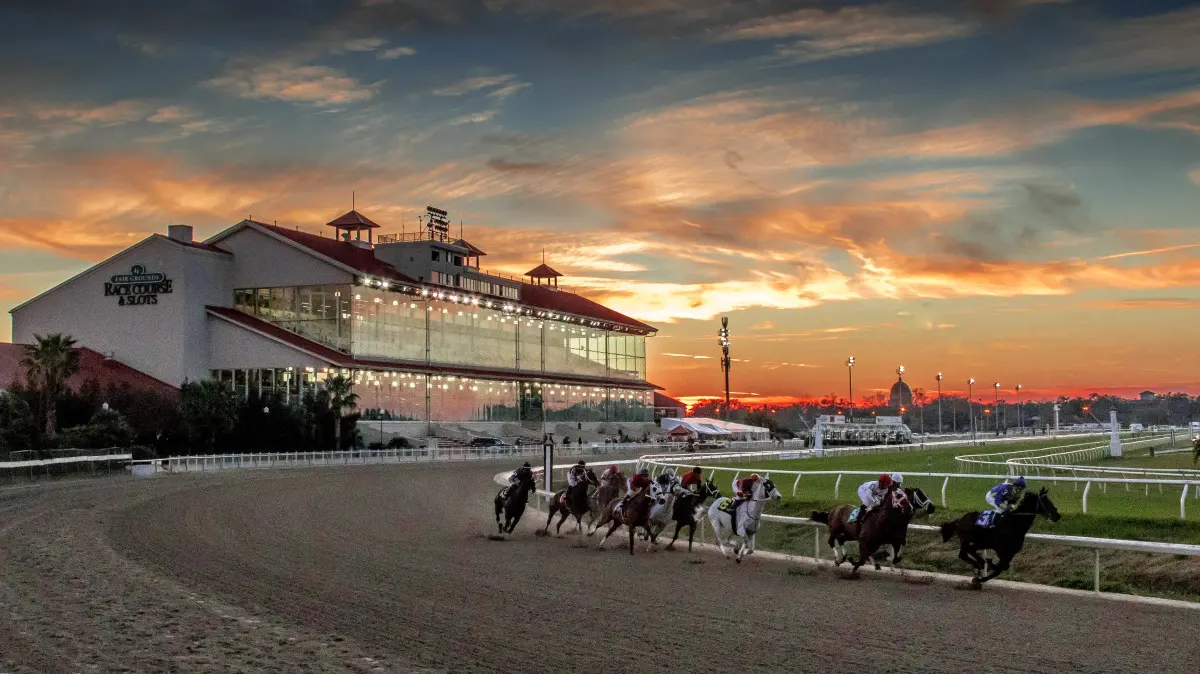
The road to the Kentucky Derby officially shifts its gravity toward the Big Easy this week. While casual observers look toward the flash and speed of Florida or the glamour of Southern California, professional handicappers fix their eyes on Fair Grounds Race Course. This historic New Orleans oval has quietly become the most productive laboratory for developing classic-distance champions. We no longer view the Louisiana circuit as a regional sideshow; we recognize it as the primary engine for the Kentucky Derby leaderboard.
The shift in power stems from a combination of elite coaching, increased purses, and a horse racing surface that demands more than just raw brilliance. When you evaluate the current crop of three-year-olds, you must acknowledge that New Orleans provides the truest test of a horse’s soul before they ever step foot in Kentucky.

Fair Grounds possesses a physical layout that mirrors the challenges of the 1 1/4-mile distance at Churchill Downs better than any other winter venue. The track features one of the longest home stretches in the country, measuring a staggering 1,340 feet from the final turn to the wire. This architectural choice eliminates the "cheap" speed victories we often witness at Gulfstream Park.
At Fair Grounds, a horse cannot simply skip away on a short turn and coast home. They must endure a grueling quarter-mile battle against the wind and the "deep" dirt that defines this surface. This long run-in allows for a "fair" fight where the best horse usually wins, rather than the one with the best post position. This fairness provides bettors with high-quality data when they set their Kentucky Derby betting odds for the spring.
We must discuss the composition of the Fair Grounds dirt to understand why it produces such resilient athletes. Experts often describe this track as "heavy" or "cuppy" compared to the lightning-fast, sandy paths in Florida. This surface requires horses to expend more energy per stride, effectively serving as a resistance-training program for young Thoroughbreds.
When a horse survives a winter in New Orleans, they develop "bottom" (a term horsemen use for deep-seated aerobic fitness and bone density). Horses that handle the "deep" dirt in New Orleans develop the stamina required for the 1 1/4 miles at Churchill Downs far more effectively than those racing on speed-favoring ovals. This is why we see Fair Grounds alumni like Epicenter, Angel of Empire, and Two Phil’s consistently hitting the board in May.
The Lecomte Stakes on January 17 serves as the first major gatekeeper of the season. This Grade 3 contest offers 20 qualifying points to the winner, making it a critical junction for anyone hoping to climb the Kentucky Derby leaderboard. This year’s field features a fascinating mix of local standouts and high-profile shippers. We see trainers like Brad Cox and Steve Asmussen utilizing the Lecomte to test the tactical maturity of their most promising colts. Because the race takes place at 1 1/16 miles, it forces young horses to navigate two turns while dealing with the pressure of a "prep" environment for the first time. The Lecomte does not just crown a winner; it exposes the pretenders who cannot handle the transition from sprint distances to the rigors of a route.
If you look at the last five years of Triple Crown results, the Fair Grounds influence is undeniable. Mandaloun and Country House both used the Louisiana path to eventually wear the roses. Even those who didn't win the Derby often dominated the Preakness or Belmont, such as War of Will and Risen Star himself. The data confirms that New Orleans produces horses with a higher "stamina index" than the California or Florida circuits.
While Santa Anita favors high-cruising speed and Gulfstream rewards pure acceleration, Fair Grounds rewards the ability to sustain a long, grinding run. This specific trait is exactly what a horse needs to pass 19 other rivals in the Churchill Downs stretch. You should prioritize Fair Grounds form when you decide to bet on Kentucky Derby online.
The most lucrative betting angle in the Lecomte Stakes involves identifying the "closers" who are stretching out in distance. Look for horses transitioning from a sprint to this 1 1/16 mile distance for the first time. If they pass horses in the New Orleans stretch during a shorter race, they’ll almost certainly pass them in the longer distances of the spring.
We look for a specific "visual" in their replays: a horse that is finishing with its ears pinned, gaining ground through the wire rather than hanging. This indicates the horse has the lung capacity to handle the extra sixteenth of a mile. When these sprinters move to two turns at Fair Grounds, they often offer incredible value in the Kentucky Derby betting markets because the public underestimates their ability to get the distance.
The current list of Kentucky Derby contenders stabled in New Orleans looks formidable. We are watching horses like Chip Honcho and Thunder Buck, who have already shown an affinity for the local surface. These colts don't just win; they win the right way. They settle behind the leaders, wait for the pilot’s cue at the top of the stretch, and then mow down their competition. This professional demeanor is a hallmark of a Fair Grounds-trained horse.
When you see a horse win the Lecomte by a widening margin, you are likely looking at a top-five favorite for the first Saturday in May. We recommend tracking these horses in the Kentucky Derby futures pools, as their prices will never be higher than they are now.
Florida and California tracks often create "speed traps" that lead to disastrous results in Kentucky. A horse that wins the Florida Derby by five lengths after an uncontested lead rarely repeats that performance when facing the "chaos" of a 20-horse Derby field. In contrast, the New Orleans path exposes horses to kickback, traffic, and a tiring surface early in their careers.
This "battle-hardened" nature makes them more reliable options for your Kentucky Derby betting tickets. We often see the Florida winners "hitting the wall" at the mile marker in Kentucky, while the Fair Grounds horses are just finding their best stride. Don't fall for the fast clocking in the sunshine; trust the stamina built in the bayou.
The New Orleans prep series (consisting of the Gun Runner, Lecomte, Risen Star, and Louisiana Derby) offers a total of 350 qualifying points. This makes it the most significant points-producing path in the country. A horse that runs well in the Lecomte and follows up with a podium finish in the Risen Star virtually guarantees a spot in the starting gate.
By focusing your analysis on these Kentucky Derby prep races, you can identify the "safe" qualifiers weeks before the general public. We recommend keeping a close watch on the Kentucky Derby leaderboard as it updates after the Lecomte. The horses moving into the top ten this month are the ones who will define the narrative for the rest of the spring.
We cannot ignore the human element in this "Bayou Blueprint." Trainers like Brad Cox have mastered the art of stabling at Fair Grounds. They understand that the mild Louisiana winter and the demanding track surface create a perfect training environment. These trainers don't just send their horses to New Orleans to win; they send them there to "grow up."
A win in the Lecomte indicates that the trainer has the horse exactly where they want them in terms of fitness and mental maturity. This level of intent is a massive signal for bettors. When an elite barn picks the Lecomte for a horse’s seasonal debut, they are telling you that they believe this horse has the quality to handle the pressure of the Kentucky Derby betting odds.

The Fair Grounds circuit is no longer a "hidden" gem; it is the gold standard for Derby preparation. The combination of a 1,340-foot stretch, a deep stamina-building surface, and a points-rich schedule makes it the most logical place for any serious handicapper to start their season.
As we approach the Lecomte Stakes, remember that the goal isn't just to find the fastest horse today, but to find the horse that will be the strongest on the first Saturday in May. The horses that emerge from the New Orleans mist this January will be the same ones fighting for glory under the Twin Spires. By focusing on those who thrive in the "deep" New Orleans dirt, you position yourself to cash big when the real running starts.
The Lecomte Stakes represents your first real opportunity to get ahead of the market. Don't wait for the Kentucky Derby betting odds to drop to 2-1 in April; find your champion in January.
Whether you are looking for long-shot value or a reliable anchor for your exotic bets, the New Orleans path offers the best data and the most consistent results. Join our community of expert handicappers today to get exclusive access to workout reports, speed figures, and trainer interviews from Fair Grounds. Stay tuned to US Racing and start your journey to the winner's circle with the most comprehensive Kentucky Derby coverage in the industry. The Bayou Blueprint is waiting; are you ready to bet like a professional?

The writing team at US Racing is comprised of both full-time and part-time contributors with expertise in various aspects of the Sport of Kings.