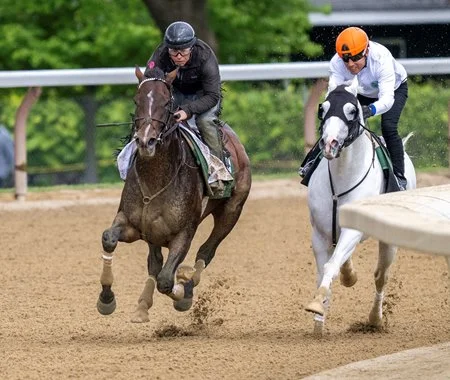
In the quiet weekends of winter, when there are no major Kentucky Derby Prep races on the calendar, serious bettors do not stop working. They shift focus. Instead of watching race replays, they turn to the work tab, scanning early morning training reports from tracks like Palm Beach Downs and Santa Anita. This is where sharp Kentucky Derby betting often begins.
Workout reports do not generate headlines, but they frequently reveal which three-year-olds are quietly improving and which ones are merely going through the motions. For bettors willing to learn how to read these reports correctly, the work-tab can offer a real information edge long before the Kentucky Derby odds fully adjust.

By January, many top stables already know whether a colt is on the Derby trail. Trainers use workouts not just to build fitness, but to test maturity, mental focus, and recovery. When there are no points races to analyze, workouts become the most reliable window into a horse’s current condition.
This is especially relevant for bettors targeting the 2026 Kentucky Derby. Early prep races like the Lecomte Stakes and the Holy Bull Stakes often include horses whose true ability is not yet reflected in the odds. Those horses usually announce themselves in the mornings first.
The work tab shows distance, time, surface, and ranking relative to other works that day. What it does not show is effort level, body language, or intent. That is where interpretation matters.
A “bullet work” means the fastest workout at that distance on that day. Many bettors chase bullet times automatically, assuming speed equals readiness. That is a mistake.
A fast workout can be impressive, but context is everything. Some trainers push for speed while others do not. Some tracks are faster in the morning than others. A flashy time alone does not guarantee a horse is improving.
What experienced Kentucky Derby betting professionals look for is controlled speed paired with strong behavior. A colt that posts a sharp time while appearing relaxed and balanced is far more interesting than one that barely holds together while chasing a clock.
Workout reports often include short notes, and those notes matter more than the final time. Two behavioral cues consistently signal a horse moving forward.
The first is gallop-out strength. After the official finish line of a workout, some horses continue powerfully for several more furlongs. This indicates stamina, enthusiasm, and physical comfort. A three-year-old who accelerates past the wire instead of decelerating is showing readiness for longer distances.
The second cue is mental engagement. Horses that switch leads smoothly, respond willingly to the rider, and maintain rhythm throughout the work are showing maturity. In contrast, horses that shut down immediately after the wire, drift excessively, or need aggressive urging often lack either fitness or focus.
These subtle details rarely affect short-term betting markets, but they matter greatly when projecting performance in upcoming Kentucky Derby Prep races.
Most bettors already have access to free workout reports, but few use them correctly. The key is consistency. Instead of reacting to a single workout, track patterns.
Look for horses whose works are gradually improving in both distance and appearance. A series of steady drills followed by one sharper move often signals a trainer tightening the screws before a prep race. That is usually when value appears in the Kentucky Derby odds.
Pay attention to the location as well. Palm Beach Downs workouts often indicate Florida-bound plans, while Santa Anita workouts usually point toward California preps. Matching workout patterns with likely race placement helps bettors anticipate when a horse is ready to peak.
The real betting insight comes from timing. Horses that are “leveled up” in the mornings often outrun their odds in early preps. Because they may lack flashy race resumes, the public underestimates them.
By the time these horses win or run big in a prep, the value is gone. Kentucky Derby betting rewards anticipation, not confirmation. Workout analysis allows bettors to act before the narrative shifts.
This approach is particularly useful when futures markets are active. A well-meant colt showing strong gallop-outs and professional behavior can offer significant value weeks before the broader market adjusts.

The work-tab is not a crystal ball, but it is one of the few tools that consistently separates informed bettors from casual ones. In weeks without major races, it becomes even more powerful.
For those serious about Kentucky Derby betting, learning how to interpret workouts is not optional. It is part of the job. The bettors who put in the morning work are often the ones cashing tickets in the afternoon, especially when the Derby trail heats up.
Watching the mist lift over the track may not be glamorous, but neither is missing value because everyone else waited for the results.

The writing team at US Racing is comprised of both full-time and part-time contributors with expertise in various aspects of the Sport of Kings.