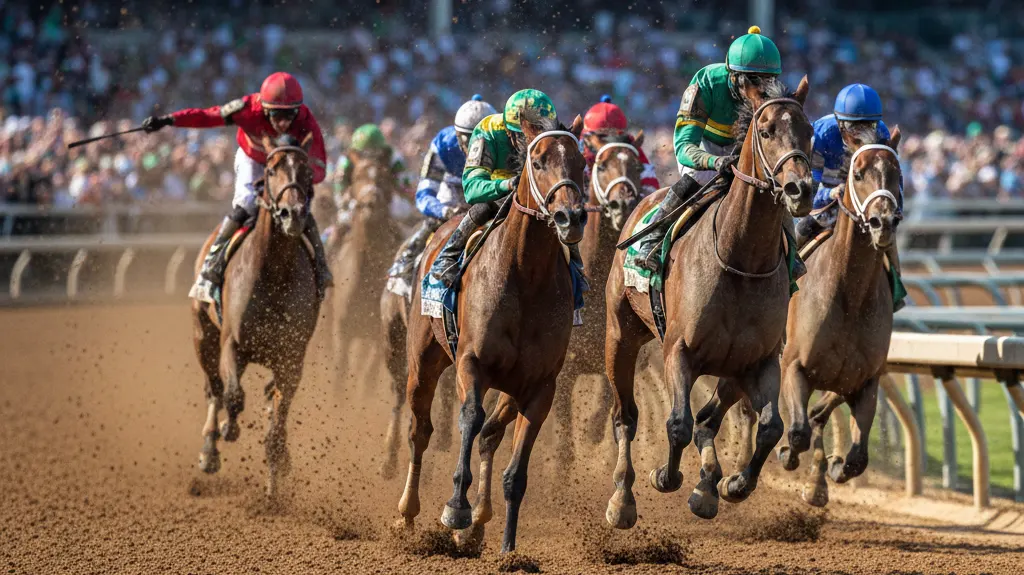
The Kentucky Derby represents the most exciting, and often the most unpredictable, two minutes in sports. Millions of fans worldwide analyze the contenders, poring over past performances, speed figures, and workout times. However, the serious handicapper, the one who consistently finds value and drives real profit, knows these raw numbers tell only half the story.
The key to unlocking the field's true potential lies in analyzing the "trip notes": the detailed, often overlooked circumstances each horse encountered during their Kentucky Derby prep races. You need to look past the final margin and understand how the horse achieved that result. This specialized analysis transforms guesswork into an informed, high-converting Kentucky Derby betting strategy.
Quick Tip: Before you check the upcoming information, boost your bankroll with the top new-player bonus.

To truly evaluate a horse, you must first calculate the unseen "cost" of the race. Final time and speed figures measure the result, but they fail to account for the energy a horse expended fighting traffic, losing ground, or having to check its stride. We must apply a penalty (a figurative time addition) to the horses who suffered a troubled journey. Conversely, we must apply a discount to the horse who enjoyed a perfect, uncontested lead.
This approach gives you an independent set of Kentucky Derby Odds and highlights the true contenders before the general public catches on. This analytical depth is essential for anyone serious about winning their Kentucky Derby betting activity. A strong finish following a significantly troubled trip often indicates a horse with far superior ability than their official speed rating suggests.
Running wide, especially on the critical second turn of a 1 1/8 mile prep race, constitutes one of the most significant energy drains a horse can face. We look for horses who covered significantly more ground than the winner.
On most North American dirt tracks, running one path wider than the rail throughout both turns costs approximately one length, or roughly one-fifth of a second. Imagine a horse running five paths wide on both turns, which is common in crowded fields. That horse sacrifices up to four or five lengths to maintain its position, purely due to the extra distance covered. That lost energy represents wasted physical ability. A horse who finishes third, beaten by only two lengths after running six paths wide, essentially ran six lengths better than the winner, a profound signal of superior talent. These are the horses you absolutely must include in your Kentucky Derby futures analysis.
Nothing drains a horse's momentum and mental resolve like an abrupt check or collision in traffic. A check requires the jockey to aggressively pump the brakes, forcing the horse to lose stride, decelerate rapidly, and often switch leads unexpectedly. The kinetic energy wasted during a violent check mid-stretch is immense, and the psychological impact can temporarily break a horse's focus.
When reviewing Kentucky Derby prep races, look for notes that say "Checked hard at the half-mile pole" or "Forced to take up sharply on the rail." A horse that endures such an incident and still manages to rally into contention or secure a spot on the Kentucky Derby leaderboard possesses both the raw speed and the deep-seated grit required to handle the 20-horse, mile-and-a-quarter chaos of the Run for the Roses.
Sometimes, the most valuable trip note is what didn't happen. Pay close attention to horses finishing strong but not fully extended or "under a hold." This occurs when the jockey realizes they cannot catch the leaders but hold a comfortable margin over the rest of the field. They preserve the horse's energy, never asking for the animal's absolute maximum effort. This subtle preservation is crucial because the Derby’s 1 1/4-mile distance is a quarter-mile longer than most major prep races.
The ability to finish with petrol left in the tank signals tremendous stamina and a deep reserve the jockey can tap into late on the first Saturday in May. This "controlled finish" offers a massive predictive advantage, indicating a horse that can successfully stretch out to the classic distance. We strongly encourage you to bet on Kentucky Derby contenders who demonstrated this kind of calculated finish in their final tune-ups.
Handicappers must also consider the opposite scenario: the "perfect trip." This often occurs when a horse draws an outside post, breaks cleanly, settles into a stalking position outside of traffic, and makes a sustained, uncontested run on the lead. They face no resistance, no dirt kickback, and cover the optimal amount of ground.
While a win is a win, a victory achieved under these flawless circumstances often masks a horse's true limitations. They delivered their best performance possible. In horse racing, trainers call this phenomenon the "bounce", a terrific performance followed by an immediate regression. When evaluating Kentucky Derby contenders, you must view the perfect-trip winner with skepticism, wondering if they can replicate that effort while facing dirt in the face, bumping, and a 20-horse stampede. A perfect trip in the final prep may signal that the horse is now vulnerable to a subpar effort at Churchill Downs.

The real payoff comes when you synthesize these notes. Your ultimate goal is to find the horse that ran the fastest race under the worst conditions. Look for the fifth-place finisher who was squeezed at the start, checked hard on the backstretch, and ran three paths wide on the turn, yet still closed powerfully in the final furlong.
That horse holds far more potential than the wire-to-wire winner who faced no challenges. When you compare your internal, adjusted figures, accounting for the five lengths lost due to a bad trip, to the public’s Kentucky Derby Odds, you identify monumental value. The crowd bases its Kentucky Derby betting on superficial results; you, the informed analyst, rely on the actionable data contained in the trip notes. This critical distinction provides your advantage.
Successful wagering demands you act decisively on this information. When you see a high-ranking horse on the Kentucky Derby leaderboard (a horse who secured sufficient points but finished second or third) and their trip notes clearly document a major incident or excessive ground loss, that is your actionable moment. That horse will likely offer generous Kentucky Derby Odds because the casual fan sees a "loser."
Conversely, a horse that won a major points race with an easy trip, setting fast early fractions and fading, often sees its odds unjustly shorten. Use the official past performance sheets only as a starting point. Read the chart notes, ignore the bias, and trust your calculated adjustments. This is the sophisticated, data-driven approach that consistently generates returns on your Kentucky Derby betting.
You have the secret blueprint to the Kentucky Derby puzzle. You now know that the next Kentucky Derby winner is often not the horse who won the easiest prep race, but the horse who overcame the most trouble and still fired. Stop basing your decisions on gut feelings or media hype. Start leveraging the concrete analytical power of trip notes to identify overlooked, undervalued champions.
This level of insight separates the recreational gambler from the professional analyst. Don't leave money on the table; leverage this specialized knowledge right now. Stay tuned to US Racing for our exclusive premium content today and get real-time trip note analysis, expert adjusted Kentucky Derby Odds, and our final prediction sheet to ensure you lock in the highest possible payout when the gates crash open.

The writing team at US Racing is comprised of both full-time and part-time contributors with expertise in various aspects of the Sport of Kings.