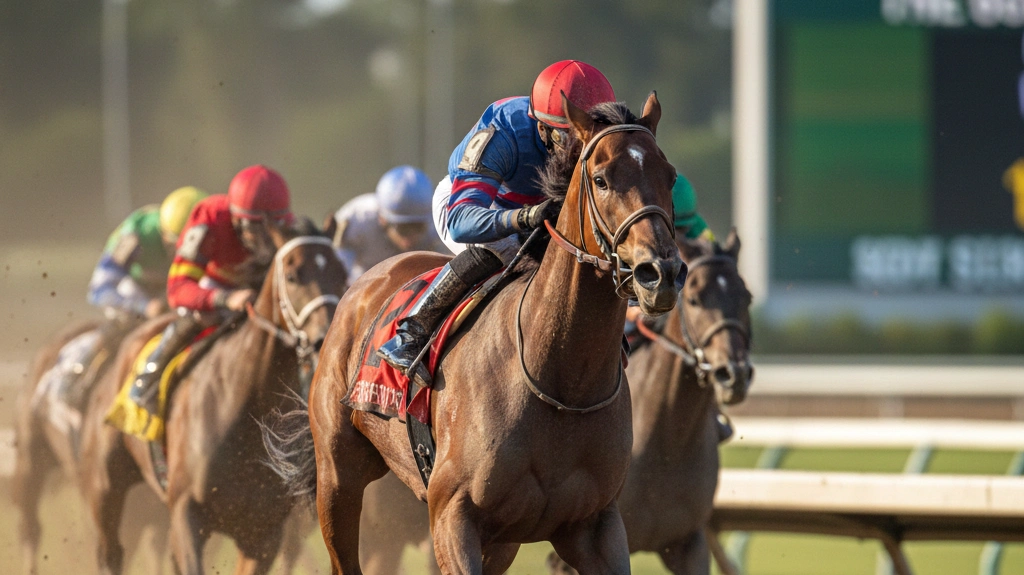
The pursuit of the next Kentucky Derby winner drives every analyst, horseman, and bettor in the world, representing the ultimate puzzle in American horse racing. Serious players know the key to solving this puzzle lies not just in watching the races but in deciphering the numerical language of speed figures.
These metrics—Beyer, Brisnet, Ragozin—claim to equalize performance across different surfaces and distances. However, a significant gap exists between tracks, forcing sophisticated bettors to become experts in comparative analysis to set their Kentucky Derby Odds. We reveal how you accurately judge a 95 Beyer at Oaklawn versus a 105 at Gulfstream Park and use this knowledge to profit when you bet on Kentucky Derby.
Quick Tip: Before you check the upcoming information, boost your bankroll with the top new-player bonus.

Speed figures exist primarily to solve the inherent inconsistencies of racetrack surfaces. A horse running a mile in 1:36 at Keeneland does not necessarily run faster than a horse covering the distance in 1:37 at Aqueduct, because track surfaces change daily and locationally.
Figure makers calculate a "track variant" which attempts to normalize these differences by comparing race times to historical pars. Major tracks, however, consistently exhibit subtle biases. For instance, Gulfstream Park, known for producing fast times, sometimes assigns higher raw figures that the figure makers subsequently discount.
Conversely, winter tracks like Aqueduct sometimes produce lower numbers due to deeper footing, prompting figure-makers to award a boost. Savvy handicappers must understand these geographical nuances, treating a number earned in California differently from one earned in Florida when evaluating Kentucky Derby prep races.
The Beyer Speed Figure (BSF) has long been the gold standard for measuring raw horsepower, with a triple-digit 100 benchmark signifying excellence. Historically, the average Derby-winning BSF in the final prep race has hovered around 103, underscoring the high caliber of performance required. However, recent trends challenge this historical standard. We observed significant pre-race BSF variance among recent winners: Mage won the 2023 Derby with a pre-race best of 94, while Rich Strike secured the 2022 upset, carrying an 84. Contrast this with the phenomenal performance of Fierceness, who earned a blistering 110 BSF in a primary Florida Derby prep race. This 26-point swing between Rich Strike’s best figure and Fierceness’s latest confirms the volatility in modern Kentucky Derby contenders. It emphasizes that bettors must look beyond a single career high and seek a trend of ascending numbers to secure winning Kentucky Derby betting wagers.
Brisnet offers a multi-faceted approach, distinguishing itself from the purely time-focused Beyer method by providing both a raw Speed Rating and the composite Prime Power rating. While the Brisnet Speed Rating also adjusts final time for the track variant, the Prime Power incorporates class, pace, and speed, giving bettors a holistic view of the horse’s complete profile.
The statistical significance of the Brisnet Speed Rating is difficult to ignore: thirteen of the last fifteen Kentucky Derby winners registered a triple-digit Brisnet Speed rating leading up to the race. This requirement carries greater weight than the Beyer benchmark for long-term consistency.
When evaluating the Kentucky Derby leaderboard, a horse that posts a 95 Beyer but pairs it with a 105 Brisnet Speed Rating often signals an extremely well-regarded horse, making that the ideal type of profile we seek when assessing Kentucky Derby futures.
We gain crucial insight by directly comparing figures from two pivotal West and East Coast preps: the Santa Anita Derby and the Florida Derby. California tracks like Santa Anita Park frequently produce highly consistent, slightly slower surfaces, so a 100 BSF earned there often reflects superior, sustained effort against intense competition.
In contrast, the quick surfaces at Gulfstream Park sometimes lend themselves to inflated raw times. For example, if we compare two leading 2025 Kentucky Derby contenders, Horse A earns a 108 Beyer winning the Santa Anita Derby, and Horse B earns a 110 Beyer winning the Florida Derby. The marginal two-point difference indicates Horse A is the superior horse, having achieved its figure on a potentially deeper or slower surface. Smart handicapping requires normalizing these numbers based on the track variant and its impact on perceived speed. This analysis helps us accurately set Kentucky Derby Odds and identify which horses represent true value.
While Beyer and Brisnet dominate public discourse, professional syndicates and serious horseplayers heavily rely on proprietary figures like Ragozin and Thoro-Graph. These systems go beyond final time and track variant, introducing weight and ground loss into their complex calculations.
Ragozin figures, often called “Sheets,” use lower numbers to indicate faster performance, measuring effort relative to the field. These figures are widely used for regression analysis, identifying horses that "bounce" or underperform after a peak effort. If a horse jumps 10 points (meaning 10 lower, or faster) in a final prep, the Sheet users predict a bounce on Derby Day, regardless of the horse's Kentucky Derby Odds. Incorporating these specialized figures gives us a vital edge, particularly when navigating the chaos of a twenty-horse field.

The goal of this intensive figure comparison is not merely academic; it drives actionable betting strategies. We actively look for two specific types of value: the “Hidden Speed” and the “Regression Candidate.” The Hidden Speed refers to a horse that earned a modest Beyer figure (say, a 95) in a slow-playing, highly contested prep race but simultaneously posted a career-best Brisnet Pace figure.
This pace performance suggests the horse exerted energy early, often indicating higher potential speed than the final BSF reflects. Conversely, the Regression Candidate shows a significant, unsustainable jump in their final prep, such as a 15-point improvement, often signaling a horse due for a poor performance in the Derby.
When we identify these patterns in the final Kentucky Derby prep races, we gain an advantage over the public, allowing us to back undervalued horses and place profitable Kentucky Derby betting wagers. This systematic approach transforms guesswork into a calculated investment strategy.
Final time figures like Beyer and Brisnet inherently measure speed, but they do not directly measure stamina, which becomes paramount in the grueling 1 1/4-mile distance of the Derby. The most reliable indicator of success is examining a horse's figure pattern, not just its single highest number.
We prefer horses showing a steady, gradual ascent in their figures, for instance, 90, 95, 100, over a horse exhibiting erratic performance, such as 108, 85, 105. This consistent upward trend confirms conditioning and the ability to sustain effort, a critical factor when analyzing Kentucky Derby contenders.
The horse that achieves its career best in the Derby often possesses this quiet, consistent pattern, presenting a high-value opportunity in the Kentucky Derby futures wagering market. The complexity of comparing figures from tracks like Keeneland, Oaklawn, and Aqueduct melts away when we apply this pattern-based filter.
You now understand that a speed figure is a nuanced tool, not a raw final result. The figure's actual value emerges only when you contextualize it, analyzing the track variant, comparing systems like Beyer and Brisnet, and assessing the horse's figure pattern.
This in-depth analysis moves you past casual observation and transforms you into a professional handicapper. Do not leave your Kentucky Derby betting decisions to luck or last-minute hype. Seize the edge by leveraging this precise comparison data and unlock serious value in the Kentucky Derby Odds market. Stay tuned to US Racing, and access our premium data packages today to access the full array of speed figures, track biases, and analytical tools you need to crush the pari-mutuel pools. Start calculating your future winnings now.

The writing team at US Racing is comprised of both full-time and part-time contributors with expertise in various aspects of the Sport of Kings.