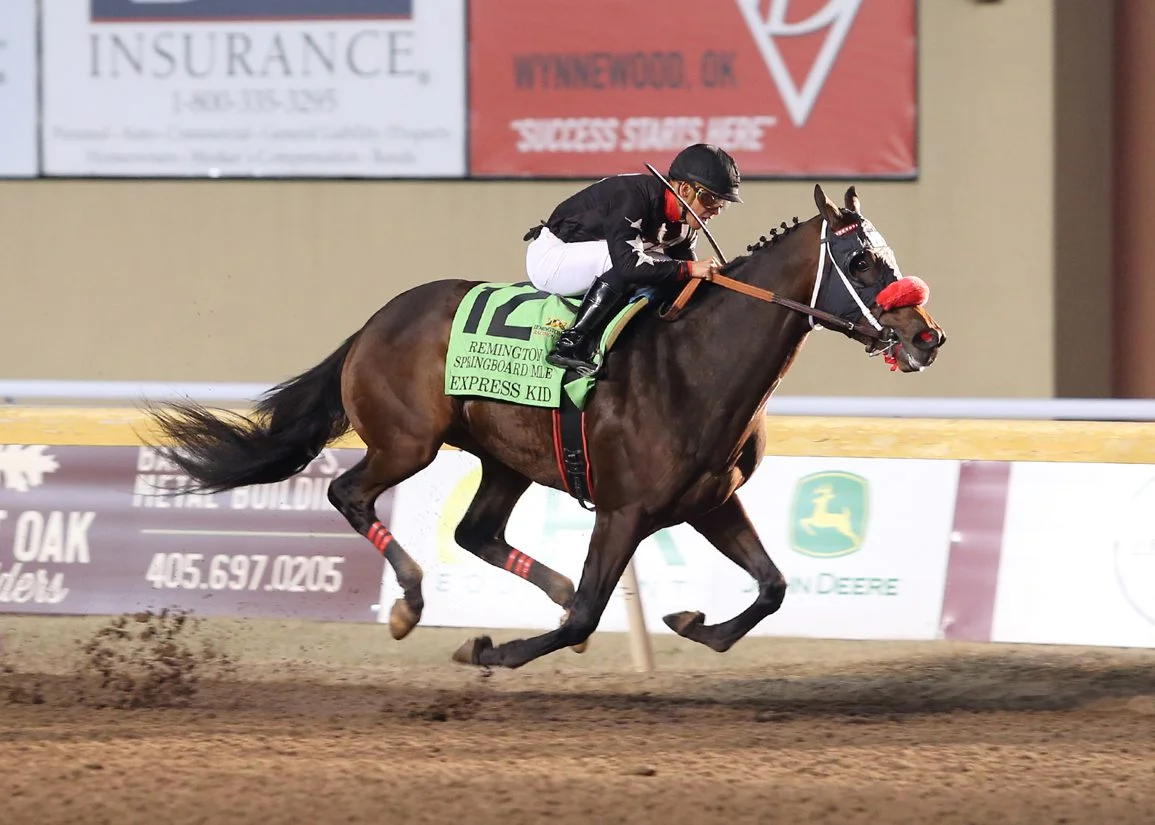
Every Kentucky Derby trail has a race that looks insignificant right up until it isn’t. The Sunland Derby lives comfortably in that category. No glamour. No coastal hype. No media parade. Just a dry, high-altitude oval in New Mexico that quietly reshapes futures markets every few years.
This season’s edition on February 15 carries only 20 qualifying points, which is precisely why bettors should care. A win here does not crown a Derby favorite. It creates something far more interesting: a desert longshot whose Kentucky Derby betting price collapses overnight from triple digits into uncomfortable relevance.
Sunland does not produce polished superstars. It produces specialists. And specialists can be extremely profitable when the market underestimates what they just proved.

Sunland Park is not a neutral environment. Treat it like one, and your tickets will die quietly. The track sits at roughly 4,000 feet above sea level. The air is thinner. The surface is drier. Speed carries differently. Horses that look ordinary elsewhere suddenly finish with authority, while more fashionable shippers labor through the lane like they are dragging anchors.
This is why Sunland winners often look strange on paper and why their futures odds start absurdly high. They do not fit the traditional Derby narrative. They do not come from the “right” circuits. They are not visually impressive in a graded company until they are.
When a horse wins here convincingly, especially on the front end or with sustained mid-race pressure, the effort tends to be more legitimate than it looks. And when that horse earns 20 points, the market is forced to react. Not emotionally. Mathematically.
This is the Sunland Derby’s real value. A colt sitting at 80/1 or 100/1 on the Kentucky Derby odds board does not need to become a Derby lock to be profitable. He needs to become plausible. A Sunland Derby win does exactly that.
Those 20 points do not secure a gate spot, but they move the horse into the conversation. More importantly, they signal to oddsmakers that the horse has demonstrated durability, adaptability, and the ability to thrive under conditions that punish weakness.
That combination alone is enough to trigger a futures correction. Suddenly, the longshot is 30/1 or 25/1. Not because he is now expected to win the Derby, but because the risk of being wrong just increased. For bettors who identify the right profile early, this is where value is created. Not on Derby Day. In February.
Not every Sunland runner is worth tracking. Most are simply passing through. The ones that matter share a few traits that do not always jump off the page.
They tend to relax early despite forward positioning. Horses that fight their riders in thin air rarely finish. They also show an ability to sustain speed rather than produce a short, flashy burst. Sunland rewards grinders who keep finding, not turn-of-foot merchants.
Pedigree helps, but not in the way people expect. You are not looking for flashy dirt sires as much as you are looking for stamina influences and durability. Horses who thrive here often have pedigrees that suggest they want to work, not pose.
Most importantly, the right longshot exits the race with something left. A desperate, all-out Sunland win does not translate well. A controlled effort, even if visually unremarkable, often does.
Those are the horses that reappear in March and April, quietly outperform expectations, and climb the Kentucky Derby leaderboard faster than anyone predicted.
Because Sunland feels inconvenient. It does not fit neatly into the coastal prep narrative. It does not offer instant validation. Futures bettors prefer confirmation from races they already respect. That bias creates inefficiency.
When a horse wins the Sunland Derby, the instinct is to dismiss the field strength and downgrade the result. Oddsmakers do not have that luxury. They price risk, not opinions. That gap between perception and pricing is where opportunity lives.
A desert longshot does not need to win another prep to justify a futures ticket. He needs to keep showing up, keep earning points, and keep surviving distance tests. By the time that happens, the price is gone.
The Sunland Derby is not about finding your Derby winner. It is about identifying horses whose probability is mispriced relative to their demonstrated resilience.
If a longshot wins convincingly under these conditions, he has shown something meaningful. He has handled altitude. He has handled pace pressure. He has finished when others stopped.
Those traits matter far more in May than social media buzz in January.
For serious Kentucky Derby betting, this race is a signal. Ignore it, and you will be forced to chase shorter prices later. Respect it, and you can position yourself ahead of the market.

The Sunland Derby will not dominate headlines. It will not produce viral clips. It will, however, quietly create the next horse everyone pretends they always liked.
One win here can turn a forgotten colt into a legitimate futures asset overnight. Not because he suddenly became elite, but because he proved he can survive conditions that break others. That is the essence of the desert longshot.
And if you wait until everyone else notices, you already missed the bet.

The writing team at US Racing is comprised of both full-time and part-time contributors with expertise in various aspects of the Sport of Kings.