Savvy gamblers understand that the Kentucky Derby Future Wager (KDFW) represents a battle against time and information. When you place a bet months before the first Saturday in May, you essentially purchase a call option on a horse's development. As we exit Pool 3, the market presents a fascinating dichotomy. The "All Other 3-Year-Olds" field remains the betting favorite at 7-2, signaling that the public still believes the eventual winner might be hiding in plain sight. Mastering the art of the hedge allows you to protect these early investments while still maintaining significant upside as the Kentucky Derby leaderboard begins to solidify.

The "Field" or "All Others" option serves as a safety net for those who recognize the volatility of young Thoroughbreds. In January and February, injuries, distance limitations, and late bloomers frequently derail the "hyped" individual interests. By holding a ticket on the field, you own every horse not listed as an individual betting interest.
Historically, this pool provides immense value because it includes the "now" horses that haven't yet reached the national consciousness. To maximize your returns, you must view the field not as a lazy bet, but as a strategic anchor for your entire Kentucky Derby betting portfolio.
Current Kentucky Derby contenders fall into two categories: the established stars and the intruders. Ted Noffey currently sits atop the throne as the 6-1 individual favorite following his dominant Breeders' Cup Juvenile performance. He possesses the tactical speed and the pedigree to handle the classic distance. However, Golden Tempo recently shook the foundations of the market with a breathtaking last-to-first rally in the Lecomte Stakes. His 20-point haul moved him into the second spot on the Kentucky Derby leaderboard.
Meanwhile, Bob Baffert’s Litmus Test remains a constant threat, offering a high-cruising speed that typically translates well to the Churchill Downs surface. Comparing these three against the 7-2 "Field" price reveals a tight market where efficiency is hard to find.
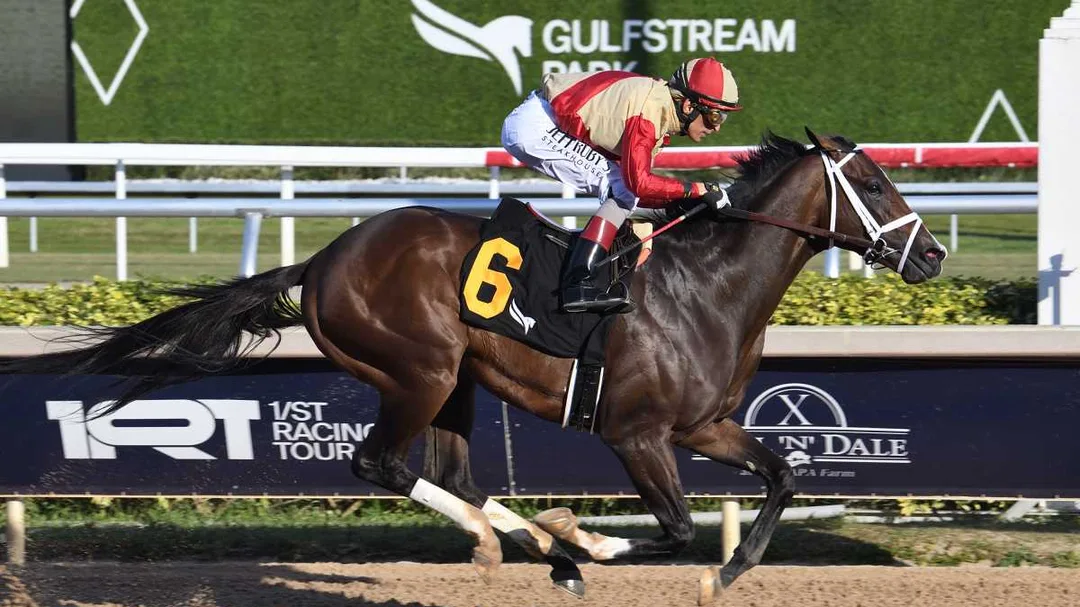
The most profitable Kentucky Derby betting strategies involve identifying "Field" horses before they become individual interests in Pool 4 or 5. Look closely at the Todd Pletcher-trained Nearly. While currently buried in the "All Others" mass, this colt recently unleashed a visually stunning maiden victory at Gulfstream Park. Nearly stopped the clock in a time that suggests he belongs with the elite. If Nearly wins his next allowance or jump into a graded prep, his Kentucky Derby Odds will crash from the field-implied price down to perhaps 12-1 or lower. Identifying 2-3 of these "landmine" horses allows you to understand exactly when your field ticket gains or loses its "intrinsic" value.
Active investors never let a profitable position sit unprotected. If you bet the field in Pool 1 or 2 at 4-1 or 5-1, and your "hidden" horse like Nearly or Chief Wallabee emerges as a star, you now hold an "in-the-money" ticket. You should use subsequent pools to bet on Kentucky Derby online by taking positions on the rivals of your primary interest. For example, if you hold a 7-2 field ticket and Golden Tempo looks invincible in February, placing a small "saver" bet on Golden Tempo ensures a profit regardless of which faction wins. This "Dutching" approach stabilizes your bankroll and prevents a single injury from wiping out your entire season's investment.
The road to Louisville passes through specific geographical hubs: Florida, Louisiana, New York, and California. We monitor the Kentucky Derby prep races to see which "All Others" graduates handle the transition from sprints to two-turn routes. Horses that win at 1 1/16 miles in late January often see their stock soar. The upcoming Holy Bull Stakes and Robert B. Lewis Stakes will act as filters. If the favorites fail in these spots, your "All Others" tickets gain immense equity. You must track the speed figures from these specific races to determine if the current individual favorites actually deserve their short Kentucky Derby Odds.
The points system dictates who enters the starting gate, but it doesn't always dictate who has the most talent. Use the Kentucky Derby leaderboard to identify "safe" horses (those who already have 20 or more points and are virtually guaranteed a spot). If your field ticket relies on a horse with zero points, your risk profile is significantly higher. In this scenario, you should hedge by betting on established point-earners in the current pool. This ensures that even if your "sleeper" fails to qualify, you still have a live ticket on a horse that will actually participate in the race.
The betting market is a living organism that reacts to every morning workout and trainer quote. Between Pool 3 and Pool 4, we often see the most dramatic shifts in Kentucky Derby Odds. Public money tends to overreact to recent winners. If a horse wins a prep race by five lengths, the public will hammer them in the next pool. This creates "value" on the other side. If you already have coverage on the "new star" via a field ticket, you can contrarily bet on the "fading" favorites whose prices have inflated. Successful Kentucky Derby betting requires you to zig when the general public zags.

Total handle for Pool 3 increased by 8% year over year, demonstrating that more players are engaging with the futures market than ever before. This liquidity makes the prices more efficient but also creates opportunities for those who dig into the "fresh data" of pedigree. Look for sons of Into Mischief or Gun Runner who are just now breaking their maidens. These horses often start in the "All Others" pool but possess the genetic ceiling to win the Derby. By focusing on these high-ceiling athletes, you ensure your Kentucky Derby contenders list includes horses that can actually get the 1 1/4-mile distance.
Many players ignore the KDFW Exacta pools, but they offer the ultimate hedging tool. If you are convinced a "Field" horse will win but fear Ted Noffey’s consistency, you can play an Exacta: "All Others" over Ted Noffey. This allows you to extract a massive payout if your longshot wins while using a popular favorite to "key" the bet. This advanced Kentucky Derby betting tactic turns a simple win bet into a sophisticated multi-variable hedge. It protects you from the "heartbreak second" where your 50-1 longshot gets caught at the wire by the favorite.
The window to secure life-changing prices on the 2026 Run for the Roses is closing rapidly. As the Kentucky Derby prep races intensify, the "All Others" field will eventually disappear, leaving you only with short-priced individuals.
Do not wait until May to formulate your plan. By utilizing a disciplined bankroll strategy and hedging your field tickets with targeted individual bets, you position yourself for a massive score. Whether you trust the brilliance of Ted Noffey or the hidden potential of a maiden like Nearly, the time to act is now.

The writing team at US Racing is comprised of both full-time and part-time contributors with expertise in various aspects of the Sport of Kings.