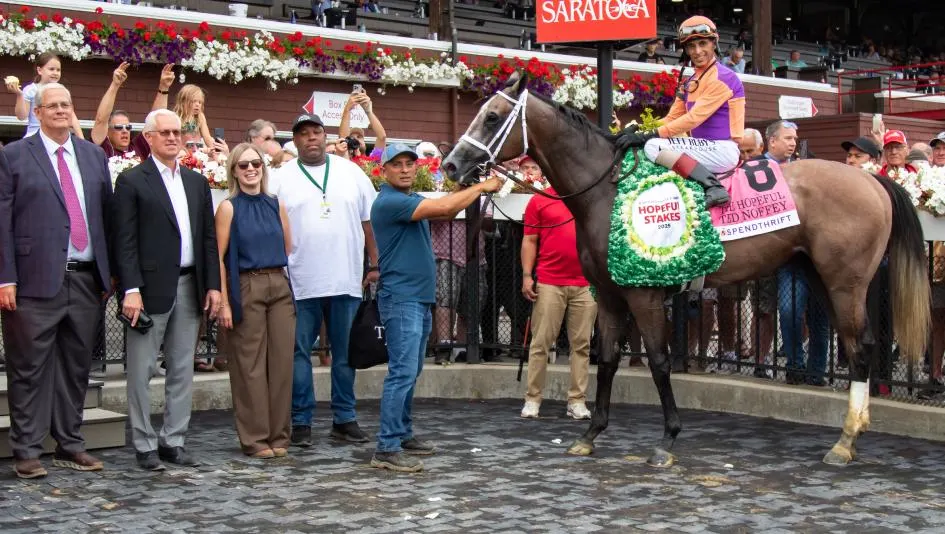
The road to Churchill Downs often appears mathematically certain by mid-January. You look at the current Kentucky Derby leaderboard and see a horse like Ted Noffey sitting on a massive 40-point cushion. He dominated the juvenile season; he looks physically imposing, and his connections represent the absolute elite of the sport. Naturally, the betting public rushes to the windows to back the "sure thing." However, professional horse racing analysts see something different: a massive psychological trap. History proves that a "safe" horse in January frequently becomes the most dangerous bet for your bankroll.

Ted Noffey effectively secured his spot in the starting gate before the calendar even turned to 2026. With 40 points in the bag, his trainer, Todd Pletcher, no longer faces the pressure of "needing" a win in his next start. This creates a fascinating divergence between the horse’s actual talent and his betting value.
While the public looks at his past performances to justify short Kentucky Derby odds, the "smart money" looks at the upcoming prep schedule as a series of training exercises rather than competitive peaks. When a horse has already qualified, the urgency to win vanishes, yet the public still bets them as if every race is the Breeders' Cup.
Elite horse trainers like Todd Pletcher operate with a "Peak on the First Saturday in May" philosophy. Once a horse like Ted Noffey secures a 40-point safety net, the trainer shifts from "winning mode" to "fitness mode." In winning mode, a trainer sharpens a horse with aggressive work and aggressive race-day tactics to ensure a top-two finish. In fitness mode, the objective changes entirely. The horse might run on a "dead" rail, carry more weight, or be asked to produce a soft effort intended solely to maintain lung capacity and bone density. If Ted Noffey finishes a lackluster third or fourth in his next start, Pletcher won't mind, but your win ticket will be worthless.
The betting market thrives on the perception of safety. Casual gamblers love betting on Kentucky Derby contenders who have already "proven" they belong. This herd mentality artificially inflates the price of the favorites, creating a vacuum of value elsewhere in the field. When you bet on Kentucky Derby online, you must realize that you aren't just betting against the horses; you are betting against the public's perception of those horses. A horse with 40 points is a "known quantity," and in the horse betting world, known quantities are rarely underpriced. You are essentially paying a premium for a horse that might not even be trying to win his next race.
While Ted Noffey cruises in "fitness mode," other horses are fighting for their competitive lives. Look at the current Kentucky Derby leaderboard and find the "hungry" horses sitting with 10 or 13 points. These animals, like Further Ado or Universe, need a top-two finish in their next outing to guarantee their spot in Louisville. This creates a massive disparity in "Expected Value" (EV). Further Ado’s trainer, Brad Cox, will have his horse "cranked" for a maximum effort. This horse is a much better bet than the safe favorite because his intent is 100% focused on the winner's circle.
Further Ado currently sits with 10 points, while Universe holds 13. These are the "Point Desperate" longshots that professional gamblers target during the January Kentucky Derby prep races. These horses often have higher ceilings than their current odds suggest. Because they haven't "broken through" yet, you can often find them at 15-1 or 20-1, while the safe favorite sits at even money. In a head-to-head matchup in January, the horse that must win will almost always outwork the horse that is merely practicing. This is the fundamental edge in modern Kentucky Derby betting strategies.
Fading the points leader in their first start after qualifying is one of the most profitable angles in horse racing wagering. Think about the physical toll of a maximum effort. If Pletcher sends Ted Noffey out to win by ten lengths in January, he risks "burning out" the horse before May. Therefore, the logical move is to give the horse a "teaching" race. He might be held back behind a slow pace to learn how to handle kickback, or he might be asked to wide-loop the field for exercise. None of these tactics lead to a winning bet, but they all lead to a better horse in May. As a bettor, you want to follow the horse that needs the check today.
The Kentucky Derby futures pools are currently dominated by Ted Noffey's name, but this is exactly where the trap is set. When you look at the current Kentucky Derby odds, you see the favorite at 6-1 or 8-1 months before the race. If you lock in that price now, you are betting that the horse remains healthy, maintains form, and overcomes the "fitness mode" slump. Conversely, taking 30-1 on a horse like Universe allows you to capture massive "closing line value" if he wins his next prep. The goal is to find the horse whose odds will drop from 30-1 to 10-1, not to hold a 6-1 ticket on a horse that is already priced to perfection.
Historical data shows that many Derby winners had a "blemish" on their record in January or February. This is rarely an accident. It is often the result of a deliberate "soft" start. If you study Pletcher's past winners like Super Saver or Always Dreaming, you notice they weren't always winning by huge margins in mid-winter. They were building a foundation. The public often overreacts to these "losses," causing the horse's odds to drift. If you want to bet on Kentucky Derby online successfully, you must learn to ignore the result and analyze the intent. Was the horse asked to win, or was he asked to exercise?

To rank among the top earners in the horse racing industry, you must be willing to stand alone. The 40-point safety trap is the perfect opportunity to do just that. While the casual fan is mesmerized by Ted Noffey's highlights, you should be scouring the past performances of the horses sitting at the bottom of the Top 20. These are the horses that will provide the explosive payouts. By focusing on intent and qualification pressure, you align your money with the horses that have the most to gain. Betting on "safety" is a recipe for slow bankroll depletion; betting on "hunger" is the path to the jackpot.
Ted Noffey might be the best horse in the crop, but in January, he is a terrible bet. The 40-point safety trap is designed to catch bettors who value security over profit. Don't be the gambler who holds a losing ticket because you backed a horse that was only out for a morning stroll. Instead, target the "Point Desperate" longshots who are ready to run the race of their lives just to stay on the path to Louisville. The value has shifted away from the top of the leaderboard. Are you brave enough to follow it?
Ready to turn this insight into profit? Don't miss out on the shifting market. Stay tuned to US Racing and get exclusive horse racing betting insights for your Kentucky Derby betting season with a winning edge.

The writing team at US Racing is comprised of both full-time and part-time contributors with expertise in various aspects of the Sport of Kings.