The Road to the Derby demands more than just raw speed; it requires a physiological resilience that few three-year-olds possess. Betting enthusiasts often fall in love with a dominant performance in January, assuming that a double-digit victory guarantees a spot on the Kentucky Derby leaderboard. However, seasoned analysts know that a massive effort early in the season often acts as a double-edged sword. We call this the "Bounce Theory," and the recent underperformance of Strategic Risk provides a textbook example of why data integrity matters more than a flashy winner’s circle photo. If you want to master Kentucky Derby betting, you must learn to separate a horse's peak physical form from its actual long-term potential.

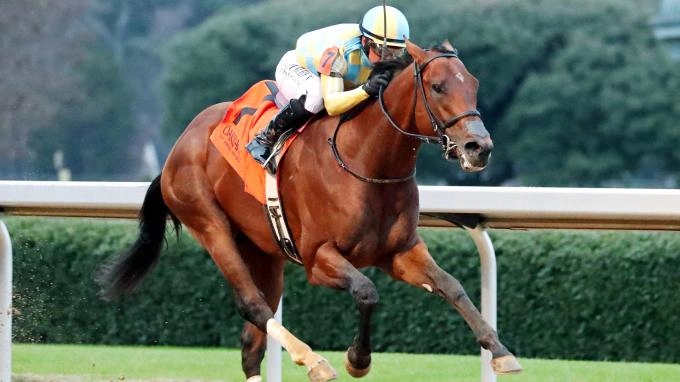
Strategic Risk entered the national spotlight following a truly dominant score in the Smarty Jones Stakes at Oaklawn Park. He didn't just win; he dictated the terms, stalking a longshot leader before exploding in the stretch to win by 4 1/2 lengths. He stopped the clock for 1 1/16 miles in 1:45.06, earning 10 vital points toward the Kentucky Derby leaderboard. On paper, this performance signaled a new superstar for trainer Mark Casse. However, the data beneath the surface told a more taxing story. Strategic Risk recorded a final quarter-mile in a blistering :23.78. While this speed thrills fans, it often depletes the physical "juice" of a young colt who still lacks the seasoned muscle mass of an older stakes horse.
The "Bounce" occurs when a horse exerts itself so significantly that it cannot recover its physiological baseline before its next start. Think of it as a battery that you drain to 0%; a quick recharge isn't enough to power a high-performance machine just two weeks later. When Strategic Risk shipped to New Orleans for the Lecomte Stakes, he carried the burden of that Smarty Jones exertion. Sharp bettors looked at the Kentucky Derby Odds and saw a vulnerable favorite. They recognized that the horse’s metabolic recovery likely lagged behind his training schedule. This regression in form represents a return to the mean, proving that a "career-best" figure is often followed by a lackluster "dud."
As the gates opened for the Lecomte Stakes, the betting public hammered Strategic Risk, yet the horse never looked comfortable. While Golden Tempo rallied from the back to seize the 20 points for the win, Strategic Risk languished in the middle of the pack. He lacked the "punch" that defined his previous victory. This is the hallmark of a tired winner. He didn't lose because he lacked talent; he lost because his body remained stuck in the recovery phase of his previous cycle. To successfully bet on Kentucky Derby online, you must track these "form cycles" rather than just looking at the last race's finishing position. Strategic Risk essentially ran his "Derby" in January, leaving nothing for the actual Kentucky Derby prep races that followed.
In modern horse racing, we rely on "The Sheets" (Thoro-Graph or Ragozin numbers) to measure internal exertion. A horse that drops a massive "1" or "2" on these scales frequently "bounces" (runs a "5" or "6") in the following outing. This provides the ultimate "fade" strategy for those looking at Kentucky Derby futures. When a horse like Strategic Risk overperforms his pedigree or previous speed figures by a wide margin, the probability of a regression exceeds 70%. Smart players use this data to find value in more consistent Kentucky Derby contenders who are improving incrementally rather than peaking too early in the winter.
Spotting a "tired" horse requires a keen eye during the post-parade and a deep dive into the past performances. First, look for a "new lifetime top" speed figure followed by a short layoff (less than 30 days). Strategic Risk returned to the track in just two weeks, a grueling turnaround for a three-year-old. Second, observe the paddock behavior. A horse suffering from a pending bounce often appears "flat," lacking the dappled coat or the energetic "swagger" seen during their peak performance. If you are monitoring Kentucky Derby betting markets, watch for "negative" steam (money coming in late on other horses), which often signals that a professional clocker saw a lethargic morning work from the favorite.

Currently, the Kentucky Derby leaderboard features several horses with 10 to 40 points, including Ted Noffey and Golden Tempo. Strategic Risk remains on that list, but his stock is falling. A horse that bounces once is a warning; a horse that fails to recover in their third start is a "non-contender."
As we approach the high-point Kentucky Derby prep races in March, like the Florida Derby or the Arkansas Derby, the intensity only increases. You cannot afford to back a horse that is "fighting the track" or showing signs of late-race fatigue. Consistency is the primary trait of a Derby winner, not sporadic brilliance followed by total collapse.
We must also consider the stamina influences. Strategic Risk is by Noble Bird out of an Afleet Alex mare. While the pedigree suggests he can handle distance, Noble Bird's progeny often run "hot." They give everything in one go. This makes them highly susceptible to the bounce factor. When you evaluate Kentucky Derby contenders, prioritize those by sires like Curlin or Into Mischief, who tend to produce "iron horses" capable of maintaining high-level performance across multiple starts. The ability to "pair" speed figures (running back-to-back fast races) is what separates a true Triple Crown threat from a January one-hit wonder.
As the Kentucky Derby Odds fluctuate, the market often overreacts to these bounces. This creates a unique opportunity for value. If Strategic Risk takes a longer break and returns for a final prep, he might be "overlaid" (at a higher price than he should be) because the public remembered his Lecomte failure. However, the initial "Red Flag" remains. A horse that shows a vulnerability to physical exhaustion in January rarely finds the "bottomless" stamina required to win at 1 1/4 miles under the Twin Spires in May. Successful Kentucky Derby betting requires a memory that spans the entire prep season, not just the last seven days.
The "Bounce" is not a myth; it is a physiological reality that claims dozens of promising Derby dreams every year. Strategic Risk’s failure in the Lecomte serves as a vital reminder that data integrity and form-cycle analysis are the only ways to stay profitable. As the field for the 152nd Run for the Roses begins to take shape, don't let a single flashy performance blind you to the underlying fatigue of a young athlete. Monitor the Kentucky Derby leaderboard, track the morning works, and always question a favorite coming off a career-best effort.
The most lucrative opportunities in horse racing come from knowing when to "fade" the popular choice. If you are ready to turn these insights into profit, now is the time to take action. Stay tuned to US Racing to access our exclusive speed figures, real-time track updates, and expert picks that identify the next big "bounce" before it hits your bankroll. Don't just watch the races; dominate the windows. Join our community of elite handicappers and start winning your Kentucky Derby bets today.

The writing team at US Racing is comprised of both full-time and part-time contributors with expertise in various aspects of the Sport of Kings.