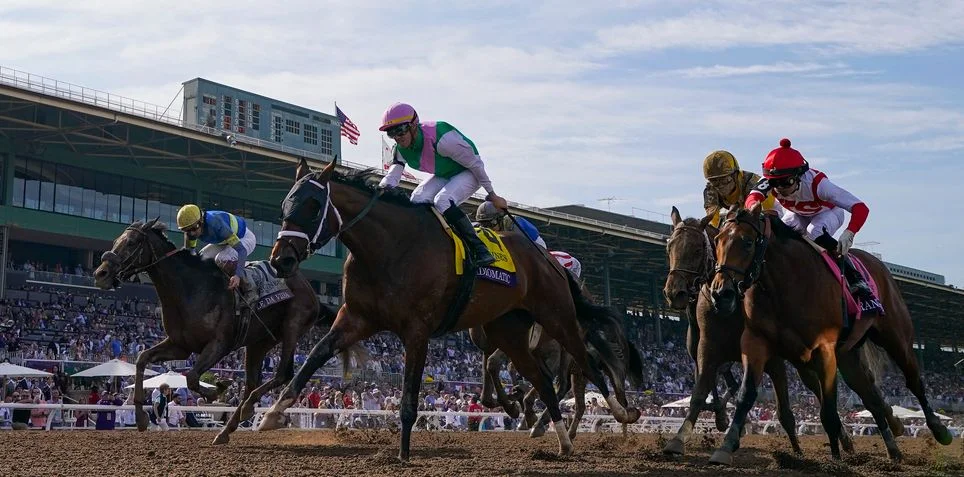
Every major Kentucky Derby prep season produces one or two races where the betting public focuses almost exclusively on speed figures and trainer reputation. The San Felipe Stakes at Santa Anita Park often falls into that category. Bettors look at past performances, notice a Bob Baffert runner or a flashy Beyer number, and push the odds board into predictable territory. That approach leaves value on the table.
The San Felipe Stakes stretches young three-year-olds to 1 1/16 miles, and the race traditionally serves as the launchpad toward longer Derby preps like the Santa Anita Derby and ultimately Churchill Downs. When distance increases, visual biomechanics start to matter. Bettors who watch the paddock closely can spot physical signals that indicate whether a horse will sustain speed or fade once the real running begins.

That is where paddock scouting becomes powerful. A horse that “reaches” with its stride often signals efficient motion and stamina potential. When bettors learn to identify that trait before the race, they gain a rare edge over casual wagering.
And that edge matters, especially for bettors already tracking Kentucky Derby betting markets weeks before the Run for the Roses.
Serious horseplayers use the phrase “reaching stride” to describe a horse whose forelegs extend smoothly forward while the hindquarters drive underneath the body. This motion creates fluid forward propulsion without wasted energy. In the paddock, that stride looks unmistakable once you know what to watch.
The horse walks with a long, relaxed step. The front leg stretches outward instead of stabbing the ground. The hind legs follow through beneath the torso rather than trailing behind. Each step covers more ground with less visible effort. That efficiency matters at distances like the San Felipe Stakes, where young horses transition from sprint-style running to route stamina.
When a horse reaches naturally, the motion allows the horse to conserve energy through the first half of the race. That energy conservation becomes critical once the field approaches the far turn at Santa Anita.
For bettors analyzing San Felipe Stakes contenders, spotting that stride in the paddock often reveals which runners will thrive at longer distances and which ones simply carry sprint speed. This small observational skill often influences smart Kentucky Derby betting decisions long before the public recognizes the pattern.
The 2026 San Felipe Stakes features a compact but intriguing group of seven three-year-olds. Several runners enter with strong connections and promising juvenile form, but the paddock will reveal far more about their readiness for the distance.
The field includes:
Several trainers here know exactly how to prepare a Derby contender. Bob Baffert brings two runners with significant expectations, while Tim Yakteen continues to develop horses capable of competing in elite prep races. However, numbers alone do not guarantee stamina. That fact makes paddock observation crucial before bettors bet on San Felipe Stakes today.
Morning-line favorite Brant arrives with enormous hype after placing third in the Breeders’ Cup Juvenile. That race often produces future Kentucky Derby contenders, and bettors immediately connected Brant with early Kentucky Derby betting futures markets. But pedigree and reputation do not guarantee success at longer distances.
When Brant enters the paddock at Santa Anita, bettors should focus on one detail above all others: stride extension. If Brant walks with a tight, compact stride that keeps his hind legs trailing behind his body, the colt may struggle once the race stretches past the mile mark.
If Brant displays long, reaching steps and relaxed shoulder movement, bettors can treat him as a legitimate distance threat in the San Felipe Stakes and beyond. Visual confirmation like this can dramatically alter wagering strategies.
Trainer Tim Yakteen brings Secured Freedom into the San Felipe Stakes after a solid effort in the Robert B. Lewis Stakes. That race often serves as a stepping stone toward this event. Yakteen has developed a reputation for improving horses gradually through the prep season. Horses from his barn often appear calmer and more physically mature with each start.
In the paddock, Secured Freedom will likely show a balanced frame and steady walking rhythm. Bettors should examine whether his hindquarters step underneath his body while walking. That motion signals powerful drive from the rear legs, a key trait for horses stretching to longer distances.
If Secured Freedom demonstrates that reaching stride, bettors looking to bet on San Felipe Stakes today could find value at mid-range odds. Those kinds of horses often attract attention in later Kentucky Derby betting pools.
Dan Blacker enters two runners in the San Felipe Stakes, and Start The Ride could surprise bettors who ignore paddock signals. This colt won the California Cup Derby earlier this season, but many bettors dismiss state-bred form when evaluating graded stakes contenders. That skepticism often creates wagering opportunities.
In the paddock, Start The Ride should show athletic fluidity if he truly belongs at this level. Look for loose shoulder motion and long strides during the walk. A relaxed horse that swings its neck naturally while walking often indicates mental composure, which helps young runners conserve energy during longer races.
If Start The Ride displays those visual cues, bettors could discover a significant overlay in the San Felipe Stakes wagering pools.
Paddock scouting does not only reveal positive traits. It also exposes warning signals that bettors should respect. A horse that chops its stride with short, quick steps often lacks the reach necessary for route racing. That movement forces the horse to expend more energy early in the race.
Other red flags include:
When bettors observe these signals before the San Felipe Stakes, they should reconsider any wagers on that runner. Even heavily favored horses can fail when physical tension overrides natural stride mechanics. Understanding these warning signs often improves Kentucky Derby betting accuracy later in the season.
Santa Anita Park presents unique tactical demands for three-year-olds in the San Felipe Stakes. The relatively short run into the first turn encourages jockeys to secure early position, but the sweeping turns still reward horses that maintain sustained momentum.
Horses with reaching strides maintain speed through those turns without losing balance or rhythm. Horses with shorter strides often struggle to maintain forward momentum once the race reaches the far turn. That difference often separates contenders from pretenders.
Because the San Felipe Stakes frequently launches future Derby runners, paddock observation in this race can shape betting strategies for the rest of the prep season. Many experienced horseplayers begin adjusting their Kentucky Derby betting futures tickets immediately after observing these physical traits.
Smart bettors treat paddock observation as a final piece of information rather than a replacement for traditional handicapping.
This layered approach helps bettors identify runners whose physical condition matches the demands of the San Felipe Stakes distance. When bettors combine statistical analysis with visual scouting, they often uncover value that traditional handicapping misses.

Every Kentucky Derby prep season produces one race where sharp bettors gain a serious advantage over the crowd. The San Felipe Stakes often becomes that race.
By learning to recognize the reaching stride and other stamina indicators in the paddock, bettors transform themselves from passive observers into informed analysts. They begin to see details that most casual bettors ignore. Those details translate directly into smarter wagers.
The next time the field circles the paddock at Santa Anita, watch carefully. Observe how each horse moves, how each stride extends, and how efficiently each runner covers ground.
Then step confidently to the window and bet on San Felipe Stakes today with the insight that separates professionals from the crowd. Because the path to profitable Kentucky Derby betting often begins with one simple moment in the paddock.

The writing team at US Racing is comprised of both full-time and part-time contributors with expertise in various aspects of the Sport of Kings.