November is when the Kentucky Derby prep race season starts to separate the real contenders from the maiden winners who got lucky once. Two big weekends are on the board right now. The Bob Hope Stakes at Del Mar on November 15 is your West Coast seven-furlong sprint for two-year-olds, and it already looks like a Baffert-versus-O'Neill showdown with legitimate depth. Then on November 28, Churchill Downs runs its Stars of Tomorrow II card with the Grade II Kentucky Jockey Club for colts and the Grade II Fasig-Tipton Golden Rod for fillies, both going a mile and a sixteenth, both worth $400,000, and both handing out Road to the Kentucky Derby qualifying points. That is a lot of Derby trail action packed into three weeks, and there is real money to be made if you do the homework.
Let's go race by race.

Eleven colts nominated. Six from Doug O'Neill, three from Bob Baffert. That is your story right there. The Bob Hope has historically been a stepping stone for West Coast juveniles looking to build a points base before the big winter preps, and this year's field has the trainer firepower to make it worth your full attention.
Baffert's trio is the natural place to start. Domus, the son of Domus's sire, wired his debut by five and a half lengths. That number gets your attention. The problem is he has tended to flatten out in subsequent starts. He ran in both the Del Mar Futurity and the American Pharoah Stakes and faded in both. That is a pace fade pattern you have to respect at seven furlongs here. If the speed holds and the pace is honest, Domus can still win this. If someone forces a real pace duel early, his late-fade history becomes a real liability. Emancipate, also from the Baffert barn, rounds out the trio alongside Kivo, an Omaha Beach freshman who broke his maiden and gives Baffert a third look at the exacta. Omaha Beach juveniles have been worth following, and Kivo at any kind of price deserves a spot on your ticket.
O'Neill running five horses in one race is aggressive but not unusual for his operation. He floods the zone, which naturally raises pace questions. At least some of those horses will establish speed. That helps the closers and hurts Domus if he wants to wire this field again. When one barn controls pace, the race shape becomes more predictable, and that often means the best closer on the board ends up running past tired horses in the final furlong. Keep that in mind as the scratches sort out, and the actual post draw comes in. For full race entries and scratches, check Equibase as the card finalizes.
With O'Neill running five and Domus needing the lead, the pace will be contested. That sets up a stalker or a closer to hit the board at a price. For a straight win bet, Domus at short odds with a fade pattern is a tough sell. The value is in the exotics.
For the exacta, consider a small wheel with the best-priced O'Neill horse on top over Domus and Kivo underneath. If O'Neill's most forward runner gets clear and Domus hangs for second, you are cashing a live ticket at a decent number. A $2 exacta wheel with one O'Neill horse on top over three opponents underneath runs you $6. Add Kivo underneath, and it stays manageable.
For trifecta construction, box Domus, Kivo, and two O'Neill horses. A $1 four-horse trifecta box is $24. That gets you all 24 combinations and covers the scenario where the pace scrambles the natural order. If the Bob Hope runs back a price trifecta, that $24 investment is well worth it given the genuine uncertainty in this field.
Your longshot angle: Kivo at any double-digit morning line price. Omaha Beach has been a legitimate freshman sire, and Baffert doesn't throw three horses at a Grade 3 unless at least one is live. If Domus gets caught on the front end, Kivo may be the one Baffert horse that benefits from a contested pace. Take a small win bet and include him in all your exotics.
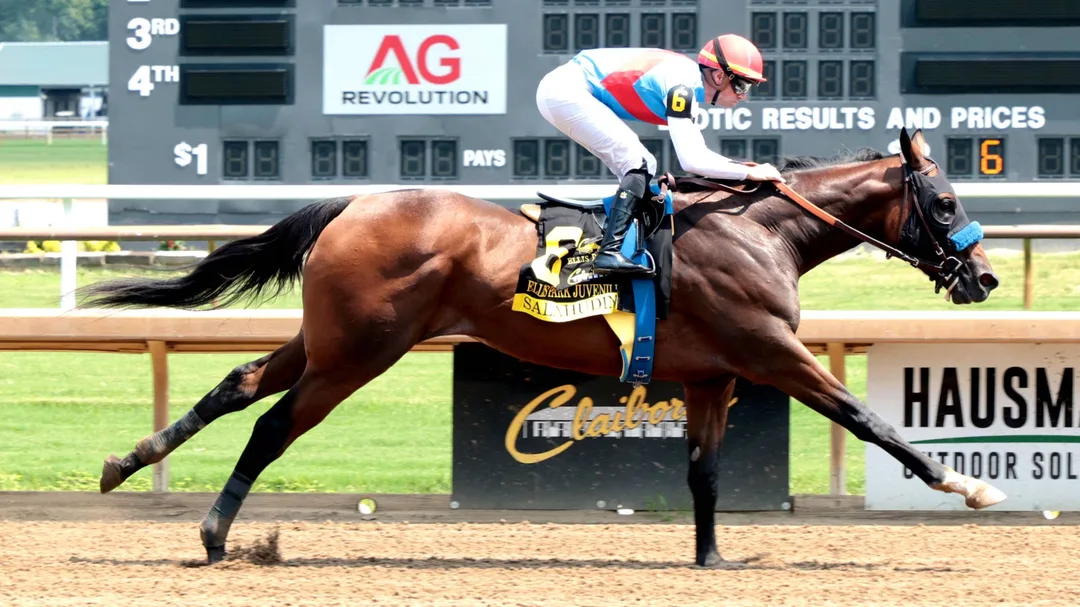
This is the race everyone's watching right now. Bob Baffert has told Churchill Downs media that Salahudin, the Uncle Mo colt who ran third in the Breeders' Cup Juvenile and won the Iroquois Stakes in September, is a live possibility for the November 28 Grade II Kentucky Jockey Club. The plan includes removing the blinkers. That detail matters.
Salahudin already sits at 19 points on the Kentucky Derby prep leaderboard. He does not need this race for points survival. Baffert is clearly thinking about sharpness and experience going into the winter. The blinkers coming off are a signal that the team believes the colt was perhaps over-focused or over-keyed in his BC Juvenile run. Taking them off at a Grade 2 against a less loaded field than the Juvenile gives you a chance to see the horse settle, rate, and develop the kind of relaxed running style that wins a mile and a quarter in May.
From a handicapping standpoint, Salahudin is the class of whatever field shows up here. The Kentucky Jockey Club Stakes at a mile and a sixteenth on a wet or firm Churchill surface suits an Uncle Mo juvenile who has already proven he can run on a big stage. The question is whether removing the blinkers creates an adjustment period or unlocks the next gear. Baffert does not make equipment changes carelessly. Trust the process here.
The rest of the field has not fully taken shape, but the Kentucky Jockey Club typically draws a mix of Midwest shippers, East Coast juveniles looking for a softer Grade 2 spot, and a few horses trying to earn their first points on the board. Any horse entering this field is competing against a colt who already ran against the best two-year-olds in the country at the Breeders' Cup. That is a significant class edge. For updated Kentucky Derby odds and contender movement, keep checking in as the November 28 field firms up.
If Salahudin runs, he is the key in multi-race exotics rather than a straight win play. At a likely short price, your win-bet return on a confirmed Baffert juvenile off a BC Juvenile podium finish will be disappointing. The move is to use him as your top key in exactas and trifectas and try to find the second and third at price.
Use Salahudin as your single key on top in a $2 exacta wheel over four horses underneath. At $8 total, one of your underneath horses needs to run second. If a lightly raced shipper or a local horse firing a career-best figure sneaks into second at 10-1 or better, you have a real payday. For the trifecta, key Salahudin on top, two horses in second, and open the third to four or five. A $1 key trifecta of 1 with 2 with 4 runs $8. That is disciplined wagering on a race where the top is fairly clear, but the bottom of the ticket is wide open.
Check the Kentucky Derby betting guide for a full breakdown of how early prep points races translate into May futures pricing and exotic construction strategy across the whole prep season.
The Golden Rod runs on the same Stars of Tomorrow II card as the Kentucky Jockey Club, and it deserves its own serious look. This is a $400,000 Grade II race for two-year-old fillies going a mile and a sixteenth at Churchill Downs. It awards early qualifying points for the Kentucky Oaks 2027 trail, and it is part of Churchill's new Sire Power competition alongside the Kentucky Jockey Club.
Brad Cox's Jump Seat has been generating early buzz in the Golden Rod conversation. Cox knows this track better than almost anyone, and when he points a filly to a Grade 2 at Churchill in November, you pay attention. The Golden Rod historically produces horses that show up again in the spring on the Oaks trail, and a sharp figure here on a wet or sealed Churchill surface can carry through the winter. Keep an eye on how the full field shapes up closer to November 28. For the latest on how Kentucky Derby contenders and their filly counterparts are tracking, the contenders page is updated regularly.
The Golden Rod also gives you a natural multi-race exotic angle when paired with the Kentucky Jockey Club on the same card. A pick 4 that runs through both Grade 2 races on the Stars of Tomorrow II card will have a lot of tickets built around Salahudin in the Kentucky Jockey Club. If you can find an overlay in the Golden Rod, that is where you separate yourself from the crowd. Early prices on the Golden Rod field are typically less compressed than the colt race, which means you can build real value into multi-race tickets if you do the work.
For anyone building a pick 4 that spans the whole Stars of Tomorrow II card, the Kentucky Derby betting resources at US Racing lay out the full exotic construction approach for prep race cards like this one.
The conversation across X and Reddit is worth following as the Bob Hope and Stars of Tomorrow II fields fill in over the next two weeks. Sharp money is tracking Salahudin's blinker removal closely, and the Golden Rod is picking up filly-focused attention as Brad Cox's Jump Seat draws early mentions.

The Grade II Kentucky Jockey Club at Churchill Downs on November 28, 2026 awards Road to the Kentucky Derby qualifying points on a 10-4-2-1 scale for the top four finishers, consistent with the standard early prep race point structure. For the full Kentucky Derby prep leaderboard and updated point standings after the race, check US Racing.
No official morning line has been released as of November 9, but Baffert's Domus, who wired his debut by 5.5 lengths, figures to open as one of the shorter prices despite showing some fade in his two subsequent starts. The O'Neill contingent of five makes this a wide-open affair with legitimate overlay potential on Kivo and select O'Neill horses. For Kentucky Derby odds movement tied to Bob Hope results, check US Racing after the November 15 card.
The Grade II Fasig-Tipton Golden Rod Stakes at Churchill Downs is a $400,000 race for two-year-old fillies at a mile and a sixteenth that awards early qualifying points for the Kentucky Oaks 2027. It runs on the same November 28 Stars of Tomorrow II card as the Kentucky Jockey Club, making that afternoon one of the most consequential juvenile days of the fall prep season. For the broader context of how these Kentucky Derby prep races connect through the winter, US Racing has the full schedule and analysis.

The writing team at US Racing is comprised of both full-time and part-time contributors with expertise in various aspects of the Sport of Kings.