Every summer, Saratoga answers one of racing’s oldest questions: Who is the best older horse in America?
For nearly a century, the answer has often come in the Whitney Stakes, a race whose honor roll reads like a Hall of Fame roll call and whose winners have defined generations of champions.
Since its inaugural running in 1928, the Whitney has evolved into one of the nation’s premier races for older horses, a $1 million Grade 1 test that often serves as the launching pad to Breeders’ Cup glory.
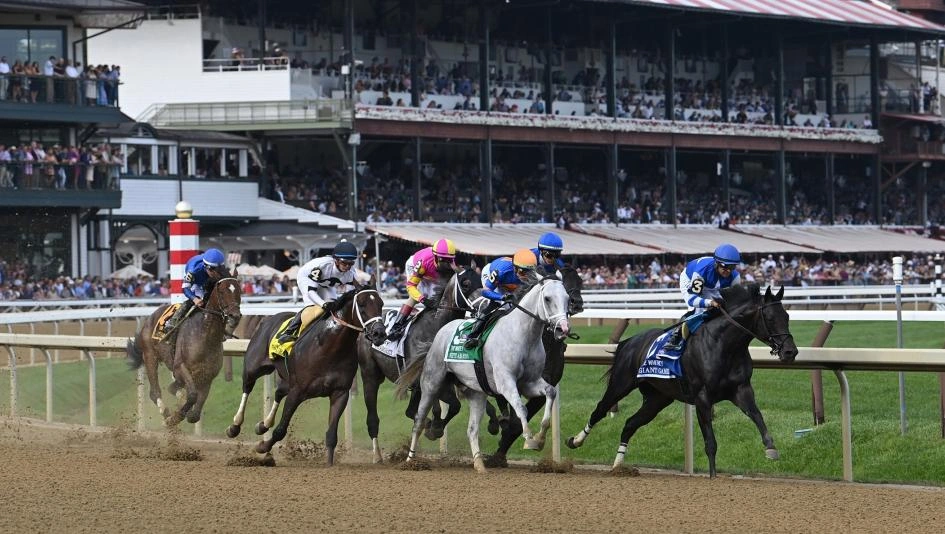
On Saturday, the Whitney has a star-studded lineup topped by Magnitude, 3-for-3 in 2026 including the Dubai World Cup (G1); 2025 Kentucky Derby (G1), Belmont Stakes (G1) and Travers Stakes (G1) winner Sovereignty; and champion filly Nitrogen, who makes her 17th start and has never finished out of the top 3.

Named in honor of the legendary Whitney family, whose contributions helped shape thoroughbred racing in America, the Whitney is woven into Saratoga’s rich history.
William C. Whitney established one of the sport’s great racing dynasties, and his son, Harry Payne Whitney, carried the family’s passion to even greater heights. Their colors were worn by champions, their breeding program produced some of racing’s finest runners, and their influence can still be felt every August when the field turns for home beneath Saratoga’s towering pines.
Run at 1 1/8 miles over Saratoga’s main track, the Whitney has long represented the championship division for older dirt horses. Winning the race doesn’t guarantee an Eclipse Award, but history suggests it often points the way. Since becoming a Breeders’ Cup “Win and You’re In” qualifier for the Breeders’ Cup Classic (G1), its importance has only grown, giving connections both a prestigious Grade 1 victory and an automatic berth into racing’s richest championship.
The list of Whitney winners tells the story of American racing itself. The incomparable Kelso captured the Whitney three consecutive times from 1961 through 1963 during his unprecedented run of five straight Horse of the Year titles. A few years later came Dr. Fager, whose brilliance and breathtaking speed made him one of the sport’s enduring legends. Damascus, one of racing’s greatest competitors, added his name to the roll of honor in 1968, while Forego dominated the decade that followed, winning the Whitney three times between 1974 and 1977 as he carried crushing weights and still turned away elite competition.
Few races have showcased as many unforgettable champions. Easy Goer overwhelmed his rivals in 1989 during one of the finest campaigns by any older horse. Criminal Type used his Whitney victory as a springboard to Horse of the Year honors in 1990. Invasor, the 2006 Horse of the Year, stamped himself as America’s best older horse with a commanding Whitney triumph before adding the Breeders’ Cup Classic later that season.
The Whitney has also produced moments that transcend statistics.
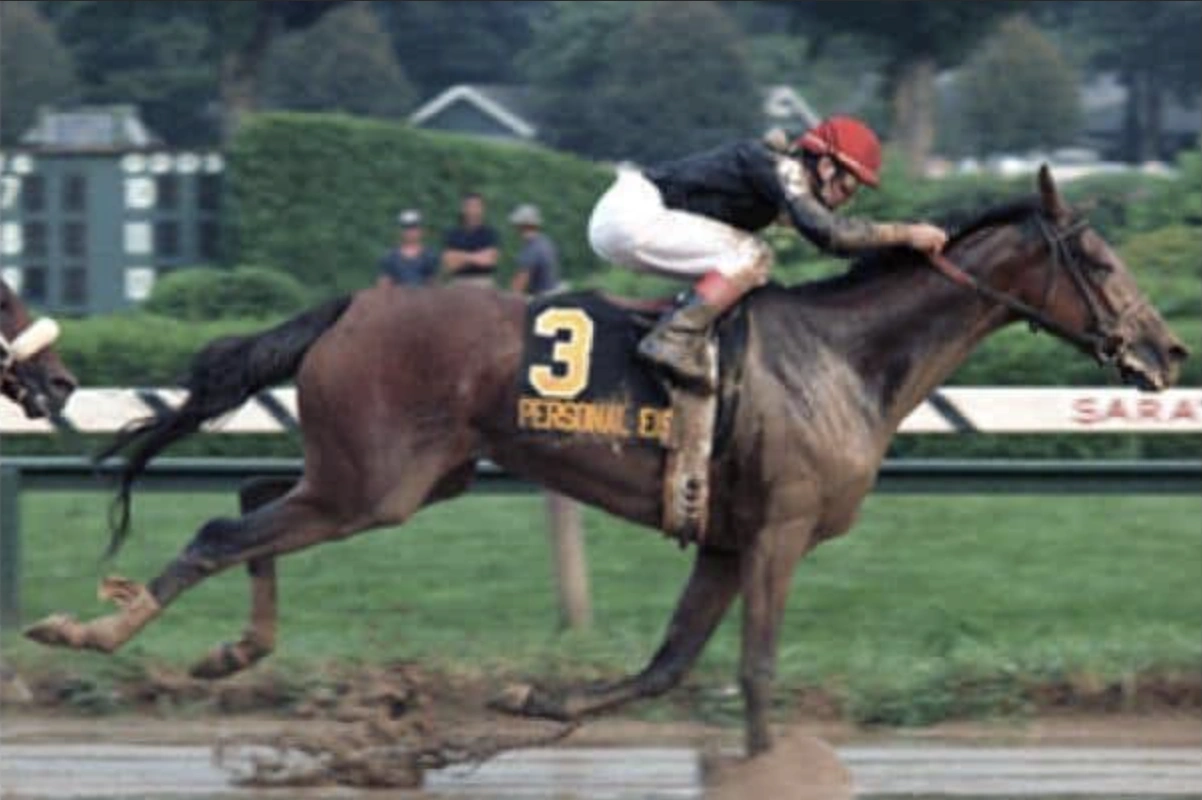
Personal Ensign’s dramatic victory in 1988 remains one of Saratoga’s most cherished memories. Already unbeaten entering the race, she rallied through the stretch to defeat the outstanding colt Gulch by a nose, preserving a perfect career that eventually ended 13-for-13. Even more remarkably, she accomplished the feat while carrying her first foal, future Breeders’ Cup Juvenile Fillies (G1) winner My Flag. It remains one of the most celebrated performances in American racing history. On Saturday, Nitrogen will attempt to become the first filly to win the Whitney since Personal Ensign and the seventh overall.
More recently, the Whitney has continued to identify championship-caliber runners. Blame used his 2010 victory to launch a season that culminated in denying Zenyatta a perfect career in the Breeders’ Cup Classic. Gun Runner dominated the 2017 edition on his way to Horse of the Year honors. Knicks Go, Life Is Good, White Abarrio and Arthur’s Ride have all reinforced the race’s reputation as the premier midsummer proving ground for older dirt stars.
White Abarrio is in for a third run in the Whitney – the 7-year-old won it in 2023 and ran fourth in 2025.
Beyond the champions, the Whitney is inseparable from Saratoga itself. Whitney Day has become one of the summer meeting’s marquee attractions, drawing packed grandstands, outstanding undercards, and some of the season’s deepest fields. It is one of those rare races where tradition and contemporary relevance exist side by side. Fans come to celebrate the sport’s history, yet every renewal offers the possibility that the next great champion is about to emerge.
And speaking of champions, one of racing’s biggest upsets took place in the 1973 Whitney when Onion defeated Triple Crown winner Secretariat by a length.
As the race approaches its centennial, the Whitney continues to honor the family whose name it bears while serving as a bridge between racing’s glorious past and its competitive present. Every winner earns a coveted place alongside the legends who came before, from Kelso and Forego to Gun Runner and today’s stars.
For horseplayers, owners and racing fans alike, that’s what makes the Whitney so special. It isn’t simply another Grade 1 on the calendar. It is Saratoga’s annual coronation of the nation’s best older horse—a race where champions don’t just win; they cement their legacy.
The writing team at US Racing is comprised of both full-time and part-time contributors with expertise in various aspects of the Sport of Kings.