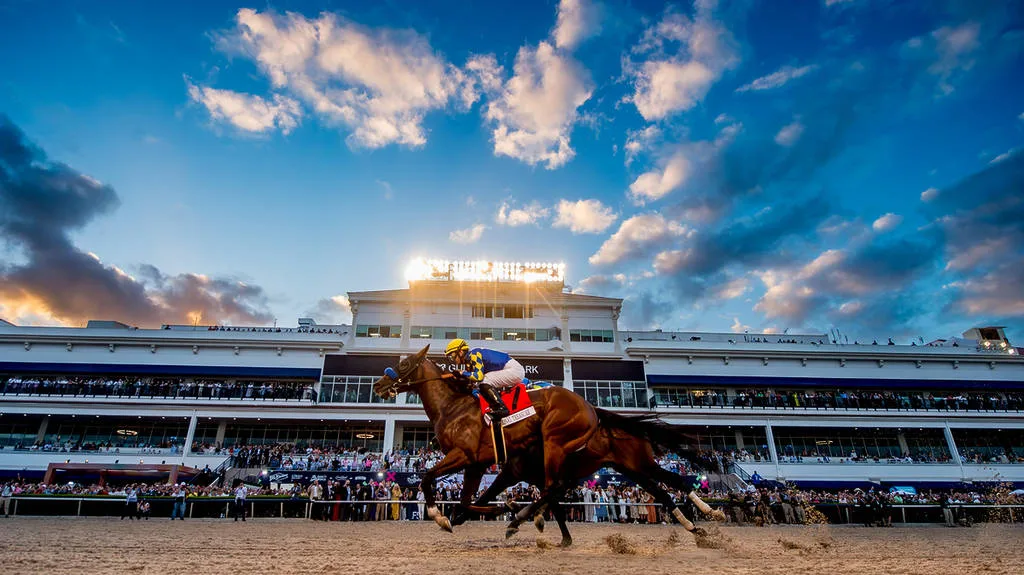
The nine-furlong distance at Gulfstream Park represents more than just a measurement on a dirt track; it acts as a physiological crossroads. Horse racing enthusiasts often view the 1 1/8 mile trip as a standard route, yet biomechanical data suggests it remains a "tweener" distance that creates a unique "distance trap." Pure milers frequently find the final sixteenth of a mile insurmountable, while classic stayers often lack the tactical speed to navigate the tight turns of the Florida oval. To master a real Pegasus World Cup betting strategy, you must identify which athletes possess the lung capacity to endure the early pace without collapsing before the wire. This article deconstructs the pace scenarios and biological stressors that define this prestigious race.

Gulfstream Park features a specialized layout that heavily influences Pegasus World Cup Odds. The short run to the first turn in nine-furlong races necessitates an immediate burst of speed from the starting gate. Horses drawing outside posts must work significantly harder to clear the field, burning precious glycogen reserves within the first 200 yards. This early exertion dictates the entire energy distribution profile of the runner. Sharp bettors analyze the "run-up" distance and the proximity of the first turn to determine which favorites might face an early energy deficit. When you evaluate the field, look for horses that can secure a forward position without entering a "red zone" of exertion early in the contest.
Equine physiology dictates that a horse enters "anaerobic metabolism" when the muscles' oxygen demand exceeds the heart's ability to deliver it. In the Pegasus World Cup, this transition usually occurs at the three-quarter pole. As the field rounds the final turn, the "oxygen debt" wall looms large. A miler might look dominant at the six-furlong mark, only to experience a dramatic deceleration as lactic acid accumulates in the hindquarters. Successful Pegasus World Cup betting requires a deep understanding of which pedigree lines offer the cardiovascular efficiency to delay this fatigue. We look for "gallopers" who maintain a high cruising speed rather than "need-on-the-lead" types who rely solely on raw adrenaline.
The most profitable angle in modern dirt racing involves identifying the "Lone Speed" horse. When a single runner holds a tactical advantage without pressure from rivals, it can dictate a "soft" pace, effectively turning a nine-furlong race into a seven-furlong sprint. This scenario significantly alters Pegasus World Cup Odds, as the betting public often overvalues closers in high-stakes races.
You should map out the expected positions of every horse at the first call. If your data suggests a lack of "early pressure," the front-runner gains a massive advantage in energy conservation. This horse will likely have the "kick" left to fend off the stayers who are still trying to find their top gear.
Many trainers enter horses in the Pegasus World Cup based on prestige rather than suitability. You will often see "milers" who have recently won at eight furlongs attempting to stretch their speed. These horses represent the primary victims of the distance trap. While they possess the turn-of-foot to lead the pack, their cardiovascular systems aren't tuned for the extra 220 yards of the nine-furlong journey.
Conversely, classic 1 1/4 mile horses often find themselves outpaced by the "speed-heavy" nature of the Gulfstream dirt. Betting against these "ill-fitted" contenders allows savvy players to find massive value in the middle-market runners who specialize specifically in the 1 1/8 mile bracket.
Market efficiency usually peaks in the hours leading up to the race. However, Pegasus World Cup Odds often fluctuate based on name recognition rather than recent speed figures. To gain an edge, you must compare the "Projected Pace" against the "Morning Line." If the public pours money into a deep closer on a track that historically favors speed, you have found a "Value Gap." Use a proprietary "Energy Distribution" model to see if the odds-on favorite is actually slowing down in the final fractions of their previous races. A horse that wins "going away" at a shorter distance often provides a false sense of security for the nine-furlong test.
A jockey's ability to "ration" a horse's speed determines the outcome of the Pegasus World Cup. In a nine-furlong race, a rider must decide within seconds whether to "send" for the lead or "sit" in the pocket. Top-tier jockeys understand the nuances of the "oxygen debt" wall and will try to get their mount to "relax" or "drop the bit" during the backstretch. This mental relaxation allows the horse to switch from anaerobic to aerobic efficiency for a moment, saving a "second gear" for the stretch drive. When engaging in Pegasus World Cup betting, always consider the rider's history at Gulfstream Park and their proficiency in timing long-distance moves.
While form is temporary, class and genetics are permanent. To survive the distance trap, a horse needs a blend of "Northern Dancer" speed and "A.P. Indy" stamina. Analyzing the "Dosage Index" helps bettors identify which horses have the genetic ceiling for 1 1/8 miles. We look for stallions whose offspring show a high percentage of wins at "route" distances but maintain a high "average winning distance" (AWD).
The Pegasus World Cup often rewards horses with "Dual Qualifier" pedigrees (those who can sprint early but possess the lung capacity of a marathoner). This genetic balance is what separates a winner from a horse that finishes "tired" in fourth place.

Experienced horseplayers utilize "Exotic Bets" to maximize their ROI on the Pegasus card. Instead of just betting to "Win," consider using "Exacta" and "Trifecta" keys centered around your "Pace Authority" horse. If you identify a horse that will likely lead the field and survive the oxygen debt, "key" them on top of several "Stamina" horses who will be passing tired milers late. This strategy capitalizes on the inevitable collapse of the distance-trap victims. Your Pegasus World Cup betting ticket should reflect a realistic flow of the race, acknowledging that while many start fast, only a few have the biomechanical efficiency to finish with authority.
History serves as a powerful teacher for those analyzing Pegasus World Cup Odds. Since the race's inception, horses positioned in the top three at the half-mile pole have won a disproportionate number of times. The Gulfstream dirt surface often plays "fast and firm," which benefits horses with high cruising speeds.
While the "Distance Trap" suggests stayers have a chance, the reality of the track surface often negates pure stamina. Look for horses coming off "Gate-to-Wire" victories or those who have shown "Tactical Versatility" in high-speed environments. This historical bias should be a cornerstone of your handicapping process.
As the gates fly open, the theoretical models meet the reality of the dirt. Your preparation must include a final check of the track conditions and "late money" shifts. Monitor the Pegasus World Cup Odds for any sudden "steam" on a horse that fits your biomechanical profile. If a horse with "Lone Speed" potential sees a drop in price, the professionals have likely reached the same conclusion about the pace scenario. Secure your positions early and trust your analysis of the "Distance Trap" to guide you through one of the most exciting betting events of the year.
The Pegasus World Cup isn't just a race; it is a high-stakes puzzle where biology meets betting. By identifying the horses destined to hit the "oxygen debt" wall, you position yourself miles ahead of the casual bettor. Don't let the "Distance Trap" catch you off guard this season. Take action now, analyze the final entries, and lock in your Pegasus World Cup betting strategy to turn the nine-furlong challenge into your most profitable window of the year.

The writing team at US Racing is comprised of both full-time and part-time contributors with expertise in various aspects of the Sport of Kings.