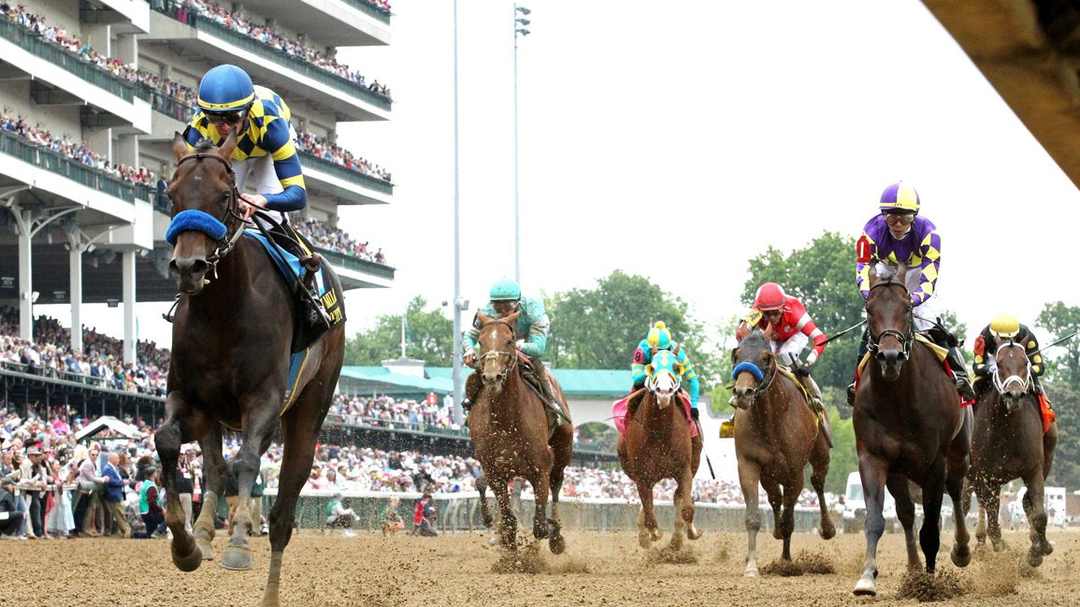
If you're serious about Preakness Stakes odds to bet this year, you need more than a pace scenario and a speed figure. You need to understand what's happening to this race at a structural level, because it affects the field, the Preakness Stakes odds, and frankly, whether this race stays in Maryland at all. The second jewel of the Triple Crown is in a difficult spot, and the problems run deeper than most bettors realize.
Let's talk about it the way we would at the rail, straight and without sugarcoating it.

Start with what you're actually going to be betting. Check the Preakness Stakes entries, and you already know the story. Golden Tempo, the Kentucky Derby winner, is skipping the race. That alone strips the event of its primary draw, the chance to watch a Derby winner chase history. But it doesn't stop there.
Bob Baffert's Crude Velocity, who was dominant in the Pat Day Mile and would have been near the top of the morning line, is also staying in the barn. The connections are pointing him toward a summer campaign at Saratoga. Smart horse management, no question. Terrible for the Preakness Stakes field.
This isn't new territory. Since 2019, five Kentucky Derby winners have skipped the Preakness. Go back further, and from 1997 through 2004, seven horses showed up at the Belmont Stakes with a shot at the Triple Crown. That era feels like ancient history now. The two-week turnaround between Churchill Downs and Pimlico is the standing complaint from horsemen, and they're not wrong to raise it. But the calendar isn't the only thing driving connections away.
When you're handicapping a race without the top horses in training, you're essentially capping a secondary field. The chalk in this spot might be a horse who couldn't beat the Derby winner on his best day. That creates opportunity for overlays if you're reading the Preakness Stakes odds for the contenders correctly, but it also means the win pool can be misleading. Sharp money will be looking hard at pace scenarios with a softer group up front and stalkers who can get to them in the lane.
Here is where this conversation shifts from handicapping to something bigger. One week before the Kentucky Derby, Churchill Downs Inc. announced it had purchased the intellectual property rights to the Preakness Stakes from 1/ST for $85 million. CDI then said it would lease the race back to the state of Maryland for an annual fee.
Read that again. The Preakness Stakes is now owned by the same corporate entity that runs Churchill Downs. They have the power to sublicense the race to another track in another state if Maryland doesn't hold up its end. CDI has turned the Kentucky Derby into a machine that generates NFL-level television ratings. They did not spend $85 million to watch the Preakness Stakes live wither on the vine. They bought it to protect it, grow it, or move it. Maryland has a limited runway to prove it deserves to keep the race.
For bettors, this matters because track ownership and management directly affect the product. Handle, takeout structure, simulcast deals, and race day presentation all connect back to who is running the operation. CDI venues run tight ships. What happens to Pimlico and who controls it long term will shape the kind of betting product the Preakness offers going forward.
Old Hilltop needed work for decades. Maryland finally committed to tearing it down and rebuilding it, a process that was supposed to follow a blueprint similar to the one New York used for Belmont Park. NYRA spent $455 million renovating Belmont, and while that work was underway, racing moved to Aqueduct. Aqueduct will run its final race day on June 28 before closing for good once the new Belmont opens this fall.
Maryland's version of that plan has not gone nearly as smoothly. The state intended to run all racing at Laurel Park, which is hosting this year's Preakness Stakes, while Pimlico was rebuilt. But that plan is now in serious jeopardy, and the problems stack up fast.
Maryland bought farmland to use as a training center for $4.5 million, then discovered it would cost roughly $100 million to actually build the facility. The Maryland Thoroughbred Racetrack Operating Authority was shut down over the mismanagement of that decision. The state then pivoted and tried to buy Laurel Park outright, proposing to move all training operations there for $48.5 million. That deal was announced recently, and the state immediately imposed a 45-day delay to review the finances. That kind of hesitation does not signal confidence.
And then there is the political dimension. During what was supposed to be a routine meeting to approve roughly $4 million in construction equipment, Maryland State Treasurer Dereck Davis asked a question that many people are now asking out loud.
"I get the history of horse racing, but at some point, you know, we have to get to it sink or swim," Davis said. "Can it survive? We can't keep pouring massive amounts of dollars into this industry, just for the third weekend in May."
That is a sitting state treasurer, and his skepticism reflects a broader sentiment among Maryland officials who are being asked to write large checks for a sport with a shrinking fan base. When politicians start asking whether a race is worth saving, bettors should pay attention. The uncertainty around venue and scheduling is real, and it has downstream effects on everything from the Preakness Stakes odds market to long-term handle growth.
Here is the practical side of all this for anyone building tickets or looking for value in the current market.
A weakened field creates a different kind of betting race. Without the Derby winner and without Crude Velocity, the pace scenario at Laurel is going to look nothing like a typical Preakness. Horses that move up in class to fill a field like this often get overbet by the public because the name recognition still carries weight on the tote board. That is where overlays live. Trip handicapping and pace analysis become more important than ever when the class of the field is genuinely unclear.
Horses whose form trails connect through routes like the Fair Grounds Stakes or the Tampa Bay Stakes deserve a hard look in a spot like this. A horse who ran a solid number against graded company at Fair Grounds and then ships in at a price because he lacks the hype of a Derby runner is exactly the kind of play sharp bettors target.
Also worth noting: with NBC's broadcast deal expiring after this year and ratings already soft, the casual money that flows into the Preakness pools from television viewers is not what it once was. Lighter casual action in the pools means the tote is more reflective of real opinion. That can work in your favor if you've done the homework on the Preakness Stakes contenders.
If you're looking at exotic wagering structures, a Pick 4 capping the Preakness as the final leg gives you the most flexibility. A wide single on the likely favorite in an earlier leg can open up your options in the Preakness race itself, where the spread of opinion figures to be significant. Check the Preakness Stakes entries and Preakness Stakes results from recent runnings for pace pattern context. This race at Laurel tends to favor horses who can sit just off a contested pace and close through the lane, as opposed to a pure front-runner grinding it out.
The Triple Crown bonus picture is also worth monitoring. When a Derby winner skips the Preakness, the bonus structure shifts in ways that can influence connections' decisions about where to point a horse later in the year. That affects the Belmont field and the summer stakes calendar. Keep an eye on how Preakness Stakes winners are being pointed in the weeks following the race. The Breeders' Cup trail is already taking shape, and a BC free bet position on a horse who wins here at a price could look very smart by November.

It is not as far-fetched as it sounds. CDI purchased Colonial Downs in Richmond, Virginia, in 2022. If Maryland cannot get Pimlico rebuilt and the political will continues to erode, CDI has a Mid-Atlantic option ready to go. Moving the Preakness Stakes to Virginia would be a significant story, but it would not be the first time the race was held outside Maryland. The Preakness ran in New York, both in the Bronx and on Coney Island, in the early years of the 20th century.
CDI also has the power to adjust the race date. Spreading the Triple Crown legs further apart would bring more horses back to the table and address the horsemen's biggest objection. A stronger field every year is worth more to CDI's brand than a historically accurate calendar. Do not assume the current schedule is permanent.
All of this sits in the background as you're pulling up the Preakness Stakes odds and making your Preakness Stakes bets. The race itself is worth betting, and there is value to be found in a field without the top horses. But understanding the larger context makes you a better player, and the larger context here is that the Preakness Stakes is at a crossroads unlike any it has faced in the modern era.
Stay sharp, do the work, and find your spots. The race goes on Saturday regardless of what happens in Annapolis or on CDI's board of directors.

The writing team at US Racing is comprised of both full-time and part-time contributors with expertise in various aspects of the Sport of Kings.