The Breeders' Cup Juvenile Fillies Turf (G1), first run at Santa Anita Park in 2008, will be held for the 19th time as part of the Breeders’ Cup World Championship “Future Stars Friday” program.
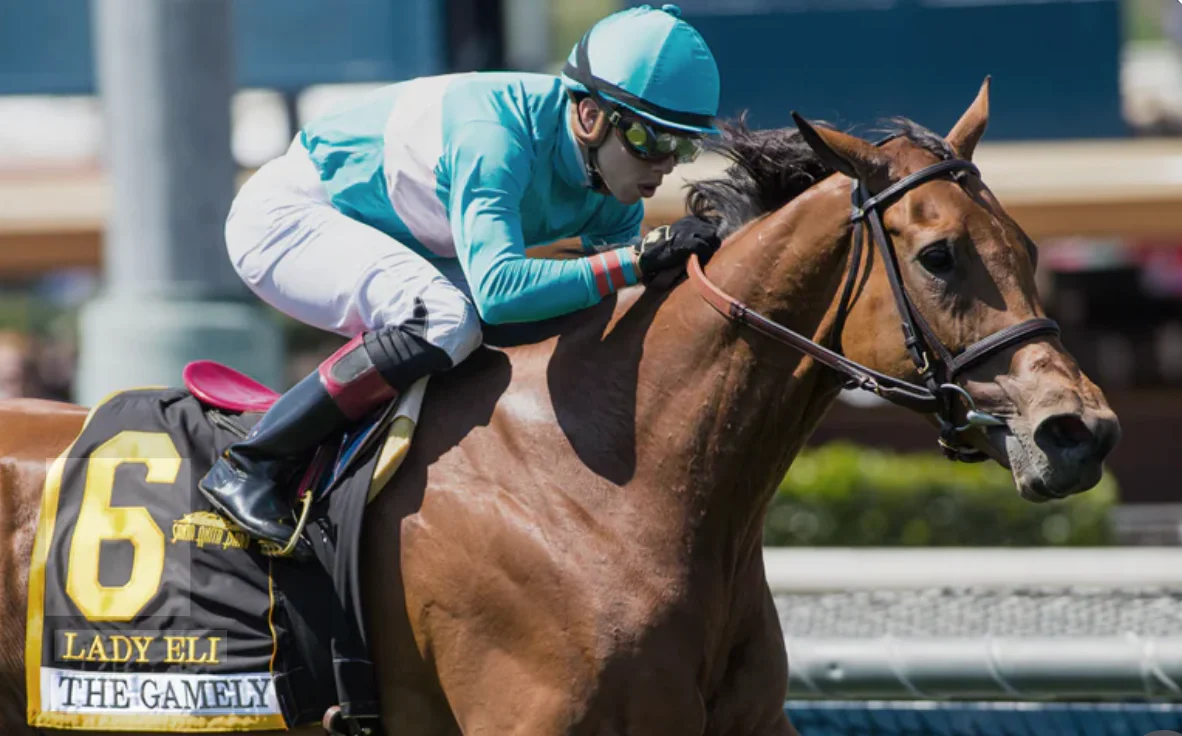

The 1-mile turf event is for 2-year-old fillies. After two years as a non-graded stakes, it received its Grade 2 status in 2010 and has been a Grade 1 since 2012.
Lady Eli is the only Breeders’ Cup Juvenile Fillies Turf winner to earn year-end honors, but she earned it as an older mare when her connections took home the Eclipse Award as the 2017 older turf female. Lady Eli also owns the fastest time of 1:33.41 for her win at Santa Anita in 2014.
2008 – Maram. The filly clinched the inaugural victory as a 13-1 longshot and gave Eclipse Award-winning trainer Chad Brown his first of now 19 Breeders’ Cup wins.
2014 – Lady Eli. Long before her courageous battle with laminitis captured the hearts of fans and bettors alike, her strong performance in this race cemented her legacy as a top turf performer of her generation. Brown, at the time still a fairly new face, proved his ability to prime his horses for big races and made himself him a pivotal figure to consider when analyzing potential future competitors.
2019 – Sharing. The H. Graham Motion-trained Sharing emerged victorious, showcasing as a two-time turf winner the importance of recent form and performance in graded races leading up to the Breeders' Cup. Her performance highlights a critical betting strategy: look for fillies that have consistently performed well in turf races, particularly those close to the event.
This grassy feature typically draws strong international competition, especially from Ireland turf-based fillies, as well as the best from North America.
Especially recent ones. If there is a strong, single‐digit line, those horses have better recent returns.
Even among longshots, the bigger surprises seem more likely to upset than those in the “just outside favorite” category (7-1 to 15-1 odds). If you’re going long, the value could be better with an extreme longshot (if the form supports it), rather than a mediocre mid-longshot.
Being close to the pace early is important. In big fields, getting around trouble (traffic) matters a lot.
Fillies who have run well over similar distances on turf (or at least have run over a mile or near a mile) seem to perform better. Horses stepping up in distance from shorter sprints but without turf experience may be at a disadvantage.
Trainers with strong records in this race (Chad Brown) are worth noting. Jockeys who excel with turf 2-year-old fillies (especially with experience in big fields) can provide an edge. The Europeans have an edge in this department.
The average win payoff in the race has been around $15.64. A total of 245 fillies started through the years, the average field size holding steady at 14.
Between 2018 and 2024 winning times ranged roughly between 1:34 and 1:36.50 for the 1-mile turf distance on firm or good going.
North American–based fillies have won 13 of 18 renewals with Chad Brown dominating Though European shippers have won fewer, they often show up in exotics (exactas, trifectas, etc.).
Also, the highest win price listed for this race was the $40.20 Balantina returned at 20-1 a year ago.
Even though European shippers don’t win as often, they tend to show up in exotic spots (exacta, trifecta). For “contrarian exotic” plays, including one or two European runnerscan pay dividends.
Don’t over-penalize wide posts. The absence of strong documented post biases suggests that wide draws are not fatal, especially if a horse has shown the ability to avoid traffic or has early tactical speed to get a good position. Many Breeders’ Cup tracks and fields are deep, and inside paths can sometimes be more congested.

The writing team at US Racing is comprised of both full-time and part-time contributors with expertise in various aspects of the Sport of Kings.