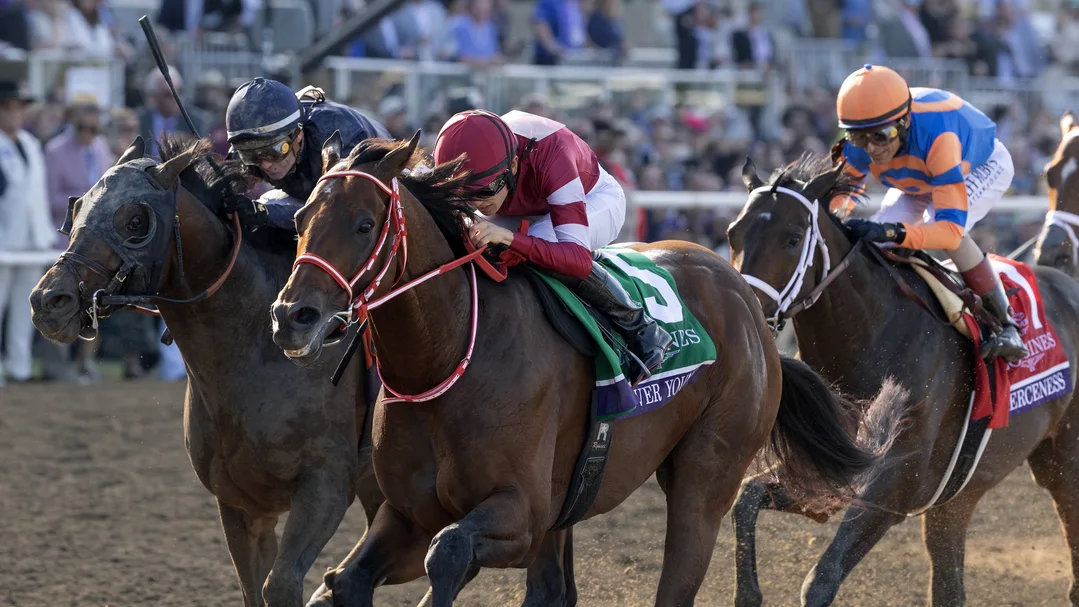
Two weeks out from the October 30-31 card at Keeneland, the Breeders' Cup betting conversation is heating up the way it always does this time of year. Sharp money is starting to move. Trainers are dropping hints in the condition book. And anyone who has been doing this long enough knows that the best edge you can build right now is not from a hot tip; it is from understanding what past results actually tell us about how these races play out.
So let's get into it. Here is an analysis of the key Breeders' Cup betting trends that serious handicappers need to know before the gates open at Keeneland.
| Race | Favored Post Range | Chalk Win % | Overlay Frequency |
|---|---|---|---|
| BC Classic (Dirt, 1 1/4M) | 5-9 | ~32% | High |
| BC Sprint (Dirt, 6F) | 2-6 | ~38% | Moderate |
| BC Turf (Turf, 1 1/2M) | 5-9 | ~30% | Very High |
| BC Distaff (Dirt, 1 1/8M) | 3-7 | ~40% | Moderate |
| BC Mile (Turf, 1M) | 4-8 | ~29% | High |

Post position bias at the Breeders' Cup is not a one-size-fits-all conversation. You have to break it down by surface and distance. In the Sprint, inside posts have consistently produced winners. When you are going six furlongs on Keeneland dirt, the rail is a viable path, and early speed from the one- or two-hole can dictate terms. That is not the case in the Classic.
The Classic, a mile-and-a-quarter dirt race, historically punishes horses that break from the extreme outside or get buried on the rail in a big field. Mid-draw horses in the five through nine range have logged the most wins over the past decade. Trip handicapping matters here. If a horse draws the one hole in a 14-horse Classic field, you need to bake a clean-trip assumption into your ticket, and that is a dangerous assumption to make.
On the turf, particularly in the Breeders' Cup Turf at a mile and a half, the draw matters even more because of the first-turn positioning battle. Mid-draw horses avoid both the traffic of the inner posts and the ground loss of the extreme outside. When you are building your Breeders' Cup betting tickets, post position is not a throwaway data point. It is a fundamental input.
Here is the number that resets expectations fast. Historically, favorites in the Breeders' Cup Classic win roughly 30-35% of the time. That means in most runs, the public's top choice loses. Compare that to a typical maiden claiming race, where the chalk wins closer to 45-50% of the time. The Breeders' Cup is deeper, more competitive, and more unpredictable than almost any other card on the calendar.
What does that tell you strategically? It tells you that hammering chalk for straight win tickets in the big BC races is a long-term losing play. The prices are too compressed. The risk-reward math does not work. The sharp approach is to identify overlays. Horses that are 8-1 or 10-1 on the morning line but have legitimate credentials: a top Beyer or Timeform figure, a favorable post, a trainer with a strong BC win percentage, and a pace scenario that sets up for their running style.
Trainers like Todd Pletcher and Bob Baffert have historically run at win percentages well above the field average at the Breeders' Cup. When their horses are underlays, pass them. When they land at a fair price with the right setup, that is where the value lives. Check the BC Classic results, the BC Turf results, and the BC Sprint results to see exactly how often the chalk held up versus the overlay came through.
In the Classic, closers and stalkers have consistently outperformed front-runners. The reason is simple: the pace in a 14-horse Classic field is almost always honest to fast, and horses that try to wire the field from the front tend to run out of gas in the final furlong. That doesn't mean a front-runner cannot win; it means the pace needs to support it. If one confirmed speed horse draws a clean outside path, and the others are buried, you might have a pace setup that holds.
In the Sprint, it flips. Early speed is much more valuable at six furlongs. A horse that can clear the field out of the gate and set a controlled pace has a real edge. Stalkers can close in the Sprint, but they need something to run at. Genuine closers, horses that need eight lengths of ground to make their run, tend to struggle at six furlongs regardless of figures.
Build your pace scenario before you build your ticket. That is the sequence. Pace shapes outcome, outcome shapes your exotic structure. A well-constructed trifecta box costs you nothing if you box the wrong horses because you misread the pace scenario.
At the Breeders' Cup, the exotics are where the real money gets made. Here is a basic framework that has served serious bettors well over time:
Exacta: Use your top two or three selections and wheel them against each other both ways. In the Classic with three live horses at 8-1, 12-1, and 6-1, a $1 exacta wheel covering all possible combinations costs $6 and can return several hundred dollars if two of those horses fill the board.
Trifecta: Key your top selection on top, box two or three secondary horses for second and third. A $1 trifecta key with one horse on top and three others for second and third runs $6. If you want to open the bottom, spreading to five horses for show position will run you more but increases coverage significantly.
Superfecta: The $0.10 superfecta has become a staple on big race days. You can structure a $0.10 superfecta with one key, two second-place horses, three third-place horses, and four fourth-place horses for under $25 and hit a four-figure payout if the right horses fill in.
This is the kind of structure that wins the Breeders' Cup day for smart bettors. Not hammering chalk. Not flat-betting every race. Structured, thought-out exotic tickets with live overlays mixed in. Get your BC free bet lined up and be ready to move.
The BC Mile on turf has produced some of the biggest overlays in recent Breeders' Cup history. European shippers who have run at Group 1 level all year often land at inflated odds because American bettors underestimate their form. A horse that has been competing at the highest level in France or Ireland can absolutely fire at 15-1 or 20-1 when it switches to Keeneland's turf course.
The class is there. The turf is there. The distance is familiar. Bettors are skeptical about the shipping and acclimation. But if the trainer has shipped successfully before and the jockey has Keeneland experience, that is a legitimate overlay situation. Past BC Mile results are full of European winners that paid big. Do not dismiss a 15-1 shot on the turf just because the name is unfamiliar. Look at the figure, look at the connections, look at the pace setup. That is the process.
If you want to benchmark class against international competition, it helps to follow races like the Saudi Cup results and the Dubai World Cup results for context on global form cycles heading into the fall championships.
Bettors on X and across the racing forums are deep into the Breeders' Cup conversation right now, with two weeks to go before Keeneland. The dominant themes are post position anxiety, specifically how the Classic draw will shake out, and whether any European turf horses deserve serious consideration in the Mile and the Turf. There is a faction of sharp bettors pushing back hard on the idea of laying short prices in the Classic, pointing to the historical chalks-lose data as the reason to structure exotic tickets instead of betting favorites straight.
On the Reddit side of things, handicappers are sharing past payouts from BC Superfectas and marveling at the value available when the chalk finishes off the board. The exotic ROI numbers being discussed are a reminder that the Breeders' Cup is one of the best betting opportunities of the year, not because favorites are weak, but because the fields are so deep that variance is high and overlays present themselves consistently.
You can follow the conversation yourself on X (formerly Twitter) and Reddit as the card takes shape and the draw approaches.

No. Favorites in the BC Classic win roughly 30-35% of the time over the past decade, which means the majority of years produce a winner at double-digit odds or better. That makes exactas and trifectas using mid-priced horses essential ticket construction. Straight win bets on short Classic favorites are a long-term leak.
In sprint races on dirt at Keeneland, inside posts, specifically 1 through 4, have shown a meaningful advantage. In longer turf routes, mid-draw posts in the 5-9 range tend to produce the cleanest trips with less trouble at the first turn. In the Classic, extreme outside posts and the rail in large fields both carry trip risk.
Given the competitive fields and historically unpredictable outcomes, experienced handicappers lean heavily toward exactas, trifectas, and superfectas using multiple horses. Straight win bets make sense when a legitimate overlay presents itself at a fair price, but the real ROI over time comes from well-structured exotic tickets that include live longshots alongside your top selections.

The writing team at US Racing is comprised of both full-time and part-time contributors with expertise in various aspects of the Sport of Kings.