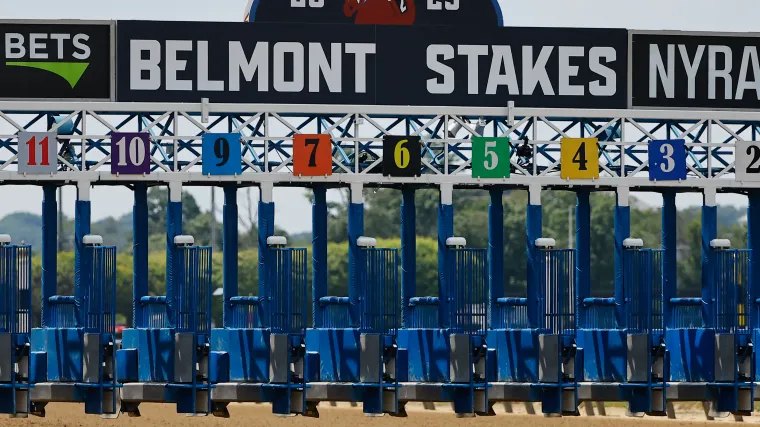
The Belmont Stakes, the final jewel of the Triple Crown, represents one of the most exciting windows in the American sports calendar. For off-track betting enthusiasts and horse racing fans alike, this historic race is a prime opportunity to turn sharp analysis into substantial payouts.
The 158th running of this classic event on June 6, 2026, offers a highly unique betting landscape that demands a fresh approach from handicappers. To build a winning ticket, you must adapt your strategies to the specific conditions of this year's race.
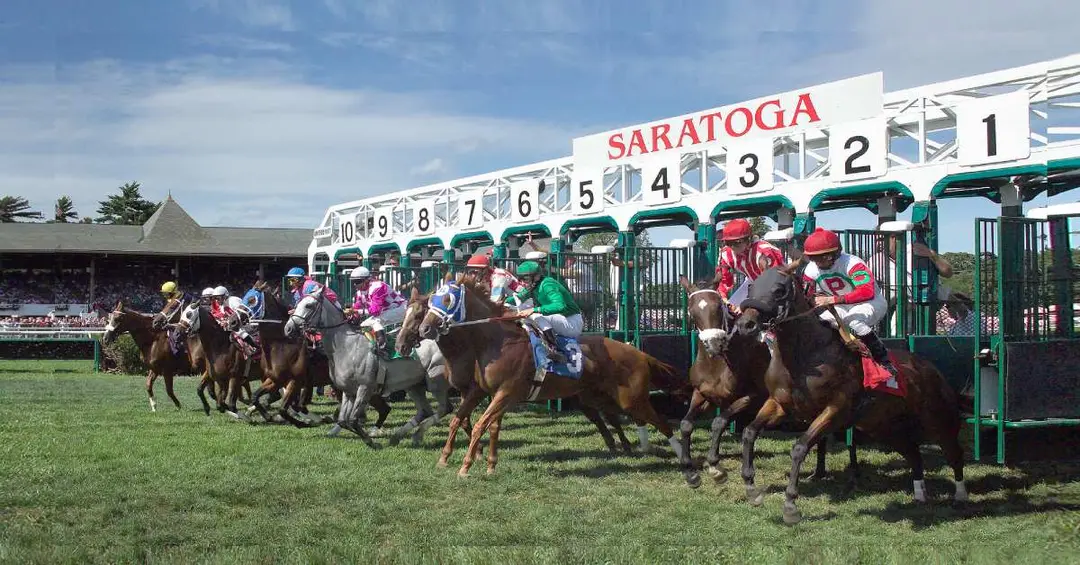
The most notable factor for the 2026 renewal is the venue itself. For the third and final consecutive year, the race is being held at historic Saratoga Race Course in upstate New York. This temporary relocation is due to the massive $455M reconstruction project underway at Belmont Park.
Belmont Park is scheduled to reopen its doors to live racing in September 2026, meaning the event will return to its traditional Long Island home in 2027. Until then, Saratoga serves as the magnificent backdrop for this elite three-year-old showdown.

As the race draws near, keeping a close eye on the shifting Belmont Stakes Odds becomes paramount for any serious handicapper looking to secure maximum value. The venue change also brings a vital change in distance, shortening the race to 1¼ miles from its traditional 1½ miles.
This structural adjustment dramatically changes how horseplayers must evaluate the field. The Belmont Stakes betting landscape has shifted dramatically with the temporary change of venue, turning old handicapping rules completely on their heads.
To help you navigate this high-stakes betting environment and maximize your returns, we have compiled an exhaustive guide detailing the five most critical factors to analyze. Before you make the decision to bet on Belmont Stakes runners this year, ensure you have mastered these essential angles:
The traditional Belmont Stakes is famous for its grueling 1½-mile distance, known as the "Test of the Champion." However, because Saratoga's main dirt track is a 1⅛-mile oval, running a 1½-mile race would require starting on a turn, which is highly dangerous for a large field of young horses.
Consequently, the New York Racing Association (NYRA) adjusted the distance to 1¼ miles (10 furlongs). This is the exact same distance as the Kentucky Derby, meaning these three-year-olds are returning to a distance they have previously encountered.
Even though 1¼ miles is shorter than the traditional distance, it remains an intense test of stamina. Saratoga’s track geometry is much tighter than the sweeping, massive oval of Belmont Park, colloquially known as "Big Sandy."
Saratoga features tighter turns and a significantly shorter homestretch. This layout places a massive premium on tactical positioning and early speed, making it much harder for deep closers to make up ground late in the stretch.
On Saratoga's fast, speed-favoring dirt surface, horses that can sit just off the lead or set a comfortable pace are highly advantaged. If a runner lacks the tactical speed to secure a clean position entering the first turn, they risk getting trapped wide or swallowed up in traffic.
Understanding this spatial dynamic is a fundamental pillar of any successful Belmont Stakes betting strategy. Bettors must devalue horses that rely solely on a single, late run from the back of the pack, as Saratoga's shorter stretch rarely accommodates long, sweeping moves.
Additionally, the track's tight turns require horses to possess excellent cornering ability. A horse that struggles to change leads smoothly or handles turns poorly will lose precious lengths at Saratoga.
Look for contenders who have run well over this specific track in their two-year-old season, or those who show high agility in their training patterns. The unique oval configuration is a major variable that will separate the true contenders from the pretenders.
Pari-mutuel wagering is a dynamic, fluid system where you are betting against your fellow players rather than the house. The morning line odds established by track handicappers are merely an educated prediction of how the public will bet.
Once the wagering windows open, the money pool determines the live prices. Evaluating the initial morning line against the live Belmont Stakes Odds helps identify which horses are being backed by "smart money" and which are being overbet by the public.
Significant odds movements usually begin in the 48 hours leading up to the race. Paying close attention to these shifts can reveal critical pieces of information. For instance, if a mid-range contender drops from 12-1 down to 8-1, it often indicates strong backside confidence from trainers, clockers, or professional syndicates.
Conversely, if a heavily hyped horse begins to drift up in price, the market may be reacting to poor paddock behavior, track conditions, or unfavorable training reports.
| 2026 Belmont Stakes Odds | ||
| Official post positions set following the post-position draw on Monday, June 1, 2026. | ||
| PP | Horse / Trainer | Morning Line |
|---|---|---|
| 1 | Vitruvian ManAntonio Fresu · D. O'Neill | 30/1 |
| 2 | PowershiftLuis Saez · T. Pletcher | 12/1 |
| 3 | Chief WallabeeJunior Alvarado · W. Mott | 3/1 |
| 4 | RenegadeIrad Ortiz Jr. · T. Pletcher | 2/1 |
| 5 | OttinhoDylan Davis · C. Brown | 20/1 |
| 6 | Growth EquityManny Franco · C. Brown | 12/1 |
| 7 | CommandmentJohn Velazquez · B. Cox | 6/1 |
| 8 | Emerging MarketFlavien Prat · C. Brown | 6/1 |
| 9 | Golden TempoJose Ortiz · C. DeVaux | 9/2 |
Last Updated on 06/01/2026
As the table indicates, the margin between the top contenders is incredibly narrow. Any late surge of capital into the pools will cause substantial fluctuations in the Belmont Stakes Odds right up to post time.
For example, a late influx of cash on the Kentucky Derby winner, Golden Tempo (5-2), could easily shift him to the favorite over Todd Pletcher’s Renegade (2-1). Monitoring these changes gives you an invaluable advantage when you bet on Belmont Stakes action.
To exploit these market movements, handicappers must learn to spot "overlays"—horses whose live odds are significantly higher than their actual, calculated probability of winning. Identifying which horses are being overvalued or ignored in the live Belmont Stakes Odds allows you to construct highly profitable tickets.
Do not let media hype dictate your wagers; instead, let the cold, hard numbers of the pool guide your financial decisions on race day.
Analyzing a horse’s form involves examining their recent race charts and performance metrics. Do not simply look at where a horse finished in their last outing; analyze how they finished.
A horse that finished a hard-fought fourth in a highly competitive, fast-paced stakes race may actually be in much better physical condition than a horse that won an easy, slow allowance race. Speed figures, such as Beyers or Brisnet ratings, provide an objective way to compare performances across different tracks and classes.
Many seasoned handicappers approach Belmont Stakes betting by looking at the progression of these speed figures over a horse's last three to four starts. You want to target three-year-olds who are on an upward trajectory, showing steady improvement as they mature.
A horse that has consistently increased its speed figures throughout the spring is a prime candidate to handle the intense physical demands of a Grade 1 Classic at Saratoga.
Pedigree analysis is another vital component of evaluating form. At the 1¼-mile distance, bloodlines that blend brilliant speed with deep, foundational stamina are highly prized.
While the shortened distance reduces some of the extreme stamina requirements of the traditional 1½-mile race, it still demands a horse that can sustain a high cruising speed over 10 furlongs. Look for runners sired by classic distance influences who also boast dams with proven stakes success at a mile or longer.
Furthermore, always compare the historical track bias with the current Belmont Stakes Odds to find hidden value. Saratoga’s track can play differently depending on weather conditions.
If rain is forecast, look for horses whose pedigrees indicate a high affinity for wet, muddy, or sloppy surfaces. Combining physical form, speed progression, pedigree depth, and track adaptability will give you a remarkably clear picture of each runner's actual capabilities.
The horse is only one half of the equation; the human connections are equally critical to securing a victory in a race of this magnitude. In the Triple Crown series, trainers must carefully manage their horses' energy levels, training schedules, and dietary needs.
Some trainers are masters at peaking a horse specifically for the final leg of the Triple Crown, while others excel at keeping their horses fresh by bypassing the Preakness Stakes entirely.
For example, Cherie DeVaux’s decision to bypass the Preakness with Kentucky Derby winner Golden Tempo was a highly deliberate, calculated move. It allowed the colt to rest and prepare specifically for the Saratoga oval.
Similarly, Todd Pletcher, who trains the formidable Renegade (2-1), is legendary for his meticulous preparation of fresh horses. This human factor is an essential variable to analyze when engaging in Belmont Stakes betting, as a trainer's past patterns often repeat.
Jockey selection is also a massive piece of the puzzle, particularly at Saratoga. Navigating Saratoga’s tight turns and short homestretch requires precise timing, patience, and nerves of steel.
Jockeys who ride regularly at Saratoga understand the subtle nuances of the track, such as when to save ground along the rail and exactly when to launch their bid before entering the final turn.
When evaluating your tickets, look closely at the jockey-trainer partnerships. A trainer who has a high winning percentage when teaming up with a specific rider is a strong signal of intent.
For horse racing fans who want to bet on Belmont Stakes contenders with precision, placing your money on teams with proven, high-percentage local records is one of the smartest, most reliable moves you can make.
To truly maximize your return on investment, you must move beyond simple "win" bets and master the art of exotic wagering. Exotic bets, such as Exactas, Trifectas, and Superfectas, allow you to cash massive tickets by correctly predicting the exact order of finish for multiple horses.
Because of the highly competitive nature of the 2026 field, the payouts for these exotic pools are expected to be extraordinarily high.
An excellent way to structure an exotic ticket is by using a "key" horse. If you are highly confident that a horse like Renegade (2-1) or Golden Tempo (5-2) will finish in the top two, you can "key" them in the first and second positions of an Exacta, while rotating longer-priced value horses like Growth Equity (8-1) or Commandment (10-1) beneath them.
This approach minimizes your total ticket cost while maximizing your potential payout if a longshot sneaks into a minor placing.
Using this structured approach allows you to cover multiple logical outcomes without overextending your bankroll. Understanding pari-mutuel math and ticket construction is what separates professional players from casual hobbyists, and that is exactly what makes Belmont Stakes betting so thrilling for modern horseplayers.
Always calculate your cost-to-benefit ratio before placing your wagers, maximizing your returns relative to the final Belmont Stakes Odds.

Preparing for the 2026 Belmont Stakes requires a blend of historical context, spatial analysis, and mathematical discipline. By understanding the unique track conditions at Saratoga, monitoring live odds movements, analyzing pedigree and form, and trusting experienced human connections, you can approach the betting windows with absolute clarity.
The 158th running of this legendary race provides a lucrative landscape for those who take Belmont Stakes betting seriously.
Do not leave your race day success up to chance or media hype. Take control of your handicapping, apply these advanced strategies, and select the perfect betting platform to bet on Belmont Stakes pools safely and securely. Sign up today, claim your exclusive deposit bonus, and lock in your winning tickets before the gates crash open at Saratoga.

The writing team at US Racing is comprised of both full-time and part-time contributors with expertise in various aspects of the Sport of Kings.