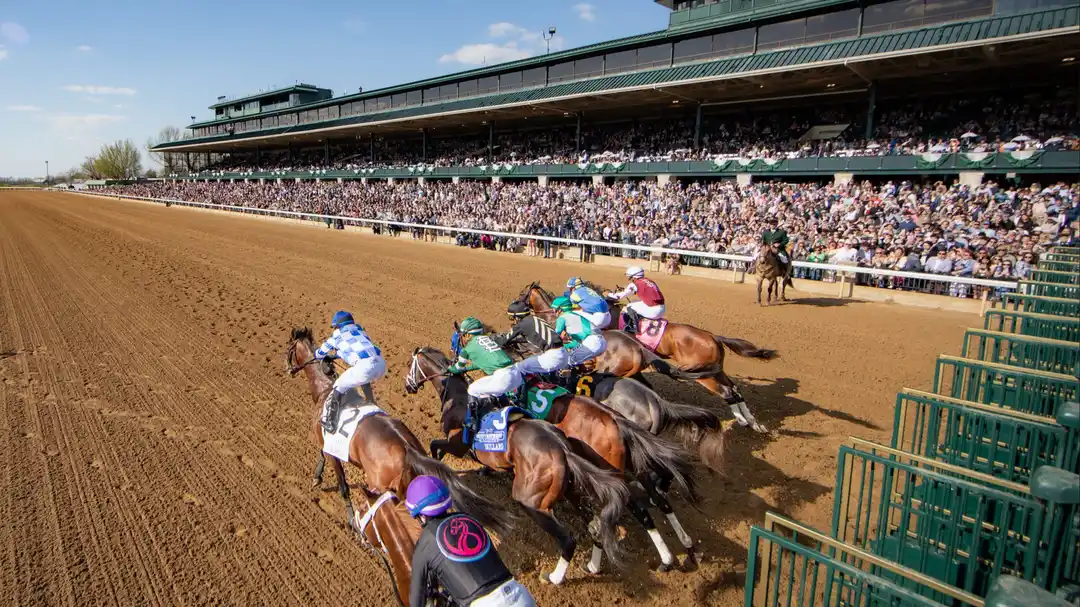
Two days. Fourteen Grade 1 races. Keeneland in the fall. If there is a better two-day stretch on the American racing calendar to play multi-race exotics, nobody has found it yet. The 2026 Breeders' Cup gives serious bettors a genuine opportunity to build differentiated tickets in massive pools, and the bettors who cash big are almost never the ones who loaded up on chalk across the board. They had a plan before they walked up to the window.
This piece is built around one thing: Breeders' Cup betting strategy for multi-race tickets across both days. No fluff. Just how to construct Pick 4, Pick 5, and Pick 6 sequences that give you real leverage against the pools without lighting your bankroll on fire before Saturday's mandatory carryover hits.

First, internalize the sheer volume of multi-race wagering opportunities across both cards. The Pick 4 runs three times per day, the Pick 5 runs once on each card, and the Pick 6 sequence on Saturday carries the mandatory payout that will draw the meet's biggest pool. Add in Pick 3s and Special Daily Doubles, and you have a layered menu that rewards bettors who budget intelligently across both days rather than going all-in on Saturday and hoping for the best.
Pull up the full race entries and past performances at BUSR as soon as the fields are official. Knowing which races anchor which sequences is the first structural decision you make, and it determines everything downstream about how many combinations you can afford.
| Day | Wager Type | Min. Base | Pool Character | Primary Strategy |
|---|---|---|---|---|
| Friday (Future Stars) | Pick 3 | $0.50 | Moderate, manageable | Budget warm-up, 2-3 wide per leg |
| Friday (Future Stars) | Pick 4 (x3 offered) | $0.50 | Building, overlays available | Single chalk + 2 live longshots |
| Friday (Future Stars) | Pick 5 | $0.50 | Competitive, carryover possible | Preserve bankroll, go conservative |
| Saturday (Championships) | Pick 4 (x3 offered) | $0.50 | Massive, heavily contested | Spread wide, avoid chalk singles |
| Saturday (Championships) | Pick 6 (Mandatory) | $0.20 | Largest pool of the meet | Single Classic/Distaff, spread turf |
Future Stars Friday gets underestimated every year. Bettors are already mentally cashing their Saturday Pick 6 tickets, and the Friday pools reflect it. That creates value, particularly in the Pick 5 where a mid-sized ticket can pay enormous relative to what you are risking.
The core discipline on Friday is this: do not go three-deep in every leg chasing coverage you cannot afford. Pick your one or two best opinion races on the card and single those. Use your saved combinations in the legs where the morning line is genuinely wide open, especially the juvenile turf routes where European-bred shippers arrive with limited American form. Those horses get underbet every single year because the casual Friday crowd has no frame of reference for their figures. That is your overlay.
A workable Friday Pick 5 structure at $0.50 base might look like this. Single your standout in Leg 1. Use two horses in Leg 2. Single your best juvenile play in Leg 3. Spread three in Leg 4 where the turf mile is wide open. Close with two in Leg 5. That is a 1x2x1x3x2 ticket costing $6.00 at $0.50. Manageable, targeted, and differentiated from the public, who is either singling every leg or boxing five horses across the board without any logic behind the structure.
You can also check past performances at US Racing to map out which horses have Keeneland form and which are arriving cold off a European campaign. That distinction alone separates sharp tickets from casual ones.
This is the centerpiece of any serious Breeders' Cup betting strategy across both days. The Saturday mandatory Pick 6 payout means the entire carryover goes out regardless of how many tickets survive. In a year where the pool builds through October, you could be looking at one of the largest Pick 6 payoffs in recent memory. That demands a dedicated bankroll allocation, not whatever is left over after you played the Friday card.
The structural approach that sharp players consistently use is the single-anchor method. Identify one race in the sequence where you have a strong, defensible opinion and single that horse. In most years, that is the Classic or the Distaff, races that tend to have a dominant form figure or a class standout who is simply better than the field on pure numbers. Singling there frees up combination budget everywhere else.
Then you spread, aggressively, in the turf legs. The Turf, Filly and Mare Turf, and Turf Mile are where European shippers land at double-digit morning line odds with legitimate winning chances. The public is not going to load up on a French or Irish shipper whose figures come from a different scale. That is exactly why you want them on your ticket. Two or three live Europeans per grass leg, combined with your domestic standout, gives you a ticket that looks nothing like the majority of the pool. When one of those shippers fires at 18-1, the payout is substantial.
A sample Saturday Pick 6 at $0.20 base with a 1x3x2x1x3x2 structure costs $7.20. You can run two or three variations of that structure covering different combinations in the open legs and still keep your total Saturday Pick 6 investment under $100. That is real leverage in a pool that could clear seven figures on the mandatory payout.
For more on building smart exotic tickets around the biggest races of the year, the Kentucky Derby betting guide at US Racing walks through the same core principles that apply directly to Breeders' Cup sequence construction.
Pace analysis is not just a tool for picking winners. In multi-race wagering, understanding pace scenarios helps you identify which legs are most predictable and which ones are chaos legs where spreading is mandatory.
If a turf route sets up for a lone front-runner who controls fractions and the field is full of closers who need pace, that race is more predictable than the morning line suggests. Single the stalker or the pace setter with a clean setup. Conversely, if a Sprint leg has four or five speed horses drawn together on the inside, the pace is going to collapse, and a closer or a wide-trip horse is going to show up at a price. That is not a singling spot; that is a two-or-three-wide spread at $0.50 base, looking for the overlay to land.
Trip handicapping matters enormously in sequence play because you are not just trying to pick a winner; you are trying to avoid being eliminated. The horse who got a horrible trip last out and is now drawn cleanly with a favorable setup deserves extra weight in your leg analysis, even if the speed figures do not jump off the page immediately.
California bettors who are comfortable playing big Keeneland pools can get the full account setup and wagering options through horse betting in California at US Racing. The platform supports the full multi-race menu, including $0.20 Pick 6 base wagers and $0.50 Pick 4 and Pick 5 tickets.
Every sharp multi-race ticket needs at least one horse going into it purely on overlay value. Not a guess or a prayer, but a horse whose actual winning chances are meaningfully higher than the morning line projects and what the crowd will bet.
In most Breeders' Cup cycles, that horse lives in the grass races, specifically any European shipper trained by a handler with a strong Breeders' Cup record whose horses attract minimal American wagering. Trainers like Aidan O'Brien and Christophe Clement have sent live horses to Keeneland at double-digit odds because the domestic crowd doesn't follow European form closely enough to price them properly. Check their past performances against Timeform or Equibase international figures before you dismiss a horse at 15-1 on the morning line.
The Filly and Mare Turf has historically been one of the most overlay-friendly races on the card. Put two European shippers in that leg of your Pick 6, and your ticket is already structurally different from 80 percent of the public pool. That is where big payoffs come from.
If you are interested in how similar overseas form translates to major international race betting, the approach applies directly to events like the Saudi Cup and Dubai World Cup, where European and American form cycles intersect, and the same overlay principles create value in exotic pools.
For additional free bet offers specific to the Breeders' Cup, take a look at the BC free bet page at US Racing before the cards go live.
The conversation around Breeders' Cup multi-race ticket construction is running hot heading into Keeneland. Follow the full discussion on X and Reddit to see how the sharpest bettors in the game are structuring their tickets heading into both days.

The Pick 4 is offered three times on both Future Stars Friday and Championships Saturday, giving bettors multiple entry points across the card at a $0.50 minimum base. That means six separate Pick 4 sequences across the two-day meet, each with its own pool and its own pace scenario to analyze. Not all six deserve the same investment level, so prioritize the sequences anchored to the Grade 1 races where your opinions are sharpest.
Single your strongest opinion, typically the Classic or the Distaff, then spread wide with two or three selections in each turf leg where European shippers can land at big prices and differentiate your ticket from the chalk-heavy public money. Run two or three structural variations of your base ticket to cover different combinations in the open legs, and keep your total Pick 6 investment within a pre-set budget so you are not chasing coverage you cannot afford. The $0.20 base gives you real flexibility on ticket construction without blowing your entire bankroll on one sequence.
A reasonable approach is allocating roughly 30 percent of your total Breeders' Cup budget to Friday Pick 3 and Pick 5 sequences, then committing the remaining 70 percent to Saturday with the bulk going into the mandatory Pick 6 pool. Friday is a genuine opportunity but Saturday is where the transformative payoffs live. Treat Friday as a productive warm-up that keeps you sharp and potentially puts some profit in your pocket heading into the big day, not as an equal investment to the Championship card.

The writing team at US Racing is comprised of both full-time and part-time contributors with expertise in various aspects of the Sport of Kings.