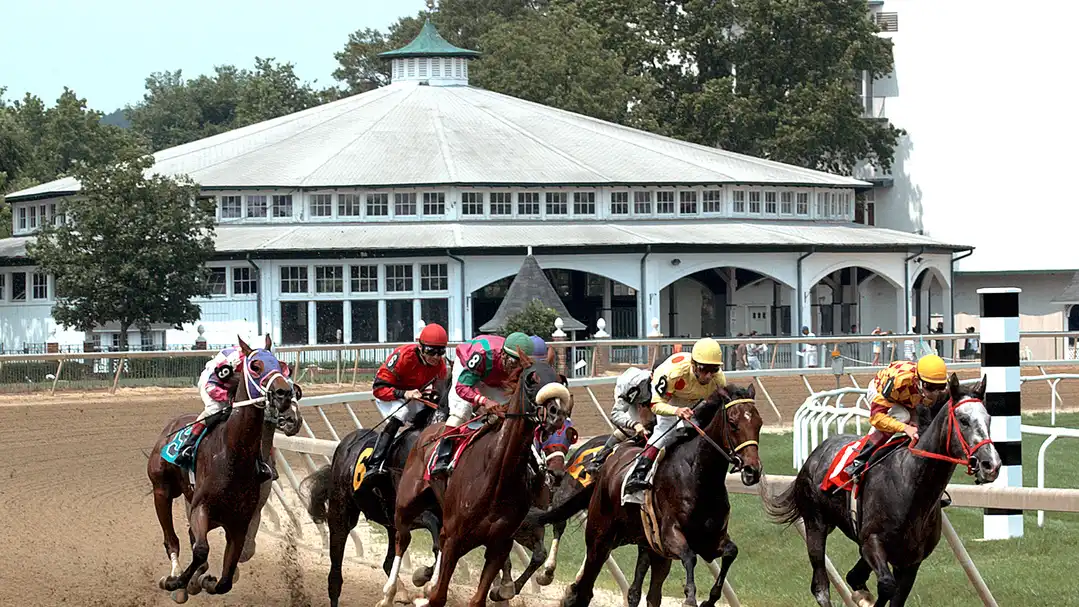
No “Toilet Run.” No Kegasus. No Bruno Mars, no Lorde, no ZZ Top. NO INFIELD.
What gives?
Saturday’s Preakness Stakes (G1) is being held at Laurel Park, about 30 miles south and a couple of light years removed from the raucous, rowdy – and let’s put it bluntly – raunchy infield carnival that marked previous iterations of the “Middle Jewel of the Triple Crown” at Pimlico Race Course, where the race shared equal billing with public intoxication.
But for all its peeling paint and malfunctioning plumbing, Pimlico felt like a place where people bet races. Its appeal was never architectural, but always atmospheric. This year will mark the 17th time the Preakness has been held outside of Pimlico, but whether it was at Morris Park or Gravesend, and now Laurel, bettors will still be studying pace scenarios and hunting value.
Oh, and why no infield? The infield pond is a “protected wetland.”

From a pure horse-racing standpoint, the biggest differences between Pimlico and Laurel are geometry, flow, and how aggressively riders think they need to ride to establish position earlier.
Pimlico is tighter and more compact; Laurel is wider and more sweeping. At Pimlico, the Preakness often developed into “secure position immediately” and dared others to circle wide. At Laurel, the turns are smoother, the track feels more spacious, and that could produce a better setup for stalkers and mid-pack runners.
Overall, this year’s edition (capped at 4,800 attendees) will likely feel more like a private wagering club hosting one of racing’s biggest events.
But it’s not some antiseptic substitute as a venue. Laurel has hosted its share of major racing moments over the years, bringing big-race credentials – and a different personality – that its more famous (or infamous) counterpart. From future classic winners like Sunday Silence and Barbaro, Laurel has hosted its share of important moments while functioning as Maryland racing’s workhorse – staging major stakes, winter programs, Maryland Million events, and prep races connected to some of the sport’s biggest names.
The track opened on Oct. 2, 1911, originally as part of the Laurel Four County Fair. Its location was strategic from the start – midway between Baltimore and Washington, meant to pull crowds from both population centers and become a major Mid-Atlantic racing hub. More than a century later, that practical DNA is exactly why it finds itself hosting (albeit temporarily, whilst Pimlico undergoes a rebuild) the Preakness.
In its mid-century heyday, Laurel became part of the golden-age East Coast circuit, attracting major stables and large crowds during racing’s peak years. Native Dancer – Maryland’s own “Grey Ghost” - was enormously popular in the early 1950’s, not just locally, but nationally, in the burgeoning years of television, as he was always easy to pick out on black-and-white telecasts because of his striking light gray coat.
In 1954, Queen Elizabeth II entered Landau in Washington, D.C International, the first time the silks of the royal family were carried in the United States. He finished last.
Among its major moments was Steve Cauthen’s victory aboard Johnny D. in the 1977 D.C International, capping one of racing’s most remarkable breakthrough seasons. That journey was chronicled in Pete Axthelm’s “The Kid” before the story gained its Triple Crown epilogue the following year with Affirmed.

Sir Barton, War Admiral, Seabiscuit, Kelso, Secretariat, Sunday Silence, and other champions all passed through Laurel at various points in their careers, linking the track to more than a century of thoroughbred history. Its history runs deeper than many casual fans realize.
So, while Saturday’s Preakness will feel smaller than most previous editions, save for 2020, when the race was run “spectator-free” in October due to Covid-19, it’s not being staged on unfamiliar racing ground. Laurel Park has spent generations serving as Maryland racing’s dependable backbone, and briefly, for one memorable spring, the workhorse gets its turn to tell the story.

Jenny Kellner is an award-winning journalist and teacher who has covered thoroughbred racing for years. As a reporter for both United Press International and The Associated Press, her work has appeared in publications and on websites around the world. Jenny has also written for The New York Times, the New York Post, Newsday and Sports Illustrated.