Every horseplayer knows that even when you're right, it can turn out all wrong. That was my fate in Saturday's Kentucky Derby (G1).
I was right about Renegade throughout the winter and spring, and I got 16-1 odds on him with a future bet after he dominated the Sam F. Davis Stakes with a powerful finish. When he became the pre-race Derby favorite following his runaway in the Arkansas Derby (G2), I felt so smart.
When he drew the dreaded rail for the Derby, I cringed but retained hope. Maybe he was talented enough to be the first winner from post 1 since 1986. “It's not ideal,” trainer Todd Pletcher said, “but we'll do what we can with it.”
I anticipated traffic problems, but not an ambush.
“We got squeezed at the start,” jockey Irad Ortiz, Jr. said, and that was just the beginning. Here's the Equibase trackman's comment: “Renegade was bumped at the start and was slammed again shortly after.”
I thought he was going to be launched over the rail and figured his chance had gone. Wrong, because he and Irad recovered and “soldiered on,” the first time I've seen that expression in a chart footnote.
They trudged on grittily from far back -- 15th of 18 after a half-mile, 16th after 6 furlongs, 12th at the quarter pole. Renegade shook off another bump near the three-sixteenths pole and kept advancing, but at the eighth pole, he was eighth with five lengths to make up.

Remarkably, he charged into contention, and for a few glorious moments, I thought he was going to win. Then, 23-1 shot Golden Tempo surged down the wide outside and edged past 5-1 Renegade to win by a neck. Oh, the pain.
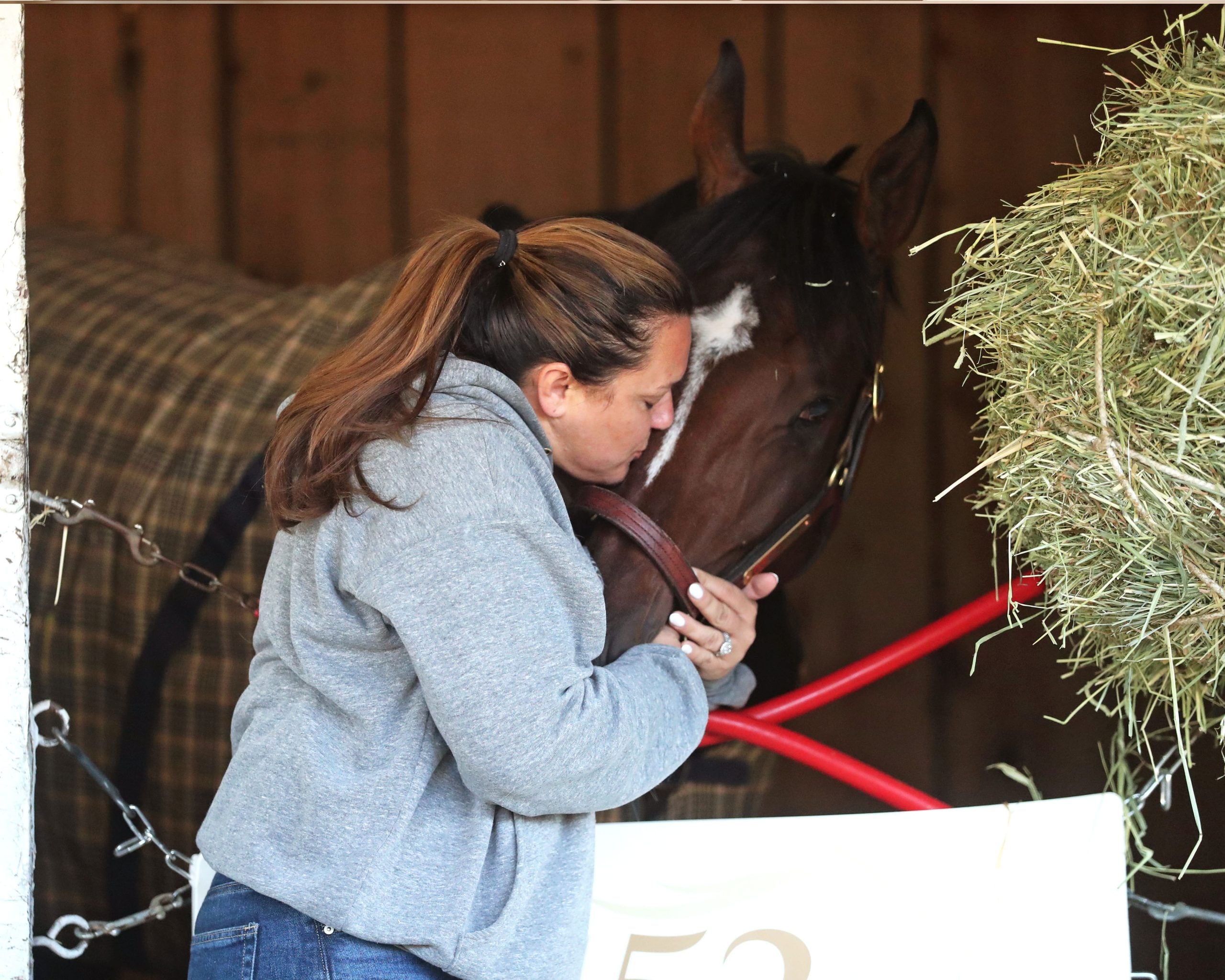
Golden Tempo's last-to-first triumph made Cherie DeVaux the first woman to saddle a Derby winner, a feel-good story for a sport that badly needs one. But it cost me bragging rights and about $160, so I felt bad.
But if my horse had to lose, I'm glad it was to DeVaux, a pleasant, articulate 44-year-old who in only eight years has become an elite trainer. Born into a horse racing family, she's been all about horses all her life. Twenty-two years ago, she started as an exercise rider before working her way up to be an assistant trainer for Chuck Simon and Chad Brown. Good for her, she deserves it.
Yet those were not my thoughts as I spewed bad words after the excruciating near-miss. Unless you're a big bettor, handicapping is more about ego than money. The satisfaction of solving the puzzle matters most.
My gut-wrenching regret is that I didn't box Golden Tempo in an exacta with Renegade, because I saw all four of his previous races and was impressed with his closing punch. I loved his distance pedigree (by Curlin out of a Bernardini mare), and he was training brilliantly. Usually, I pay close attention to workouts, but somehow I overlooked three sharp moves at Keeneland that signaled he was ready to run a career top. You snooze, you lose.
Despite his 30-1 morning line, DeVaux liked her colt's chances. The morning after the race, she said, “We understood he was a horse who would mature late. So, we were super confident about going a mile and a quarter.”
How I wish I'd paid closer attention, because then I would have had small win and place bets on Golden Tempo and hit a $278 exacta. Just before post time, I briefly considered making those wagers, then decided not to. Oh, what might have been? Echoing in my head were the horseplayer's saddest words -- woulda, coulda, shoulda.
“Tough beat,” said Pletcher. Yep.

Then again, I've had quite a few golden moments in the Derby, including the unlikeliest one of all, with 65-1 shot Country House in 2019. I still can't figure out how I landed on him, but not only did I have a $10 future bet at 29-1 odds, but I also played him across the board. When Maximum Security was disqualified for interference, Country House was handed the victory. My total profit: $497.60.
That was a shot in the dark that hit the bull's-eye. Country House was far from the best horse in that Derby, unlike Renegade, who was. The moral of the story: The racing gods giveth, and the racing gods taketh away.

Ed McNamara is an award-winning racing writer who has covered the sport since 1981 for The Bergen (N.J.) Record, Newsday, ESPN, Thorocap, and USRacing. He is the author of Cajun Racing: From the Bush Tracks to the Triple Crown and Racing Around the World, and a contributor to The Most Glorious Crown and The Racetracks of America. He has also written for racing publications in France and Italy.