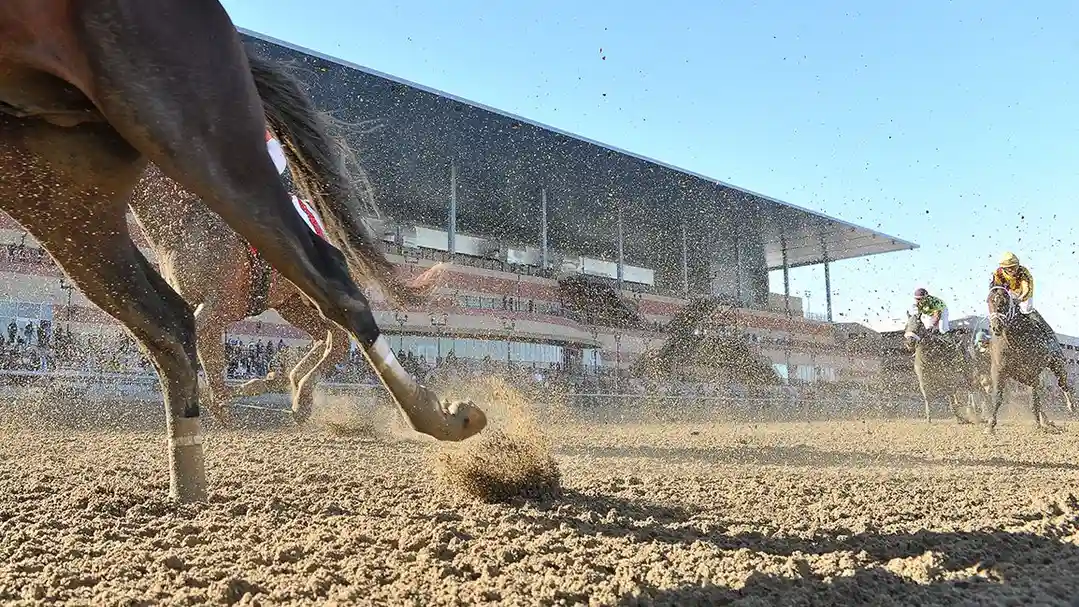
Every serious bettor knows the Kentucky Derby is not a race you handicap in a vacuum. You have to respect the venue. Churchill Downs is one of the most surface-sensitive tracks in American racing, and in a field of 20 three-year-olds going a mile and a quarter on the first Saturday in May, a single inch of rain can rearrange the entire betting landscape before the gates open. If you are building a ticket for 2026, the Churchill Downs surface is not a footnote. It is a primary handicapping variable.
We are ten days out from the 2026 renewal. There is rain in the Louisville forecast. The post draw happens on April 25. Right now, if you are not actively thinking about track condition, pace shape in relation to that condition, and which horses in this field have a synthetic-surface pedigree that could translate to a wet, sealed Churchill Downs main track, you are leaving real money on the table.
Let's get into it.

| Horse | Trainer | Running Style | Off-Track Record | Surface Notes |
|---|---|---|---|---|
| Renegade | Todd Pletcher | Stalker/Presser | No documented wet starts | Unproven off-track; rain risk to odds |
| Further Ado | Brad Cox | Closer | Limited sample | Churchill Downs dirt specialist; bear watch |
| Fulleffort | Brad Cox | Presser | All starts on synthetic | Rich Strike 2022 comp; key if sloppy |
| So Happy | CA-based | Front-runner | West Coast fast track only | Deep KY dirt historically problematic for shippers |
| Iron Honor | Chad Brown | Tactical Speed | Limited data | Have to Dosificate Stamina |
Surface notes compiled from publicly available prep race charts and trainer reports. Always verify current entries and conditions at DRF.com before wagering.
Churchill Downs' main track is a unique piece of real estate. The crown on that oval is pronounced, the turns are tight by graded stakes standards, and the kickback in a 20-horse field is something no horse truly rehearses for in a prep race. When you add moisture, the whole equation changes.
A wet Churchill Downs surface does two things most bettors understand intellectually but underweight in practice. First, it seals. A sloppy or muddy sealed track plays faster on top but is unforgiving to horses that dig deep rather than skim. Second, it compresses speed figures. A horse that earned a 105 Beyer on a fast track will not automatically replicate that figure on a sealed, sloppy surface. The figures lose their predictive power at the top of the range, which means the morning line chalk becomes vulnerable in ways that pure speed handicapping will not reveal.
What you want to focus on in the days leading up to the race is the Churchill Downs Spring Meet early races. Those first two weeks of racing at Churchill Downs are a live read on how the surface is playing. Are speed horses winning off the pace? Is the rail holding? Are closers getting through late? That information is more valuable than any prep race speed figure earned at Keeneland or Oaklawn because it is specific to this track, this configuration, this spring.
According to expert handicappers covered by Bettors World, surface variance during the early Spring Meet can shift the value of post positions significantly once the field is drawn. A rail-heavy bias makes a horse like Further Ado, trained by Brad Cox, who knows this track as well as anyone in the business, considerably more interesting depending on where he lands in the draw. A closer-favoring surface opens doors for horses with bigger post positions who can save ground on the far turn.
Renegade is one of the headline names in the 2026 Kentucky Derby prep races conversation, and Todd Pletcher confirmed work activity at Palm Beach Downs, with Renegade and stablemate Powershift working four furlongs in 48.87 on April 16th. That is a clean, workmanlike move. Pletcher manages his horses well heading into the first leg of the Triple Crown, and his Kentucky Derby trainer betting record speaks for itself, with Super Saver and Always Dreaming both going to the winner's circle for him.
But here is the problem. Renegade has no documented wet-track form. Zero. That is not a disqualification, but it is a flag. When a horse carries heavy chalk into the gate at Churchill Downs with rain on the forecast and no evidence of how he handles a sealed or muddy surface, the sharp money starts looking elsewhere for coverage. The morning line on a horse like Renegade could drift anywhere from a point or two to several points if the track comes up off on Derby morning. Bettors who are locked into him without any backup coverage are taking on unnecessary risk.
The way to play this situation is not to fade Renegade entirely. It is to use him more selectively. Key him in positions where he has to earn it, and build your coverage around the surface question marks. The Kentucky Derby betting guide at US Racing breaks down how to structure multi-race exotics with contingency coverage, and that framework is exactly what the track condition angle demands.
This is where it gets genuinely interesting for 2026, and where sharp bettors on Reddit are already doing the work. Fulleffort has run his entire three-year-old prep cycle on synthetic Tapeta surfaces. His numbers look good. His class progression looks reasonable. And his odds have tightened from 25-1 to somewhere around 20-1 in the early futures market, which tells you the sharp money is at least sniffing around.
The Rich Strike comparison is not just noise. Rich Strike in 2022 had a similar synthetic-to-dirt translation question mark going into Churchill Downs, and the reason that longshot bomb connected at 80-1 had a lot to do with the surface playing to his style on that particular day. The science behind this is not complicated. A wet, sealed Churchill Downs track mimics the consistent, moisture-sealed kickback of a synthetic Tapeta surface. Horses that have trained and raced on that kind of footing are not suddenly at a disadvantage the way they might be on a firm, deep Kentucky dirt track. They are actually in familiar territory.
US Racing covered this angle specifically, noting that Animal Kingdom in 2011 followed a similar path. Both examples are graded-stakes winners who found their best performances at Churchill Downs precisely because the surface conditions on race day aligned with their prep cycles. Does Fulleffort profile the same way? That is the question every serious Kentucky Derby betting player should be running down right now.
At 20-1 in a 20-horse field with legitimate surface upside if it rains, Fulleffort is a horse you at least want in your exotics. Whether he becomes a primary key or a deep closer in your trifecta and superfecta depends on what the track looks like on Derby morning and where he draws.
The April 25 post position draw is the next inflection point. Until then, you are working with pace scenarios that are somewhat theoretical. But there are frameworks worth building now.
In a 20-horse field at a mile and a quarter, post position matters more than casual bettors give it credit for. If the surface comes up sloppy, inside posts become magnets for trouble. Horses breaking from the rail in a big field on a wet track have to deal with mud thrown directly into their faces from the horses in front of them. Some horses handle kickback without missing a beat. Others check out mentally and physically after the first quarter mile. That is a pedigree and training question worth researching before you lock in your ticket.
For bet on Kentucky Derby purposes, here is a basic exotic construction framework tied to the surface condition variable:
Check the Kentucky Derby jockey betting angles as well. The rider on Fulleffort matters enormously in a wet, scrambling 20-horse field. An experienced jockey who has won on off tracks at Churchill Downs is a non-trivial edge.
Do not overlook the Triple Crown bonus either if you are thinking about where your Derby winner bets are set up for Preakness and Belmont.
The conversation happening on r/horseracing about So Happy and West Coast shippers is legitimate. California horses have historically underperformed at Churchill Downs at a rate that is measurable in the data, and the surface is a central reason. California tracks like Santa Anita and Del Mar play differently from Churchill Downs. The footing, surface cushion, and crown of the track create a slightly different lean in the turns. Add in a cross-country ship, a shorter acclimation window in some cases, and a wet track on top of all that, and the California shipper problem compounds itself.
This does not mean horses like So Happy cannot win. It means their morning line price needs to reflect the additional risk. If So Happy is going off at even money or 5-2 with no documented off-track form and a California prep cycle, that is a horse you are against, not with, in the surface-dependent scenarios. The overlay is somewhere else in the field.
For historical reference and past Kentucky Derby results broken down by surface condition, US Racing has an archive of data worth reviewing before you finalize your ticket.
The broader conversation across X and Reddit makes one thing clear: serious bettors in 2026 are not treating track condition as an afterthought. It is a central variable in how tickets are being structured and where value is being identified. You can follow the live discussion on X and Reddit to see how the community is updating in real time as the forecast develops and the post draws approach.

A sloppy or muddy Churchill Downs surface tends to compress the field's speed figures and expose horses with no documented wet-track form. Favorites without off-track pedigree or race experience can see their odds drift significantly on the board, opening real overlays for proven mudders or horses from synthetic-surface backgrounds whose form translates better to a sealed, wet track. Monitor the weather forecast and the morning line moves on Derby morning carefully.
It can, particularly when the Churchill Downs main track is wet and sealed. A sloppysurface mimics the consistent kickback and footing of synthetic Tapeta tracks, which is exactly why longshots like Animal Kingdom in 2011 and Rich Strike in 2022 were able to fire their best efforts. Horses like Fulleffort, who built their entire 3-year-old prep cycle on synthetic, deserve serious consideration if the track comes up off. The key is confirming the surface condition on Derby morning before finalizing any ticket.
Churchill Downs' crown and rail configuration mean that a rail-heavy bias can make inside posts extremely valuable, while a closer-favoring surface opens the door for horses drawn wide who can save ground on the far turn. In a 20-horse field with significant kickback, early pace shape and post position interact constantly with surface condition. Watching the Spring Meet races before the April 25 post draw is the sharpest free handicapping edge available to any serious bettor building a 2026 Derby ticket.

The writing team at US Racing is comprised of both full-time and part-time contributors with expertise in various aspects of the Sport of Kings.